Steadfast drive for sustained, sustainable results for children – How do any of us do it?
My visit to India’s state of Madhya Pradesh gave a window into the seeds for success. India’s Country Office calls them the 3Cs for every child – convene, converge, catalyse for children.
India’s second-largest state by area and fifth-largest state by population, the sheer size demands one to ask, where to begin? With the children, of course. Forty per cent of Madhya Pradesh’s 73 million people are children. Reaching them early is the game changer.
This brings me to the first C I saw at work in Madhya Pradesh – catalysing change at scale with and through partners. Madhya Pradesh’s leaders are investing in children. Department of Women and Child Development supports the government’s investment in building models that reach children with strong systems that reach children with health, nutrition, education and protection. The focus lies upon the most vulnerable and aims to inform and improve government schemes, plans and practices so that they are able to impact those hardest to reach.
UNICEF is also sharing best practices and learning lessons that we apply across India and share with even more partners around the world. Our work with Women and Child Development is enhanced by leadership driven by the Chief Minister and Deputy Chief Minister themselves, who speak and put resources behind programmes enhancing child survival.
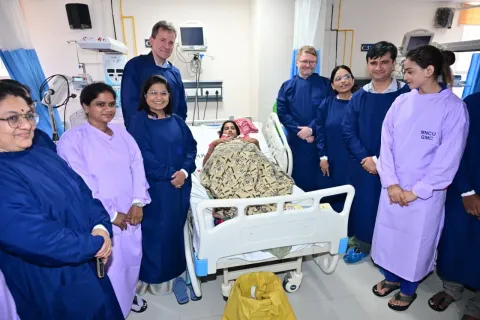
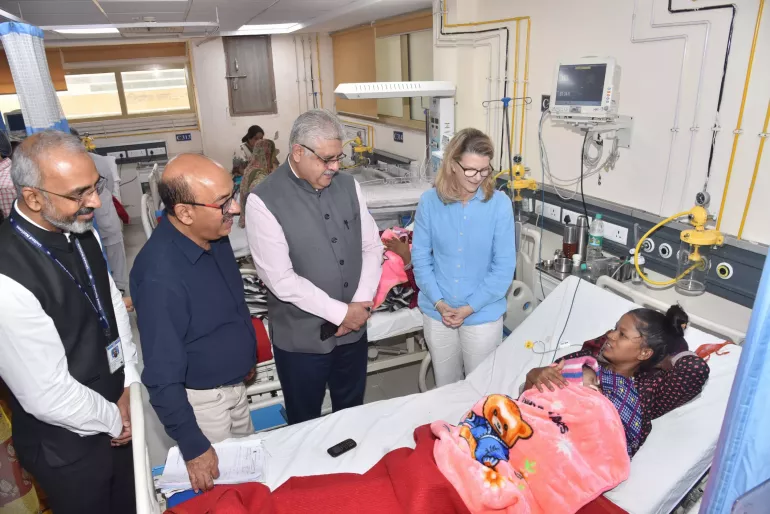
Government, leaders and decision-makers taking catalytic action is important and seeing if and how those actions change lives is even more important. That is where my visit to the Mother-Newborn Care Unit (MNCU) at Gandhi Medical College comes in. I also saw a second C in action - convergence.
With the MNCU, Madhya Pradesh is applying lessons from India’s successful SNCUs (spell out) and demonstrating how converging around the whole child matters. Madhya Pradesh is among the states with the highest infant and maternal mortality (IMR of 40 per 1,000 livebirths and MMR of 159 per 100,000 livebirths as per SRS 2022).

Madhya Pradesh’s MNCU is addressing these challenges with programme convergence, where mothers’ presence alongside their babies (Zero separation) in the mother and newborn care units. Something so simple has such an impact – essential medical intervention complemented by a mother’s care. MNCUs provide space for mothers to remain with their babies; show the power of a mother’s touch, and empower mothers with essential nutrition knowledge. Real lives were reached and changed.
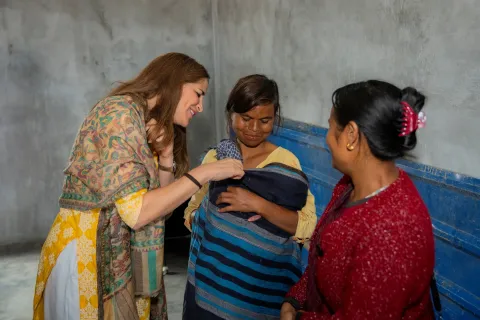
How inspiring and heartwarming it was to watch new mothers in the unit nurturing their newborns towards better health. In the quiet hum of the care unit, I spent some time interacting with the mothers who had found both healing and hope within its walls. Rupa Prakash, just 22 and holding her two-week-old newborn daughter close to her chest, radiated a calm strength that spoke volumes.
Her gentle smile and steady presence seemed to reflect the nurturing environment around her. Beside her, Priya, another young mother, rested peacefully with one of her three-week-old twin babies, while her sister-in-law lovingly rocked the other nearby. There was no rush, no panic; only a comforting rhythm of care and connection. The Care Unit was not just equipped with medical expertise, but also filled with quiet confidence, compassion, and the kind of support that helps families truly breathe.
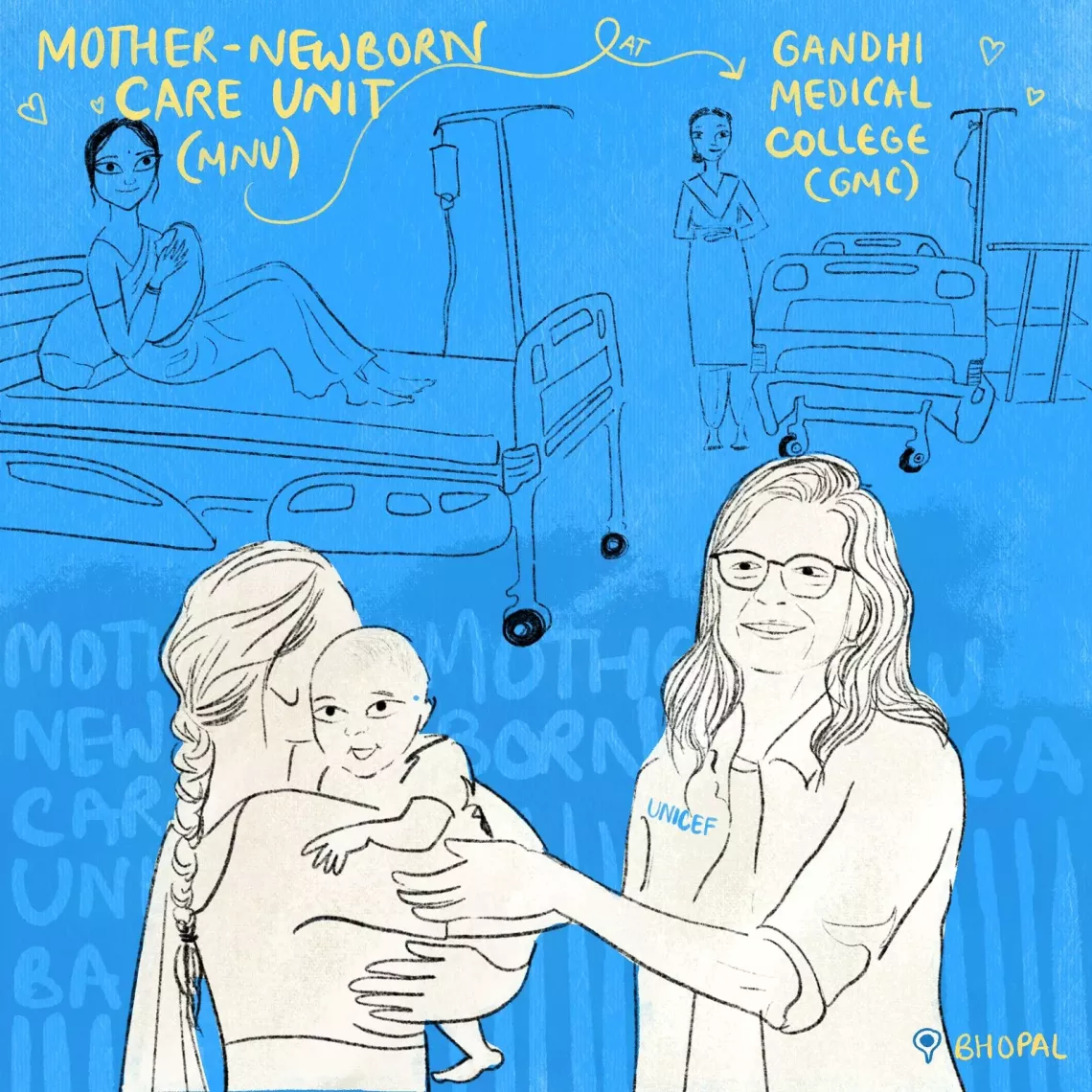
As a mother, I understood the feeling of families being freed from the grip of fear and uncertainty, to embrace a sense of relief and reassurance. And that’s the feeling this unit conveys quietly but confidently: everything will be okay!
Madhya Pradesh plans to have 25 MNCUs across the state by 2028 as envisioned under Sanjivan Roadmap 2030 – demonstrating the importance of effective programming complemented by catalytic partnership that can take success to scale.
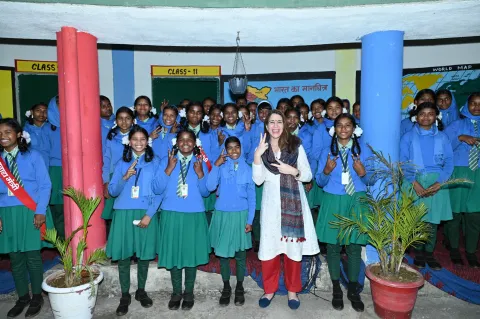
The day’s visit would have been incomplete without meeting UNICEF India’s Youth Advocate, the award-winning athlete - Gauranshi Sharma – a daughter of Bhopal. Gauranshi, a national badminton champion and internationally acclaimed badminton winner, personifies convening for children.
Beyond Gauranshi’s athletic drive is her commitment to convene youth across India to open opportunities for all children and youth across India. I participated in an exciting seed ball preparation activity with her, along with the spirited UNICEF Bhopal team.
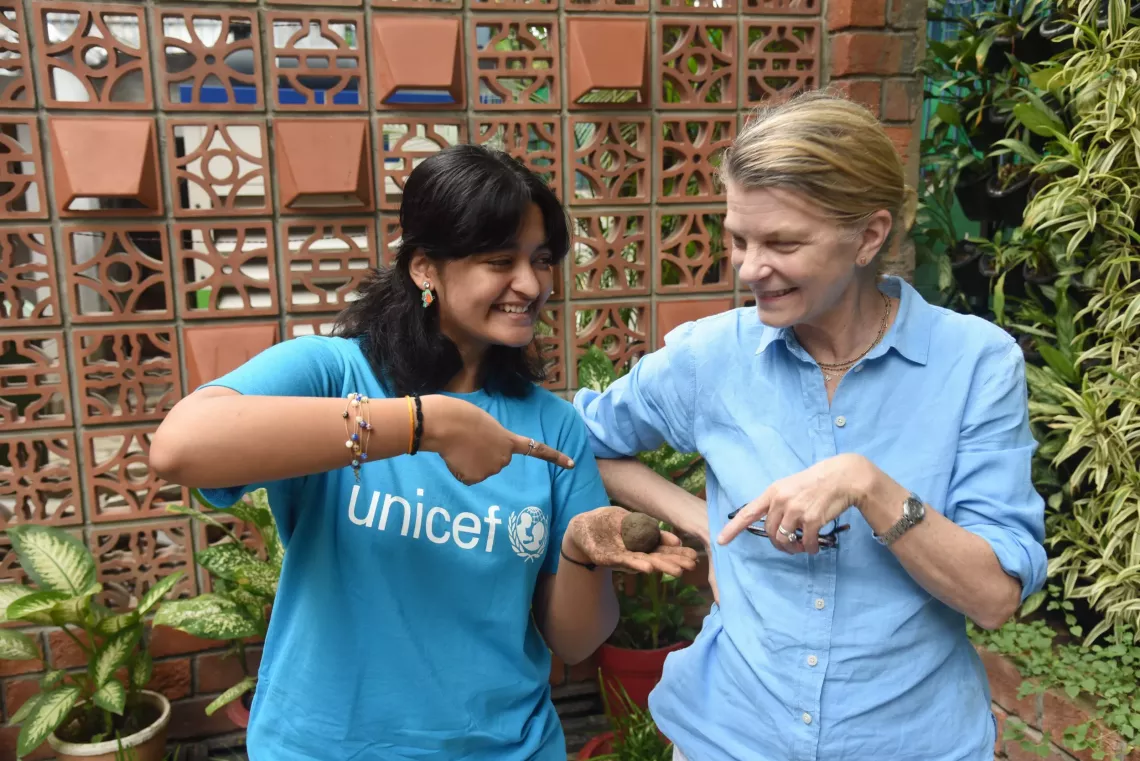
Gauranshi has met and overcome obstacles and courageously shares her story so that all of us can come together to create pathways for all children to dream and reach their potential.
What a day in Bhopal. What an opportunity to see and then to share how UNICEF does our work; how powerful the impact is when we convene, converge and catalyse with partners for every child.