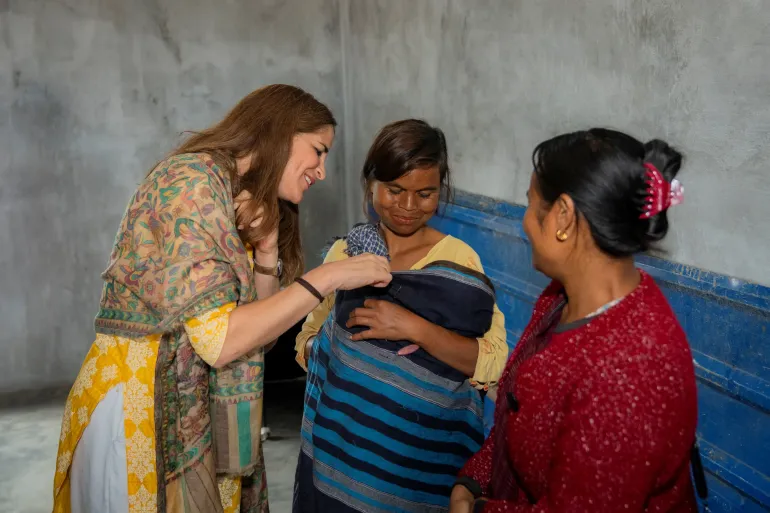
There is a question that communities in remote areas have learned, over years, to ask quietly: Will this reach us? Will this last?
I spent a week in the Northeast — from Assam to Meghalaya — wondering whether the answers were changing. What I found was more than I expected.
The First 1,000 Days
At UNICEF, we focus strongly on the first 1,000 days. One of the best-established findings in child development, and one of the most persistently underacted upon. The window where nutrition and care shape brain architecture, immune systems are built, and emotional connections open future possibilities.
When I sat in the Anganwadi centres in Morigaon on that first morning at Pahariduba and Thengbhonga in north eastern Indian state of Assam, I saw what acting on the 1,000 days can look like growth monitoring.
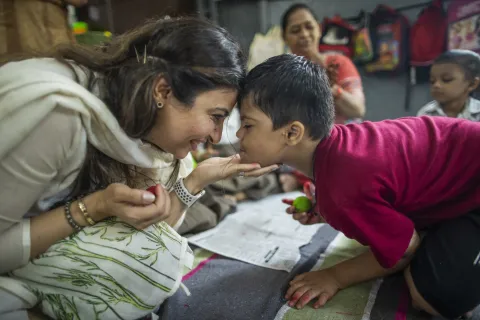
Nutritional counselling. Local food diversity demonstrations. Storytelling sessions. WASH practices taught through demonstration, not pamphlets. Stimulation, love and care, and communities coming together.
Hima and Her Sister
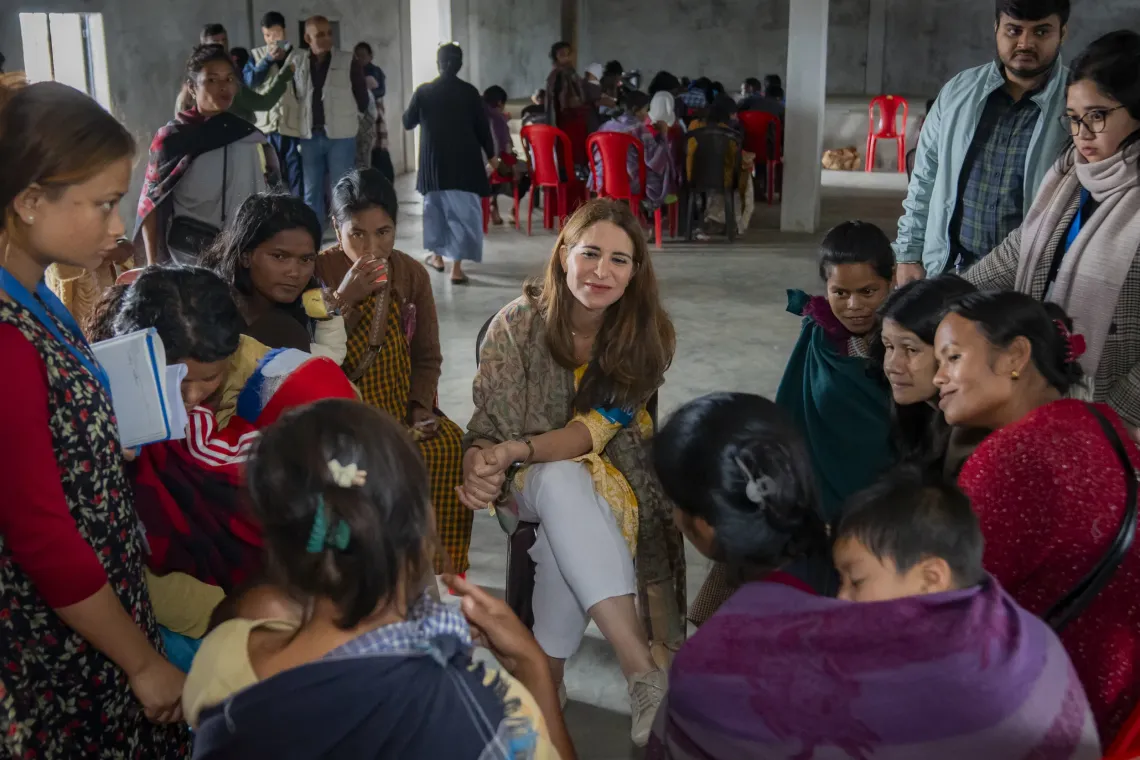
In Shkentalang village, West Jaintia Hills, Meghalaya, I joined a community gathering on immunization. It was not a health-driven intervention, but rather something owned by the community, which was organic and meaningful: a space where trust was being built through conversations. With women at the centre, yet men are key actors in the discussions.
And in the middle of it, I met Hima Rasmut.
She is 24 years old and has four children; her youngest is seven weeks old. Her husband passed away not long ago. Until that day, not one of her four children — after her first — had received a single vaccine.
The story of why begins with her eldest child. That child received the BCG vaccine at birth. In the days that followed, a reaction set in — the kind of side effect that is medically ordinary, but for a first-time mother, unbearable.
No one explained to her what she was seeing, no one told her it would pass. In that silence, a fear took root that no outreach campaign had managed to reach.
Hima’s experience is not exceptional. Across the seven priority districts of Meghalaya, where UNICEF and National Health Mission are running the GAVI HSS-3 programme, 4,548 children fall under the category of “zero-dose” children.
The woman who finally reached her was not a health worker. It was a ‘Buddy Mother’.
Truephina Rasmut became a buddy mother under the Human-Centred Design programme that UNICEF runs with NHM Meghalaya and the State Health Systems Resource Centre. The Beilangki programme has now established 276 groups across 285 villages. This programme trains women not only to deliver messages, but to have meaningful conversations to understand and change mindsets.
I sat quietly among them to understand their stories, and be part of the magic of a simple, effective, women-to-women dialogue.
“Vaccines work better than medicines. You are curing diseases that you cannot see, and stop them from affecting your children, and then, gently but boldly, she also told her what only a sister can say: “Your husband is no longer here. It is on you now to ensure that these children are vaccinated so they are healthy in life. You need them, and they need you”
The magic was done. Hema made a promise: she would bring her child to be vaccinated. As a mother of two young children, it was a privilege to be part of the moment when a mother overcame her fear and made a course correction that will have a lasting transformation on her children.
Her understanding, I am sure, will lead to her learning more about public health services, which will also make her willing and open to adopt conducive and positive practices for her children. This is how virtuous circles are created.
Hima’s story is not the only one. In Mawkriah East, a village where 38 missed infants had been identified, peer-led group discussions by buddy mothers brought every one of them back to vaccination.
It is now a UNICEF-featured case study because it shows what the method looks like when it reaches scale.
When the Administration Shows Up
Trust-building conversations do not happen in a vacuum. They happen inside systems — governance structures, financing arrangements, institutional mandates.
What I have seen in many countries is a gap between what gets decided at the state level and what gets implemented at the district. What was happening in West Jaintia Hills was different. The conversation at the District Collector’s office in Jowai was about a state Maternal, Newborn, and Child Health (MNCH) roadmap finding its footing at the local governance level — health at the helm, with rural development, social welfare, education, and disaster management all in the architecture.
A mother accessing an Anganwadi, a health facility, or a referral vehicle does not experience these as separate department mandates. She experiences them as a single journey. An effective convergent approach requires the design of the system to focus on that pathway, not around departmental mandates.
Mission 003
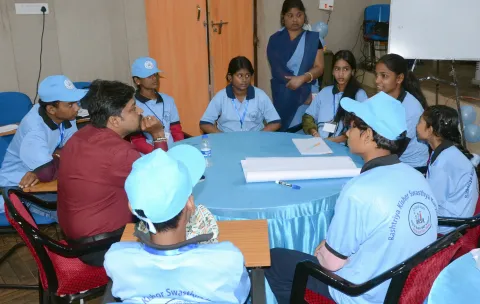
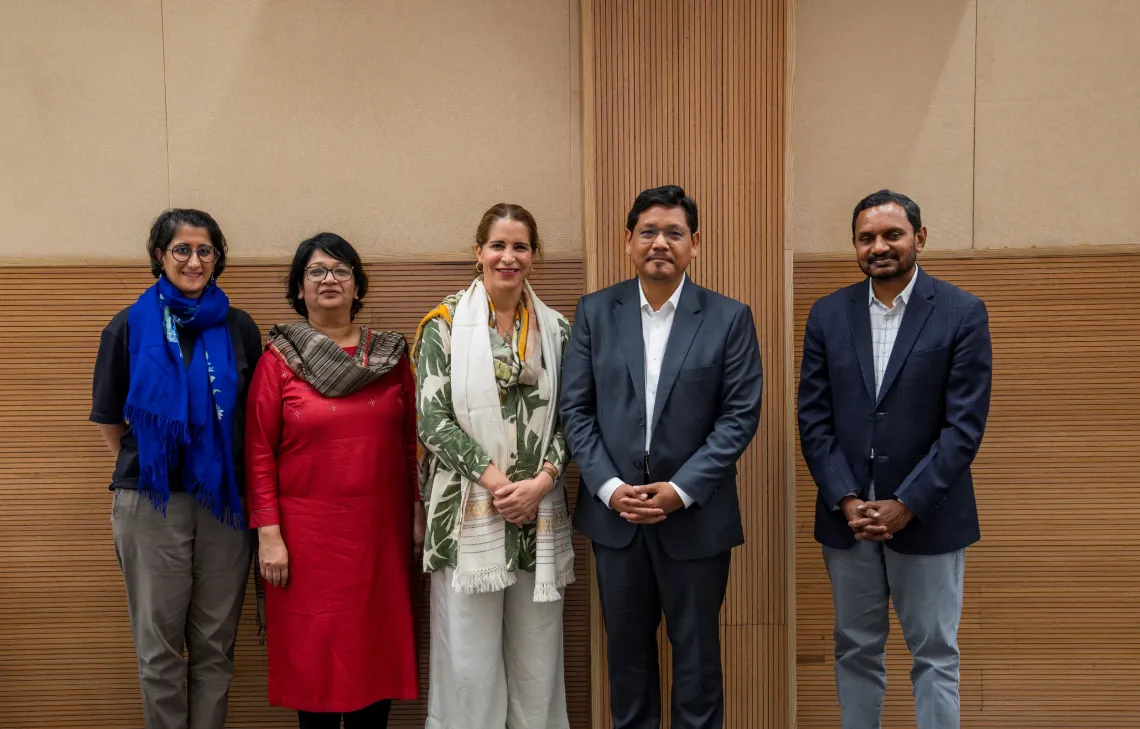
When I met with the Hon’ble Chief Minister of Meghalaya, Conrad K. Sangma, I was carrying all of what I had seen, the Anganwadi workers, the community gathering of mothers, Hima and her buddy mother Truephina, the District Collector naming the hardest-to-reach blocks, and the young voices insisting on a seat at the table.
The idea of bringing government efforts on curbing maternal mortality, stunting and low immunization under a ‘Mission 003’ took shape, with the vision of bringing to zero maternal deaths, unimmunized children, and every child achieving the standard three-feet length in their first 1,000 days together. This Mission is to be anchored by a strong multidisciplinary approach supported by strong political will.
It is also a promise made to children like Hima’s youngest daughter.
UNICEF will stand fully behind this mission, and the deep commitments of governments across Assam, Meghalaya, and the Northeast to ensure that younger generations have better chances to survive and be resilient.
Because change at the last mile only lasts when it is owned locally, sustained by systems, and trusted by the communities it serves.