Over three unforgettable days, I had the privilege of walking alongside caregivers, children and young people, community and government leaders, and our dedicated colleagues at UNICEF Bihar.
We covered a lot, meeting people in villages and hospitals, engaging with youth circles and government officials, but more than anything, we witnessed what change looks like when it’s rooted in equity and driven by the community.
During a visit to the Gaya district, we witnessed a Village Health Sanitation and Nutrition Day (VHSND1) in progress. This monthly outreach platform, under India’s health services, involves health workers, Anganwadi workers, and ASHAs working together to deliver services directly at the community level.

A young mother, accompanied by her infant child, explained how frontline workers convinced her to bring her baby in for vaccination for the very first time. As a result, this baby will have a greater chance to survive and thrive. Health services here were not just being delivered; they were being claimed by people who know their rights, and a system that is ready to deliver on its duties.
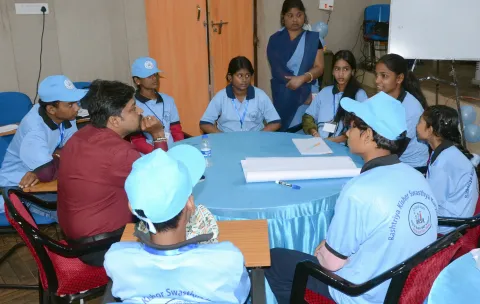
Later, we met with adolescents under the UDAAN initiative, a flagship adolescent empowerment programme led by the Government with UNICEF support. We saw girls discussing their career aspirations and many are aiming to appear for the Bihar Police Services exam. Boys are questioning gender roles and contributing to tearing down stereotypes.

Adolescents, both girls and boys, proudly show us their “Pad ATM3”, a low-cost sanitary pad dispensing mechanism that promotes access to menstrual hygiene. Proud fathers and mothers were not scared to give their adolescent children a voice, a space.
The young leaders weren’t waiting for permission to create change, they’re already leading it, and they reminded us that empowerment isn’t a programme. It’s a process, a promise.
One of the most humbling moments came at Prabhavati Hospital, where Bihar’s first Maternal and Newborn Care Unit provides newborns with another opportunity.
Health isn’t just about facilities. Watching the care teams in action, tender, tireless, and focused, I felt the weight of the responsibility we have, as individuals, communities, and systems, to allow a new life to survive, thrive, and flourish.

Our final day brought us to the Centre of Excellence at AIIMS Patna. From teleconsultations in remote blocks to mentoring frontline workers, this hub is turning expertise into access to possibilities, acting as a resource multiplier. It reminded me that knowledge has power only when it moves across institutes, districts, disciplines.
At every step of the visit, we were joined by leaders who not only enable this change but also accelerate it. The District Magistrate of Gaya took time to listen and reflect on our field findings. The Secretary of the Women and Child Development Corporation offered a clear vision and strong endorsement for deepening adolescent empowerment across Bihar’s development agenda.
In a closing conversation with Bihar’s Health Minister, we found alignment, appreciation, and a shared commitment to improving child and maternal health outcomes in the State, as well as the importance of political leadership in driving these goals.
I returned to Delhi carrying stories of resilience, partnership, and quiet revolutions led by many hands. To everyone who opened their world to us: thank you. You reminded us that change doesn't trickle down. It rises from the ground.
And to our UNICEF colleagues, your courage and commitment are creating ripples far beyond the field.