Mayene Bangoura: The Voice That Breaks the Silence
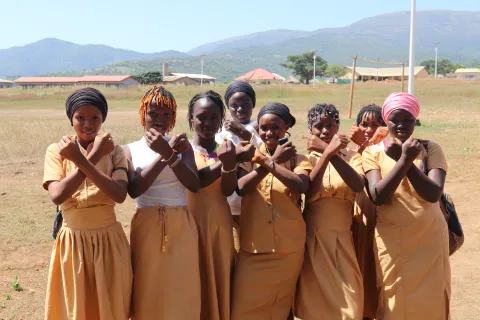
In Boké, with the support of the Swiss National Committee for UNICEF, teenage girls are campaigning to end female genital mutilation and child marriage in their communities.
- Français
- English
She could have stayed silent. It would have been simpler, safer. Instead, she chose to speak and to risk everything to protect her little sisters. Standing before her own grandmother, Mayene spoke the words that many never dare to say, even when lives are at stake:
"This is against the law. If you do it anyway, I will report you to the police."
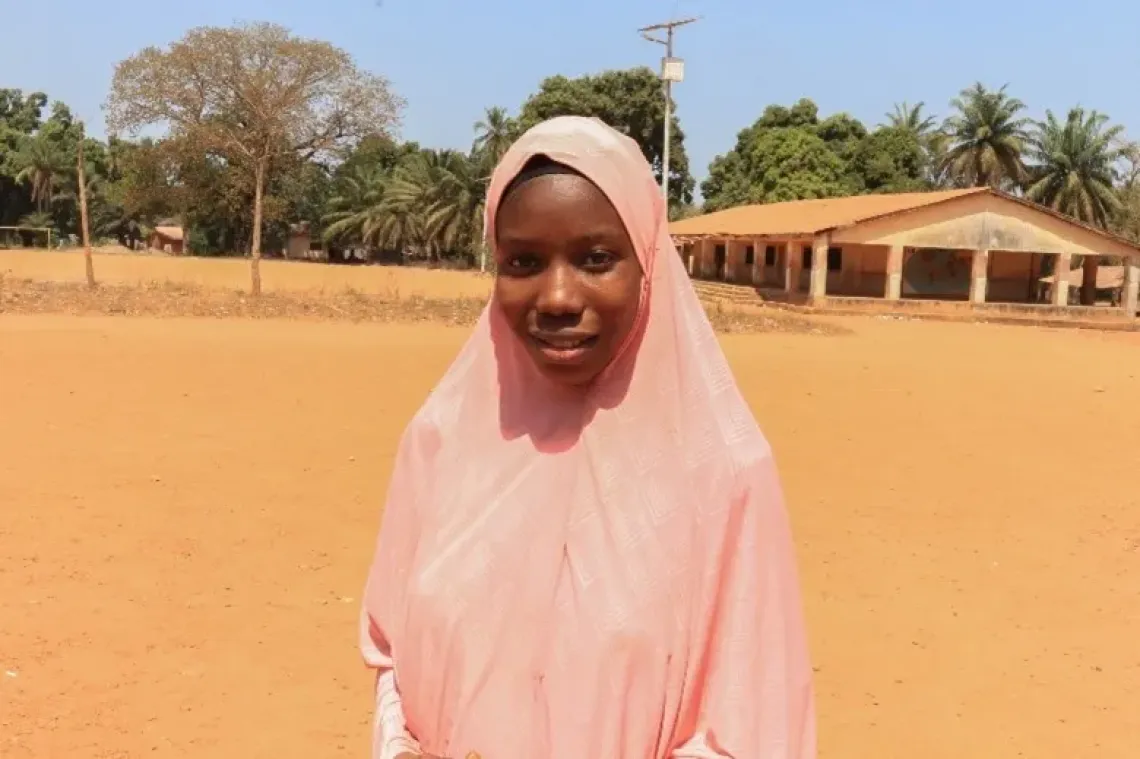
In Guinea, and particularly in the Boké region, the weight of centuries-old traditions bears heavily on the futures of adolescent girls. Despite legal prohibitions, female genital mutilation (FGM) and child marriage are still seen by many as obligatory rites of passage. It is within this context of intense social pressure that Mayene, 16 years old, chose to rise, transforming the vulnerability of girlhood into a force for community advocacy.
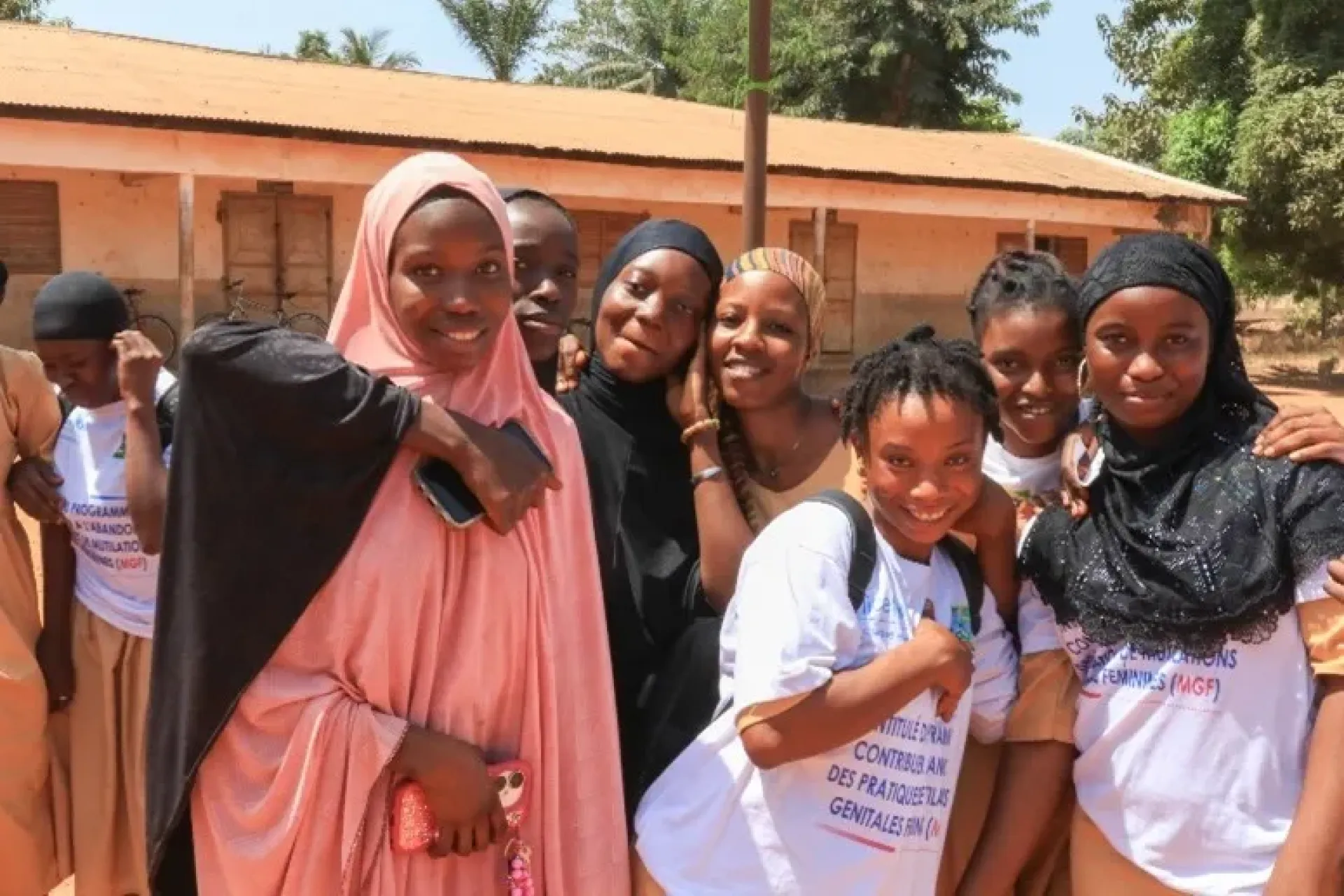
To take this fight further, she joined the Girls Leadership Club (GLC) of her village, a club made up of young girls who, like her, are becoming agents of change.
Asked why she got involved, she answers without hesitation:
"It was seeing my friends in action that made me want to join them. What they were doing moved me. I loved their fight. So, I asked my father for permission, and he agreed."
Mayene's commitment is anything but improvised. It is driven by rigorous organisation. Three times a week, on Mondays, Wednesdays and Saturdays from 8 to 9 a.m., Club members gather around the school flagpole in Bintimodia to prepare their awareness-raising activities for their village and neighbouring communities.
At the tailoring workshop where she trains as an apprentice, Mayene is not alone: her three colleagues are also Club members. Together, they turn every working moment into a space for dialogue. Between stitches, they speak to clients about the dangers of FGM and child marriage. At the market, every encounter becomes an opportunity:
"I talk to girls, mothers and even fathers. I explain that these practices have serious health consequences, and that they are prohibited by law. People who carry them out risk going to prison."
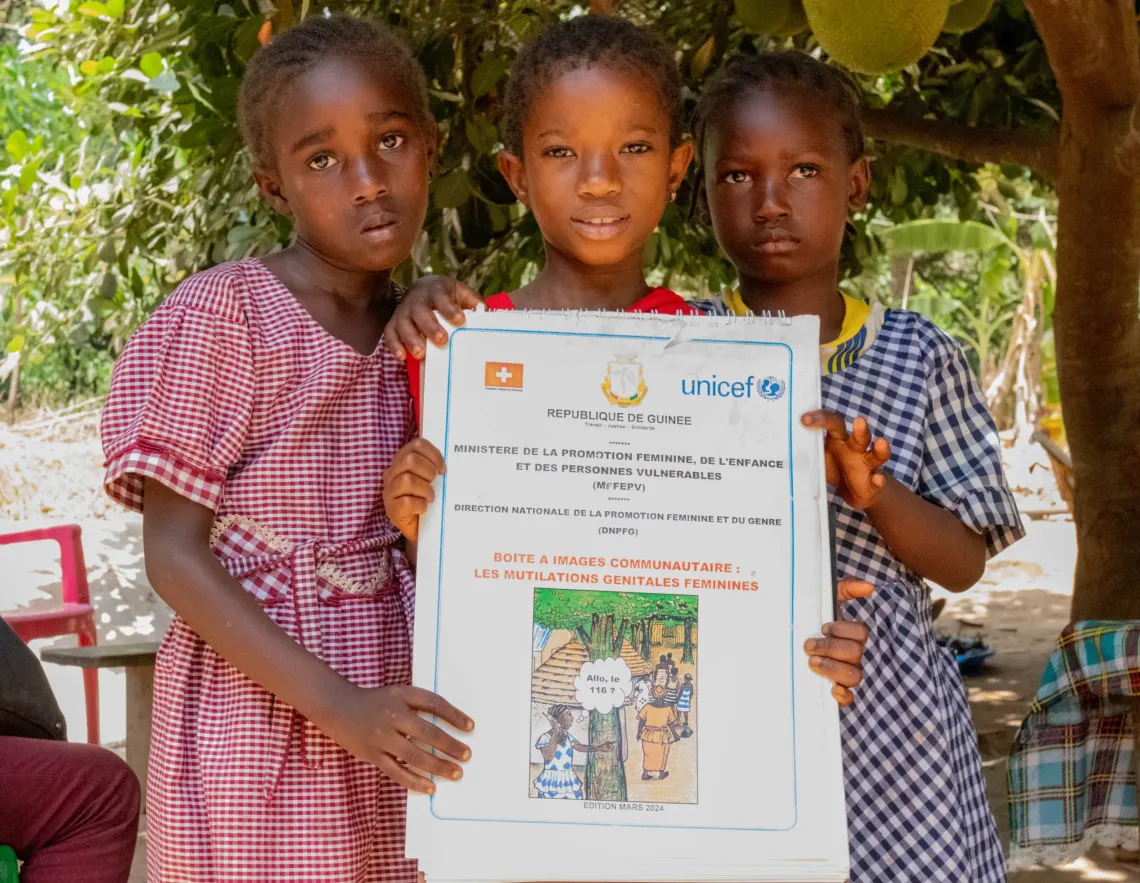
Mayene's most courageous act came where no one expected it: within her own family. When she learned that her grandmother was planning to have her little sisters subjected to FGM, Mayene did not stay silent. She spoke to her directly, calmly but firmly, reminding her of the health risks and the law.
"This is against the law. If you do it anyway, I will report you to the police."
She immediately alerted the Club president, Zeinab Cissé. Together, they informed the head of the commune. A delegation went to the grandmother's home to raise awareness, explain the law and, above all, listen to her. The grandmother listened. She understood. She made a commitment never to have her granddaughters subjected to FGM.
Mayene's story is not an isolated case. It is the face of systemic change. With the support of the Swiss National Committee, UNICEF today supports 520 young girl leaders across 35 localities in Guinea. Since 2023, this programme to combat FGM in the regions of Boké, Kindia and Conakry has delivered concrete results: 25 cases of mutilation reported, 16 prevented, and 9 criminal convictions secured. For child marriage, the action of these clubs has helped prevent 48 forced unions out of 58 reported.
By choosing to speak, Mayene protected her sisters and proved that a young girl can be a driver of progress. "Everything we do with the Club is to make these practices stop," she says. "I, Mayene Bangoura, remain committed until they disappear from Bintimodia."