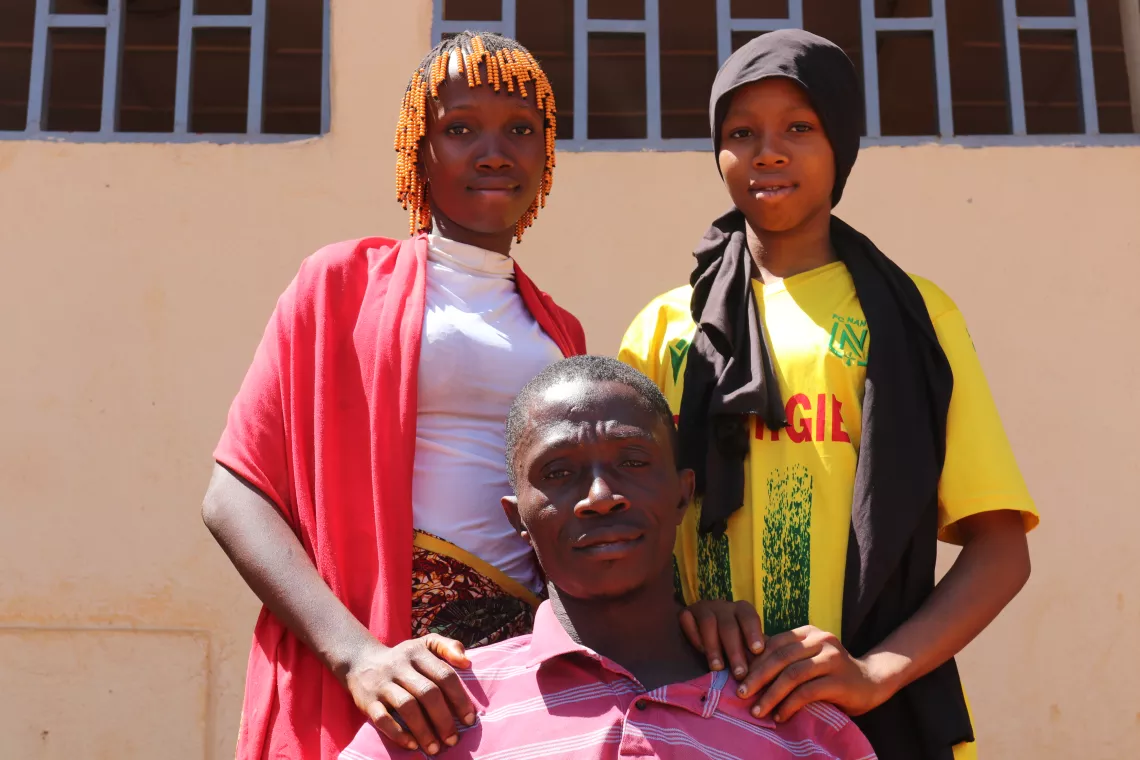
"I was lucky to have a father who was categorically opposed to the excision" Nantenin 15 years old.
UNICEF in Guinea assists young girl leaders in the fight against FGM, with the support of the Swiss National Committee for UNICEF and the UNFPA-UNICEF Joint Programme for the Elimination of FGM.
- Français
- English
Female genital mutilation are prohibited by Guinean, but the practice is still common in the country. The fear of social exclusion is often so strong that parents cannot avoid to have their daughters excised.
Nantenin, 15 years old, lives in Damaro in the Kankan region of Guinea. She is a member of the Girls' Leaders Club in her commune and works with local authorities to fight against female genital mutilation. Thanks to the advocacy training she received from UNICEF, she is raising awareness in her community about the abandonment of female genital mutilation. The actions of the Girls' Leaders Club helped preventing the excision of several young girls in Damaro. Nantenin and her sister were protected from this practice thanks to their father, despite their mother's insistence that they needed to be excised. "I was lucky enough to have a father who was strongly opposed to the practice, so my sister and I were spared from excision thanks to his decision. It wasn't easy for us, because our mother wanted to have us excised at all costs despite our father's and aunt's opposition. We were forced to spend the vacations at home with dad, not to be excised."
Nantenin's father explains that he was sensitized via the radio about the consequences of excision. "I would rather prefer my daughters to be treated as 'unclean' than to have health problems, excision is really not a good practice for girls, even the doctors agree. The women give their testimonies on the radio, they talk about the pain they have and that is caused by the excision. Since our Iman confirmed to me that this practice is not religious, but rather traditional, I promised myself that I would not have my two daughters excised. Today, many people in my family have understood the importance of not having their daughters mutilated. It is a choice I do not regret."
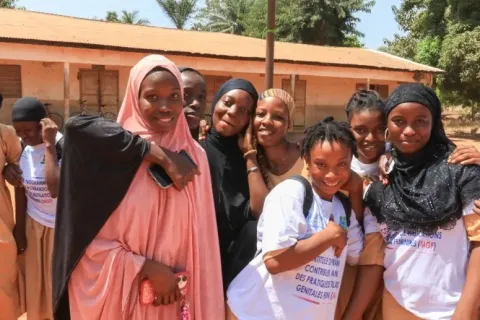
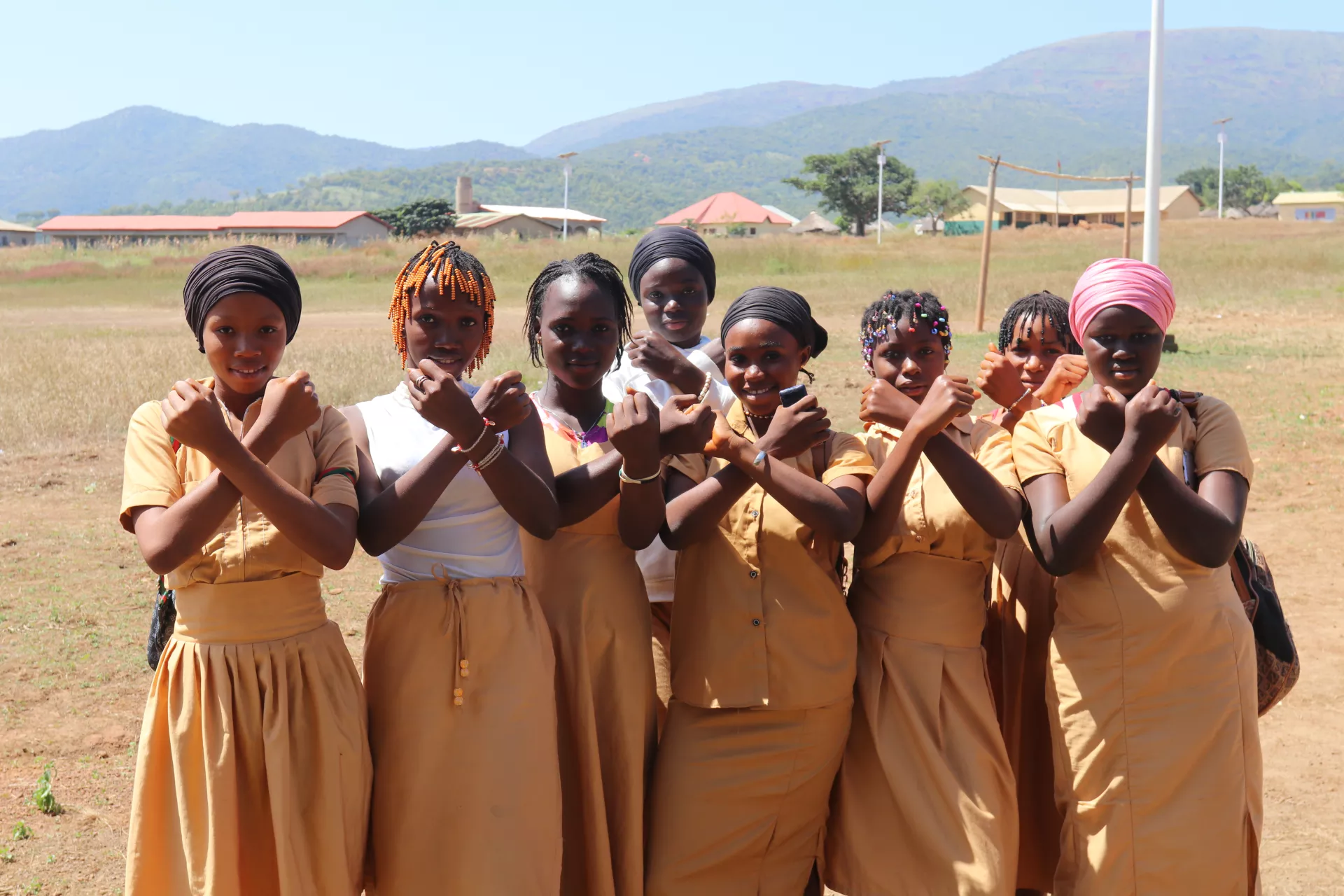
A pioneer in the fight against female genital mutilation in their community, Nantenin, with her sister and the members of their Girls' Leaders Club, raises awareness by going door-to-door every Friday. "Thanks to the awareness-raising activities, 27 girls were not excised. We are supported by our parents, the leaders of our community and by UNICEF, which gives us technical support for our training. We are proud and we will continue our fight to obtain zero mutilation in Damaro. A girl who is not excised is a complete and healthy woman. We have testimonies from some of our sisters who married and were excised, that they have difficulty to conceive children and they have pain in the lower abdomen, infections and do not feel any intimate pleasure with their husbands. My mother has understood the damage caused by this excision, and she now supports us in our fight and defends us in front of the people who criticize us. We have succeeded in imposing our status and in being proud of it."
Nantenin and members of the Damaro Girls' Leaders Club explain to mothers, fathers, community leaders, and religious leaders the consequences of genital mutilation with the support of a social worker. They train volunteers to disseminate awareness messages to the population, and develop Girls' Leaders Club branches in the surrounding villages, especially in schools. "These sensitizations allowed us to change opinions on these ancestral practices that are harmful to the health of girls and women, to change the place and role of girls in society, and to encourage girls' education as much as possible so that they do not reproduce this practice on their own daughters."
UNICEF in Guinea, with the support of the Swiss National Committee for UNICEF and the UNFPA-UNICEF Joint Program for the Elimination of Female Genital Mutilation, enabled Guinean girl leaders to organize into associations, learn about the consequences of female genital mutilation, and to be trained in communication and awareness-raising techniques. 448 women mentors, 131 women's groups, and 27 girl leaders' platforms were supported with approximately $1,136,000 over the period 2020 to 2022.