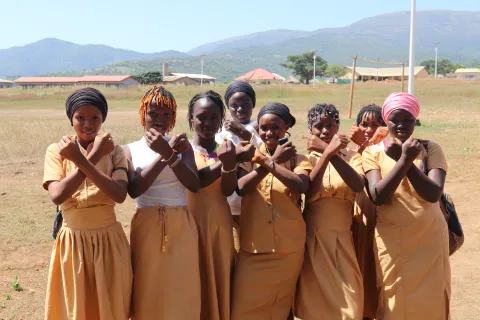
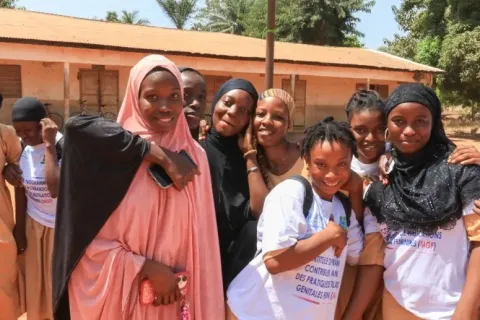
"I decided not to have my daughters excised" Koulako, mother of 7 children in Damaro.
UNICEF in Guinea assists women in the fight against female genital mutilation, thanks to the support of the Swiss National Committee for UNICEF and the UNFPA-UNICEF Joint Programme.
- Français
- English
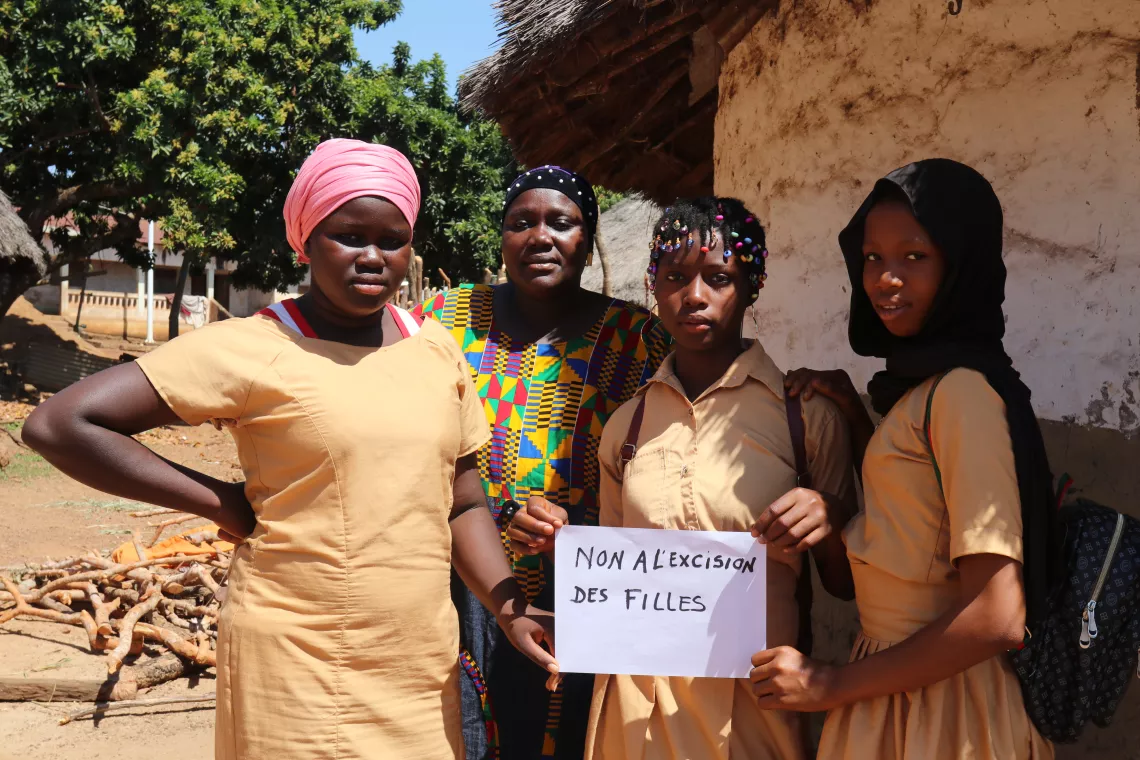
Koulako, 39 years old, is mother of seven children, including three girls. She lives in Damaro commune, Kankan region, in Guinea. Koulako was excised, which caused her health problems and difficulties during her deliveries.
Koulako decided not to have her daughters excised and fights against this practice in her community on a daily basis. "My three daughters are not excised. I was sensitized by my mother, it is thanks to her that I did not have my daughters excised. When a member of my family does not want their daughters to be excised, I take care of them." Koulako sensitizes parents, young girls and women to the dangers of female genital mutilation. She is also a recognized "mentor woman" (matron) in her community, accompanying and sensitizing adolescent girls on pregnancy and early marriage. "Excising a girl is spoiling her femininity. I have been a matron for 10 years. During childbirth, I see excised women suffer. I have noticed that women who are not excised give birth with less complication and risk. Through all of this, I was able to convince my husband that our daughters should not be excised. Fortunately, he joins me in this fight."
Female genital mutilation are prohibited by Guinean law, but the practice is still common in the country. The fear of social exclusion is often so strong that parents cannot avoid having their daughters excised. However, female genital mutilation causes severe complications and even death. The most direct risks are bleeding, septic shock, infection, urinary retention and severe pain. Girls who are subjected to female genital mutilation are more likely to drop out of school.
Koulako is trying to change mentalities on female genital mutilation. She organizes educational talks with women, parents and especially fathers in her community. "I make them aware of the dangers of excision by using examples. Some women have difficulty giving birth or they have problems during intimate relations with their husbands. Each time, there are members who accept not to have their daughters excised and who start raising awareness for the well-being and protection of the girls and women of Damaro."
Koulako also fights against preconceived ideas and rumors. "A rumor was circulating about a disease that was spreading in Haute Guinée affecting only unexcised girls. Unfortunately, after this false information, some parents had their daughters excised." Koulako's daughters are sometimes criticized because they are not excised. "I simply tell my daughters to answer them that it is their father and mother who do not want them to be excised, and that they are proud of it."She also pointed out that some Guinean families practice excision to get their daughter accepted at a wedding, for example, but that it is not a necessity, nor an obligation. "My first daughter is married, and she did not have any problems in her household, she is very well accepted by her husband's parents. We must make decisions that are beneficial to our children and not pursue harmful traditions against their health and well-being."
UNICEF in Guinea, with the support of the Swiss National Committee for UNICEF and the UNFPA-UNICEF Joint Program for the Elimination of Female Genital Mutilation, supports women in their fight against FGM by training them in communication and awareness techniques, helping them carry out educational activities with their peers, and participating in radio shows. 448 women mentors, 131 women's groups, and 27 girls leaders' platforms were supported with approximately $1,136,000 over the period 2020 to 2022.