Young Champions Helping Their Peers Stay in School
Equip children with the skills and confidence to support their peers
- English
- العربية
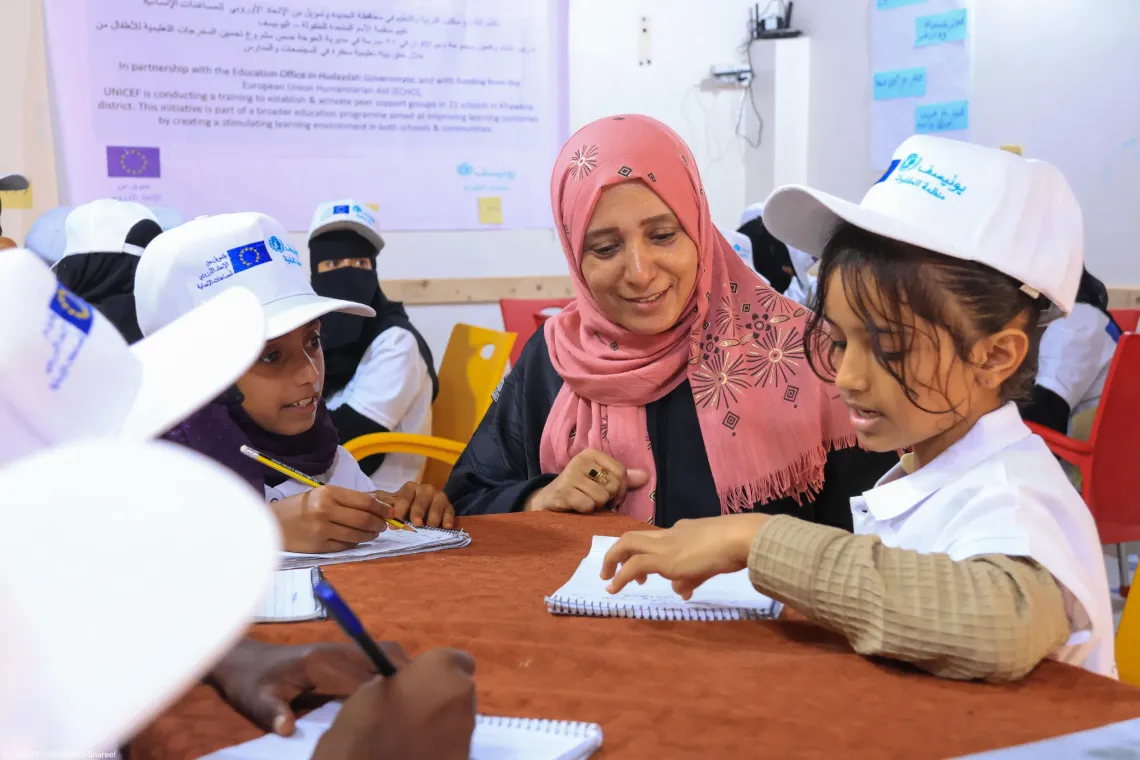
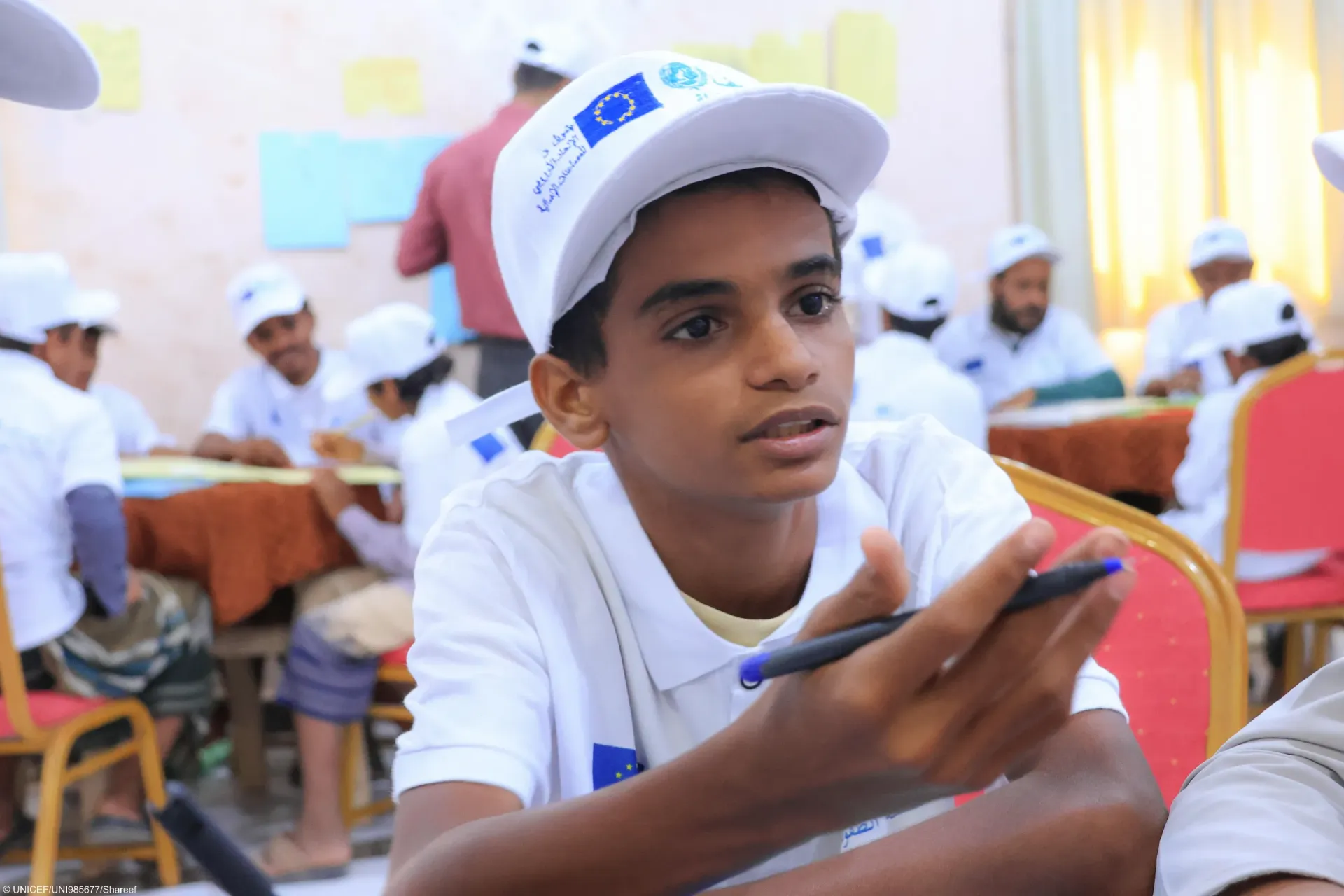
Suhad, 11, and Faris, 15, are among 126 children and teachers who participated in a four-day peer-to-peer support training as part of UNICEF's Social and Behavior Change (SBC) activities. Supported by the European Civil Protection and Humanitarian Aid Operations (ECHO), this specialized training brought together five adolescents aged 11–16 and one supervising teacher from each of the 21 targeted schools.
The training aimed to equip children with the skills and confidence to support their peers and address some of the challenges that keep children out of school, including bullying, poor academic performance, and other factors that contribute to school dropout.
Building Young Leaders
During the training, participants learned leadership, communication, and problem-solving skills. They also worked with their teachers to design initiatives that encourage children to stay in school and return to learning.
According to trainer Ihab Waheeb, the training is an investment in the future of both children and their communities.
"In Al-Khawkha, we trained 105 children and 21 supervising teachers in the peer-to-peer support club. This programme can have a great impact. I see a bright future for children and the entire community. By focusing on children, we are investing in the fundamental building blocks of the future. These children will become engineers, doctors, pilots, and productive members of society. We need to empower them to uplift their communities."
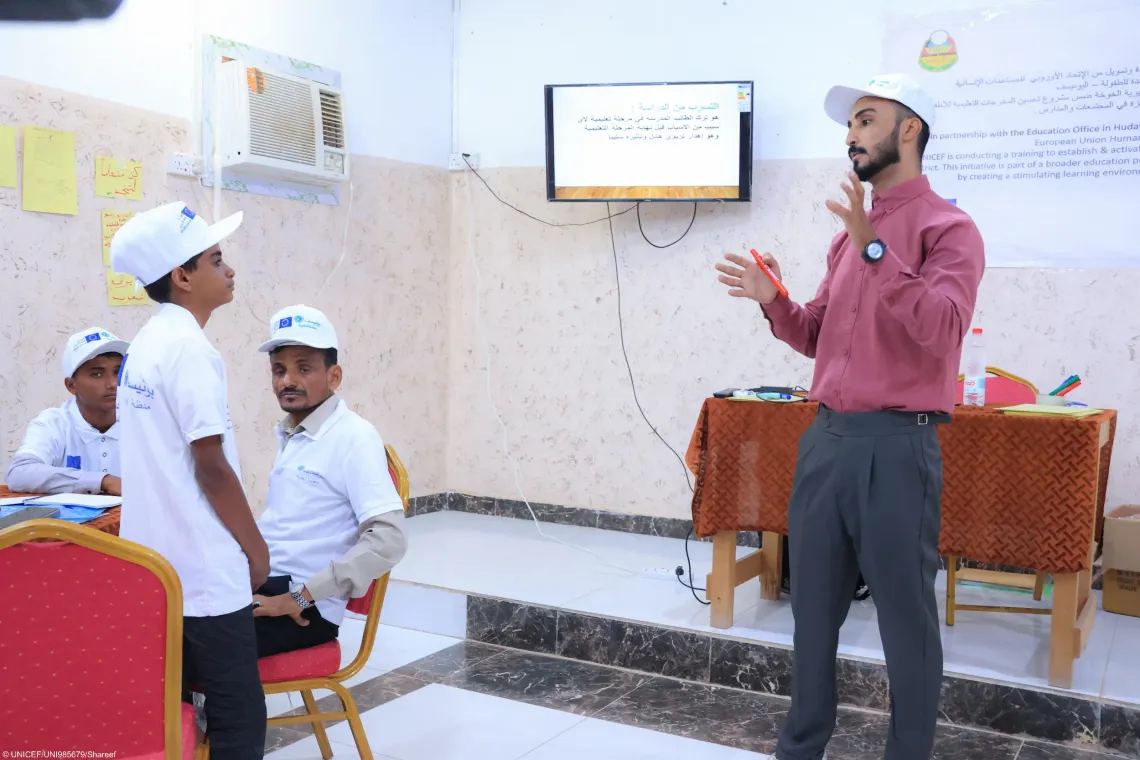
For trainer Muna Hassan, the programme was about helping children recognize their ability to make a difference.
"Our programme focused on education and on creating a suitable, active learning environment. We also focused on how to bring children back to school, how to support them, and how the trainees can become agents of change who help their peers return to school. We taught them how to be leaders and how to initiate positive change. We also worked with them to become education ambassadors. We wanted them to understand that they have a role in society, even at a young age."
Putting Learning into Practice
The training did not end when the sessions were over.
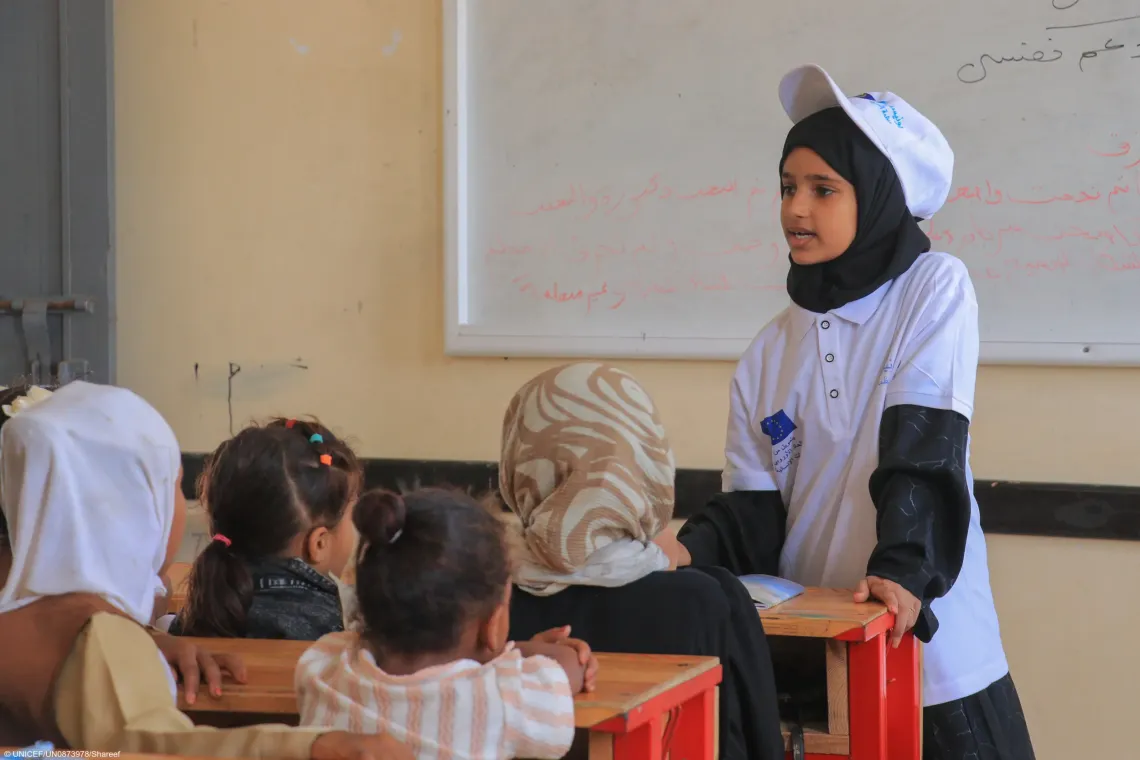
Today, Suhad and Faris and their colleagues, who were trained in April, are using the skills they learned to support their classmates and encourage other children to continue their education.
Suhad says the training helped her understand how she can guide and motivate other children, especially girls who are at risk of dropping out of school.
"Through my training with the peer-to-peer support clubs, I gained valuable skills and learned how to use them to guide peers who have dropped out of school due to early marriage, encouraging them to return to their education because education plays a vital role in the lives of girls and boys."
Staying Engaged During the Summer
During the summer months, Suhad and Faris continue to participate in activities at their schools three days a week.
These SBC activities are part of a wider 10-month UNICEF programme supported by the European Union, aiming to reach 10,250 children in Khawkha. The programme has an integrated multi-sectoral approach to improve learning outcomes like school Readiness and retention.
During the summer months, the integrated education program ensures that vulnerable children do not simply wait for the next school year to begin. Through remedial classes, Social behaviour and Change activities, psychosocial support, community engagement, and cash assistance, children maintain their learning, strengthen their wellbeing, and receive the support needed to successfully transition into the new school year.
By September, children return to school not just ready, but empowered to learn, engage, and thrive as they continue their educational journey.
Impact of programme on young people
For Faris and his peers, the summer activities provide an opportunity to continue reaching out to children who are no longer attending school.
"I am determined to continue this initiative. I have engaged with five friends to encourage them to return to school. Together with my friend Sultan, we continue to engage with them so they can return to school at the beginning of the new school year."
Finding Confidence Through Leadership
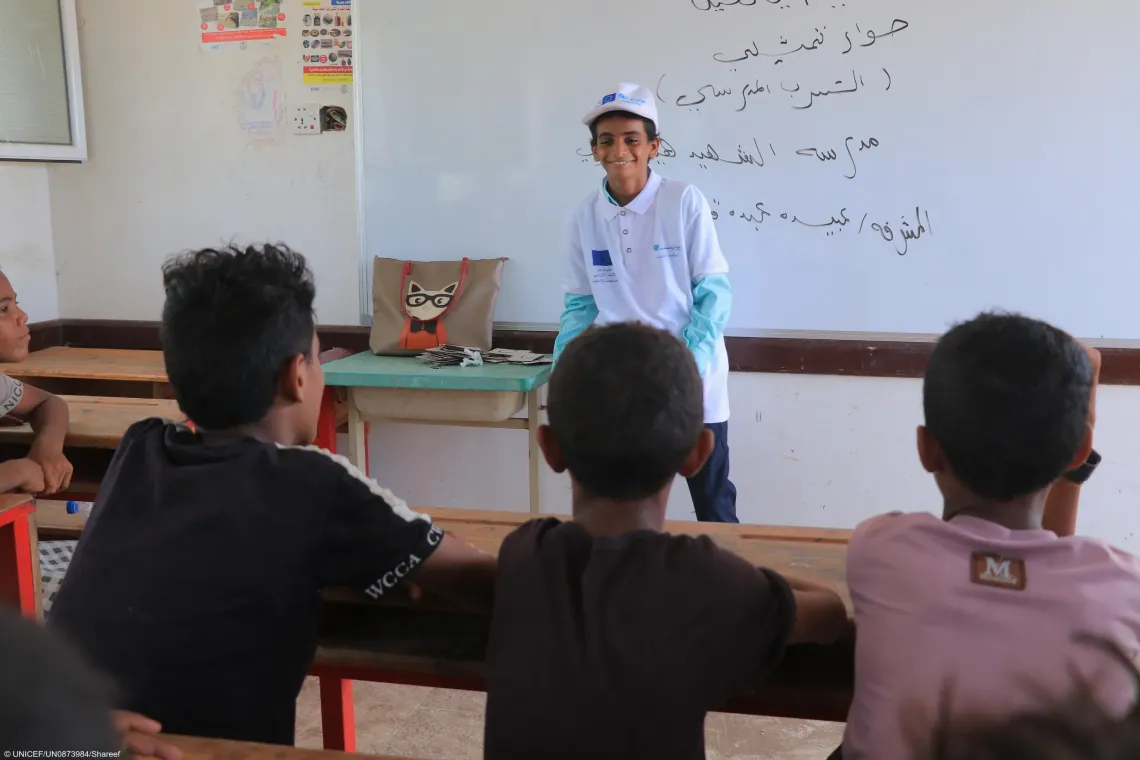
As she shares what she learned with other students, Suhad has gained confidence in her own voice and abilities.
"I feel proud when I see my classmates interacting with me and benefiting from the information I share. This programme has given me the confidence to be a positive voice that encourages girls to love school and continue their education."
Looking Ahead
As the new school year approaches, children like Suhad and Faris are helping ensure that more children return to the classroom.
Muna Hassan expressed her appreciation for the initiative:
"I extend my deepest thanks to UNICEF and to the European Union Humanitarian Aid for this initiative. I am very, very grateful."
By September, children are not only prepared to return to school but are also better equipped to support one another, overcome challenges, and continue their education with confidence.