Working amidst the floods and hardship with a kind heart
Yemeni humanitarian worker shares reflections

- English
- العربية
For Bassam Aleleany, a humanitarian worker from Marib, Yemen, the coming rainy season may come with floods, which means a disaster for many internally displaced families and their children in Marib.
Yemen has been facing rising temperatures, and more frequent extreme weather events, with significant impacts on its most vulnerable populations, and economic prospects. Half of the Yemenis are already exposed to at least one climate hazard — extreme heat, drought, or flooding — with compounding effects on food insecurity and poverty. [1]
The internally displaced people (IDPs) living in IDP camps are among the most vulnerable people exposed to climate change disasters. In Yemen, 1.9 million out of the 4.8 million IDPs live in 2,290 IDP sites[2], and they are at high risk of fire and/or flooding. 84 % of these sites are located in Marib, Hudaydah, Al-Jawf, Hajjah and Taizz.[3]
Heavy floods in 2024
Aleleany recalls how bad the situation was last year, for thousands of internally displaced people and their children.
“The floods have taken everything these Internally displaced people once had. They wiped everything. These people and their children became homeless again. It is very difficult to be under the mercy of conflict and natural disasters with nothing you can do,” said Aleleany.
In August 2024, Yemen experienced devastating floods following a period of intense rainfall, which caused substantial damage, particularly in IDP sites. The disaster resulted in over 45 fatalities in Yemen[4]. In Marib, the disaster resulted in 8 deaths and 35 injuries, according to the Health Sub-National Cluster. A total of 97 sites were affected, with more than 12,000 households- around 74,000 individuals, including 33,377 children- were directly impacted. Among these, 3,673 shelters were destroyed, and nearly 8,700 suffered partial damage, as reported by Camp Coordination & Camp Management (CCCM) and Shelter Sub-National Clusters. In addition, 8 schools and 34 classrooms were affected, disrupting education for 6,298 students and 285 teachers, according to the Governorate Education Office and Education Sub-National Cluster.[5]


UNICEF Response
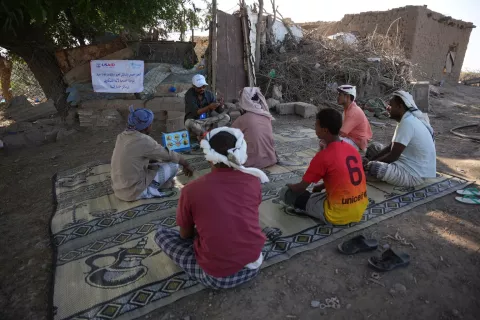
As an urgent response, UNICEF implemented vital interventions to support the most vulnerable people in Marib & other Yemeni governorates in cooperation with local partners. Aleleany was among the emergency team UNICEF deployed to provide critical support in WASH, Health, Nutrition, the Rapid Response Mechanism, and Child Protection. The support was provided to 60,340 IDPs, including children, women, and men affected by the adverse weather. UNICEF efforts were coordinated closely with local partners and authorities to ensure an efficient and effective response to the urgent needs of the impacted families
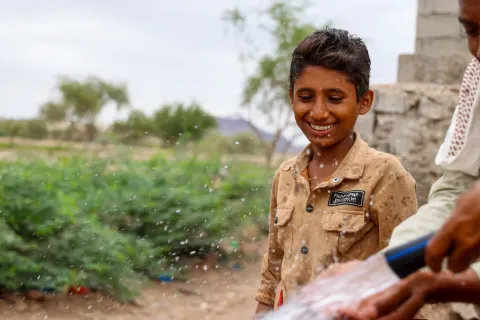
UNICEF response included the distribution of 7,000 consumer hygiene kits and 250 basic hygiene kits 7,000 Jerrycans with capacity of 20 liter in addition, UNICEF distributed to affected families. 500 water tanks with capacity of 1000-liter to displaced people in 20 IDPs sites in Marib City and Marib Al-Wadi, including those affected by cholera outbreaks and other diseases in the most affected areas. A total of 45,500 displaced people in Marib Governorate benefited from these crucial humanitarian interventions. This activity is made possible thanks to the generous support of UNICEF and funding from the Yemen Humanitarian Fund and the UN Central Emergency Response Fund (CERF).

“The happiest and most emotional moment for me was when we reached a remote area to distribute water and sanitation items. We met a woman who was the only breadwinner for her family and gave her a water tank. Her eyes were filled with tears, and she told us that she has been in need for a water tank for more than two years,” said Aleleany.
“We thank the donors for their generous support to the most vulnerable people all these years, and we hope the support continue to the internally displaced people in Marib,” added Aleleany.

Growing Challenges Require Support:
While heavy rains are typical during Yemen’s monsoon season, potential flooding underscores the country’s vulnerability to severe weather events. In addition, food insecurity, rising prices, floods, cholera have all exacerbated pre-existing vulnerabilities for these Yemeni households.
As a humanitarian worker, Aleleany hopes that “internally displaced people and their children live at peace”. He hopes that support to the most vulnerable communities in Yemen continue, and that peace prevails so internally displaced people can go to their homes or at least start to find a sustainable work.
“Internally displaced people are the most impacted by the conflict. They do not have homes with walls to protect them. the majority of them do not have a source of income. They go out every day to look for work. Sometimes, they come back home with food in their hands, but sometimes they come with bare hands to their children. They deserve a better chance in life,” concluded Aleleany.
[1] World Bank: Navigating Climate Challenges amidst Conflict: Pathways for Yemen’s Future
[2] Yemen Humanitarian Needs and Response Plan, issued in January 2025.
[3] CCCMCluster. (2024, April 30). Yemen - CCCMCluster - April IDP Sites Master List - 20240430. UNHCR Operational Data Portal. Retrieved from (link)
[4] Polish Humanitarian Action, Rapid Needs Assessment, Flood Emergency, (MARIB, 11.08.2024).
[5] UNICEF Humanitarian Action Update- Marib Response, August 2024.