The Women Who Knock on Every Door to Save Lives
From door to door, community health and nutrition volunteers and mobile teams help families prevent malnutrition, improve health, and save lives

- English
- العربية
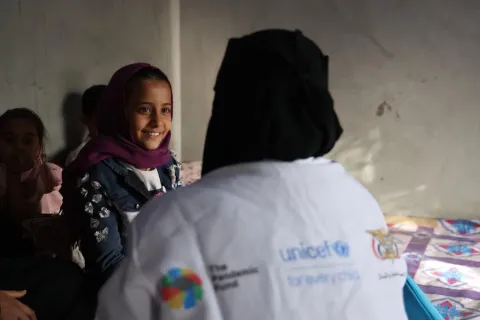
When Maryam, a community health and nutrition volunteer, knocks on a family's door in Al-Hajel village, she is often searching for the first signs of malnutrition before they become life-threatening. Like thousands of community health and nutrition volunteers (CHNVs) and mobile teams across Yemen, she moves from house to house, supporting pregnant and breastfeeding women, identifying vulnerable children, and connecting families to lifesaving care.
Every household visit Maryam makes, whether to a village home or a displacement camp, is an opportunity to protect a child's future. Since becoming a volunteer in 2021, she has dedicated herself to serving her community, building trust with families and helping them make informed decisions about their health and nutrition despite the economic hardships many face.
“My work is not limited to a specific place; I connect with people directly from house to house,” says Maryam. “In every field round, I look for those suffering from malnutrition, focusing primarily on children who need special care.”
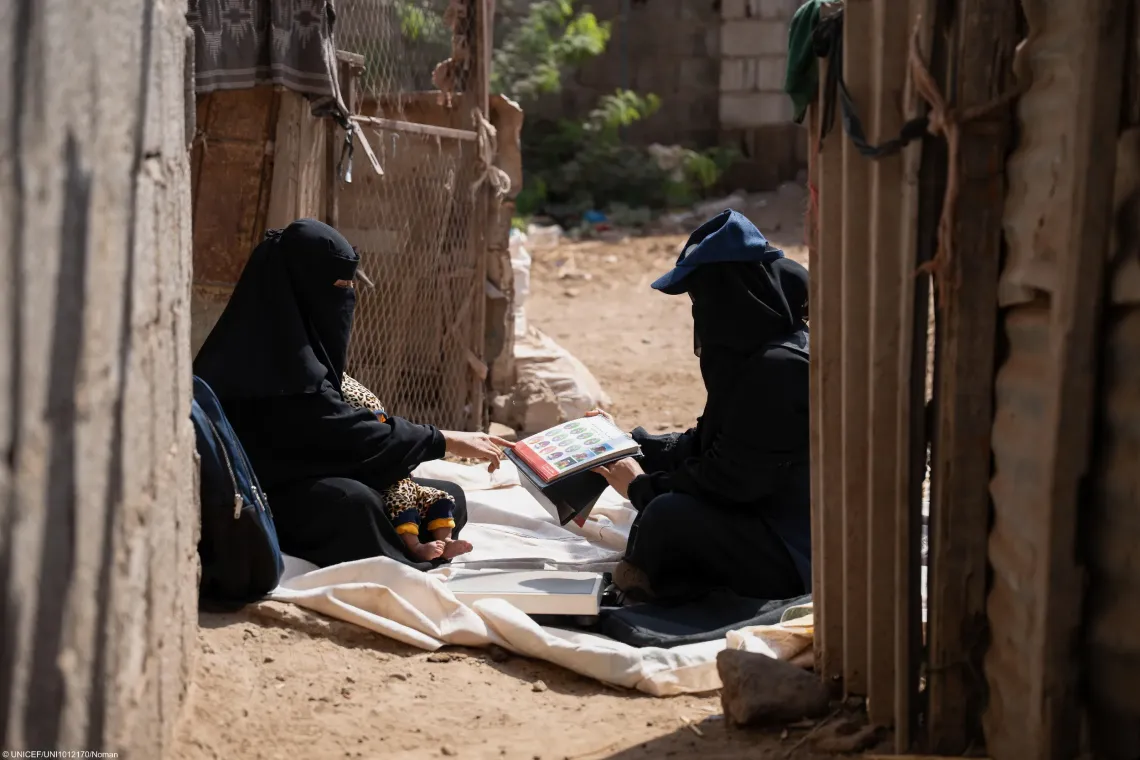
Her role extends beyond identifying cases. She follows up with pregnant and breastfeeding women, promotes exclusive breastfeeding, provides health and nutrition counselling, and refers children who need specialized treatment to health facilities.
“Sometimes the challenge lies in difficult living conditions,” Maryam explains. “When I advise a mother on the necessity of good nutrition during pregnancy, providing nutritious meals can be a hardship. In these cases, I don't just give theoretical advice; I try to provide practical solutions that fit their circumstances.”
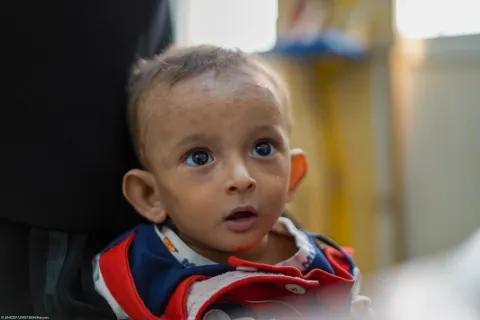
One of the families Maryam recently supported was that of four-month-old Ibtisam. Her mother, Fawzia, struggled to provide enough nutrition during pregnancy and after childbirth as the family coped with financial hardship. During a visit, Maryam identified concerning signs and began supporting the family with counselling and guidance.
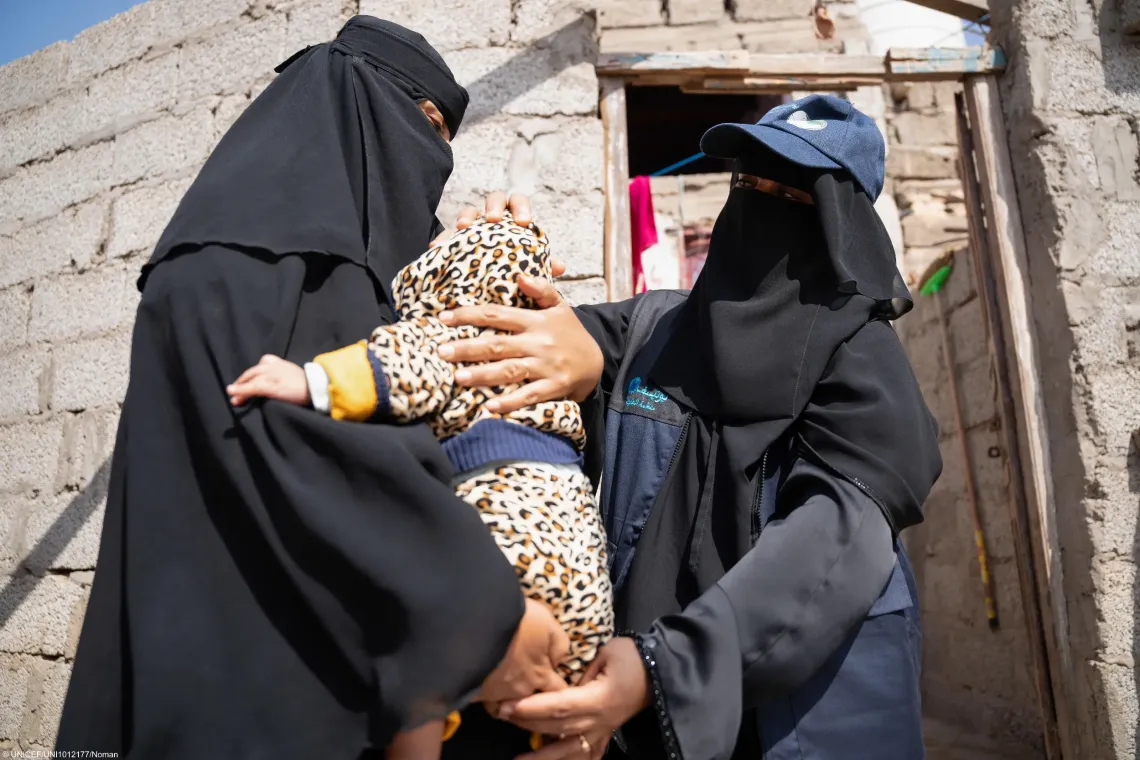
“When the volunteer, Maryam, visited us, she provided us with very important guidance and instructions,” says Fawzia. “She made me aware of many things I was ignorant of, and I am now trying hard to follow her advice. The result is that my daughter is constantly improving.”
In nearby Al-Hamra village, another volunteer, Haifa, has spent the past five years serving her community. Like Maryam, she conducts regular household visits, monitoring children’s growth, educating parents, and identifying malnutrition before it becomes life-threatening.
“As a volunteer, my mission is to be the first line of defense,” Haifa says. “I look for the early signs of malnutrition and keep a close eye on healthy children who might suddenly fall ill, referring them immediately to the nearest health center when needed.”
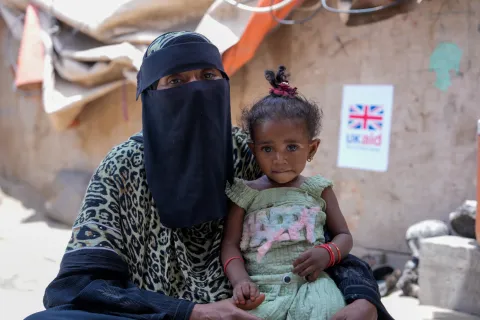
Among the children she monitored was two-year-old Zainab, whose recovery from severe acute malnutrition followed months of careful follow-up and support. Working closely with her family, Haifa helped ensure that Zainab received the care and nutrition she needed while also strengthening her mother’s understanding of healthy feeding practices.
For Zainab’s family, the improvement has been life changing.
“Today, I can truly feel a great improvement,” says Fatima, her mother. “She has started to eat regularly again. She now has about three to four meals a day. Seeing her finally eating and recovering has been a huge relief for me.”
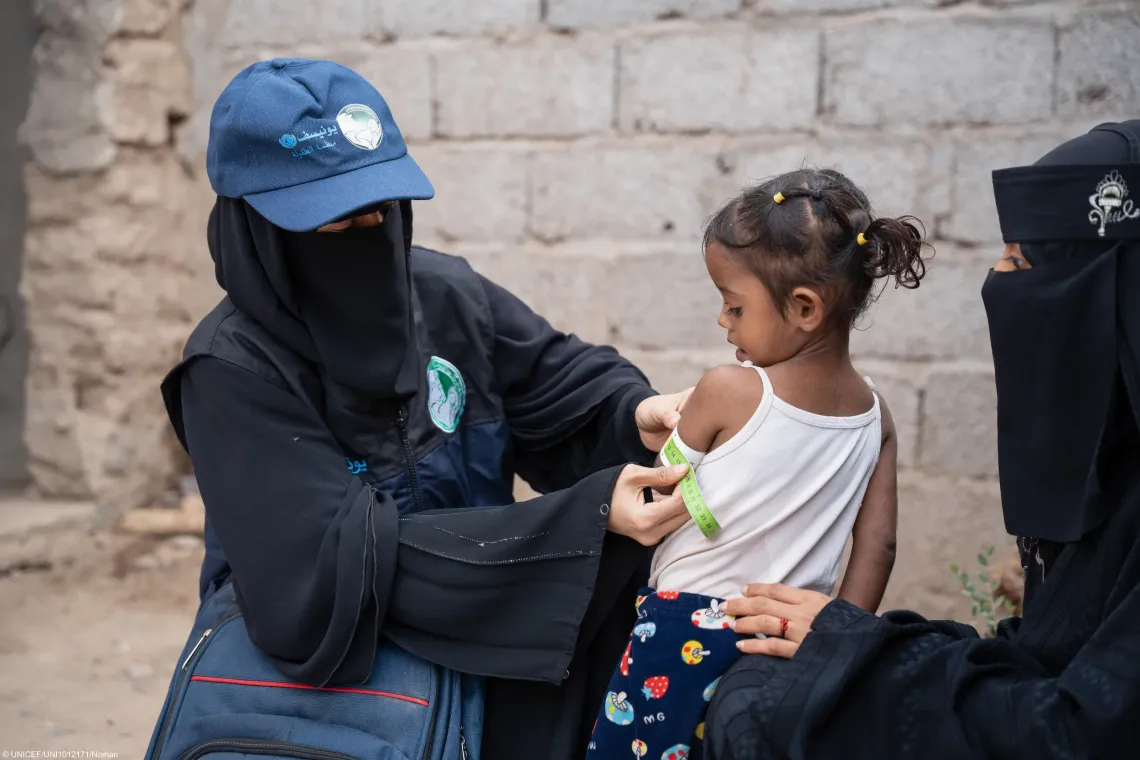
Haifa says the real impact extends beyond the children she helps recover.
“That mother then becomes an advocate herself, teaching her neighbors the same prevention steps she used to save her child,” she says. “It creates a beautiful ripple effect of awareness throughout the village.”
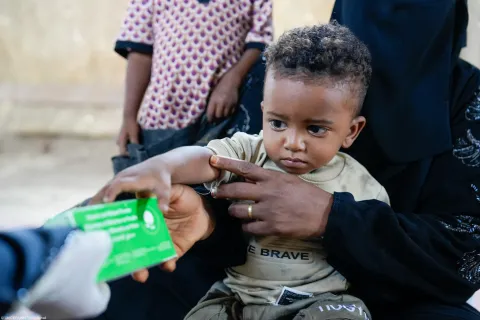
Across Yemen, community health and nutrition volunteers and mobile teams serve as a vital bridge between families and health services. They screen children under five, support pregnant and breastfeeding women, refer severe cases for treatment, and promote practices such as breastfeeding, immunization, hygiene, and disease prevention. In hard-to-reach communities, their presence often means that children receive help before it is too late.
In Al-Hajel village, Maryam says the changes are becoming increasingly visible.
"Malnutrition was widespread and sometimes led to death, but today we have been able to save many lives and significantly improve the health situation," she says.
Sustaining this frontline network requires continued investment. With support from The Bezos Family Foundation to UNICEF's Child Nutrition Fund (CNF), UNICEF is strengthening community-based health and nutrition services across Yemen. The partnership supports 28 mobile health and nutrition teams operating in nine governorates, including Marib, Lahj, Abyan, and Aden, and more than 8,600 CHNVs across ten governorates, including Taiz, Hadramaut, and Shabwah. Together, they are helping extend essential health and nutrition services to vulnerable communities and bring lifesaving care closer to families.