Transforming Lives Through Clean Water: UNICEF and KSrelief's Humanitarian Endeavor in Yemen
Addressing the critical water and sanitation challenges faced by the conflict-affected communities in Yemen

- English
- العربية
In the spring of 2022, the King Salman Humanitarian Aid and Relief Centre (KSrelief) and UNICEF embarked on a joint implementation program aimed at addressing the critical water and sanitation challenges faced by the conflict-affected communities in Yemen.
This project was titled "Providing Potable Water Supplies and Human Use for the Governorates of Marib, Al Jawf, Hajjah, and Sa'ada." The purpose was to not only quench thirst and prevent waterborne disease in the rapidly expanding residential areas, but also to literally breathe life into communities grappling with conflict, return children to schools, and give the whole country hope for revival after many years of a violent conflict.
The initiative, which took place from June 2022 to June 2023, involved a range of vital activities carried out across multiple governorates in Yemen. Primary objectives were to ensure access to a safe water supply, promote sanitation and hygiene practices, and support the resilience of local institutions and communities.
The essence of the project and implementation
Amidst the ongoing crisis and its impact on the already weakened social and economic institutions and healthcare system, the people of Yemen faced a dire situation regarding access to clean drinking water.

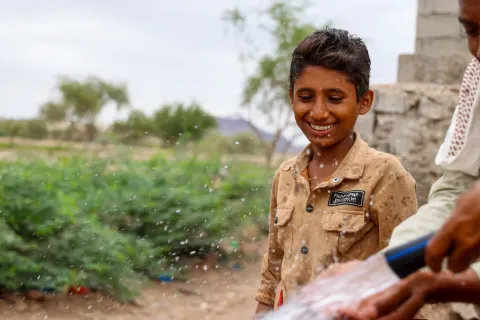
"Before this project was implemented here, the situation with water was absolutely horrific," says Sadeq Saleh Al Najri, Director General of the Local Corporation for Water and Sanitation Sa'ada Governorate. "People were suffering as they had to fetch water from distant wells and paid insanely high prices for this inadequate water supply. Some had to pull their children out of school in order to provide water for their families. I believe now that this project has started to work and over 2500 families will have access to clean and safe water in Sa`ada, the main beneficiaries will be the children, as they are able to go back to school," he adds.
The initiative was supported by a generous contribution of $5 million from the King Salman Humanitarian Aid and Relief Centre Fund and, in general, was associated with UNICEF's assistance to Yemen in the implementation of emergency water, sanitation, and hygiene (WASH) interventions alongside long-lasting, affordable solutions that increase the resilience of local institutions and communities and establish links between humanitarian and development programming by installing solar systems that naturally have low operating costs and high efficiency in the region.
Rehabilitation and Construction of Water Supply Systems
The project involved the rehabilitation and expansion of urban and rural water supply systems in target areas.
Seven water supply systems were successfully rehabilitated in Marib, Saada, and Al Jawf governorates, surpassing the initial target and providing access to safe water for an estimated 132,536 people.
"This project finally gave my family access to sustainable water supply,” says Mahmoud Saleh Al-Abdali, a 48-year-old resident of Al-Salam neighbourhood in Marib Governorate and a father of five. “Before this project was implemented, we could only get water from the water trucks. The owners of those trucks ask unbearable prices for their services and still sometimes sold us salty water, which was impossible to use," he remembers. "Now we have clean drinking water. We are very grateful to the King Salman Humanitarian Aid and Relief Centre and UNICEF for standing by the Yemeni people.”

Along with the originally planned construction and rehabilitation projects, sub-projects were adapted in response to changing circumstances. All the efforts helped to distribute the funds in the most efficient manner, achieve maximum coverage, and ease the financial burden on households most affected by the lack of clean water.
"Now people pay about 200 rials per cubic meter, which is a huge relief for them as the price for water brought by the trucks could exceed 1500 rials per cubic meter," explains Safwan Ahmed Abed, the supervising engineer of the Mahda water project in Al-Safra district of Saada Governorate.
Implementing solar power systems
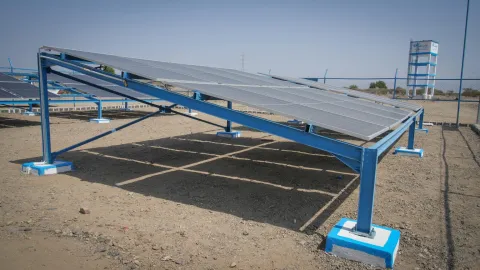
The various solarized water supply projects helped ensure sustainability and reduce reliance on fossil fuel-based water pumping. Altogether, it allowed making the water supply stable and independent from the fluctuations of unstable oil prices.
In this effort, two phases of solar pumps were successfully implemented in the Al Nawa'em and Qala'at Hameed Al-Gharbi water supply systems, benefiting an estimated combined total of 145,001 people. These installations provided a more reliable and environmentally friendly source of clean and safe water.
"The solar power systems work during the day, accumulating energy," explains engineer Safwan Ahmed Abed. "This energy then provides an uninterrupted water supply for the people."

Providing water supply to internally displaced people
One of the project’s most significant achievements was connecting the internally displaced people (IDP) settlements to existing water supply systems. It helped to eliminate the need for water truck services, which provided an unstable and often overpriced supply of water to the IDP sites, which were growing rapidly as the hostilities aggravated all over the country.
This strategy offered 11,100 IDPs in Deer Ghaitha, Al Mutayhera, Shawqabah, Jabal Al Mayanah, and Al-Khudaish access to sustainable water sources, thus improving living conditions.
"Implementing such projects in Marib City has become essential due to urbanization, population density, and the ongoing displacement. The population of Marib City has grown from about 34,000 people before the conflict to over 3 million in just a few years. The impact of such projects on displaced people and the community cannot be overrated. It provided sustainable water supply for the IDP sites, the host community in Marib City, and the cities in the governorate."
Improvement of Hygiene and Sanitation in the Affected Areas
The project included the construction of emergency latrines with cesspits and three cesspit pits in Majzer district and Marib city, benefiting a total of 6,986 people.
The enhanced sanitation infrastructure contributed to preventing disease outbreaks and improving the overall health and well-being of the affected population.
"The project is very important to me, my family and the whole community. It solved many problems and provided basic life services," says Abdulhakeem Mohammed Abdulmalik, a 25-year-old resident of Marib City, adding that he hopes to see continued attention to sanitation in the city.

In addition, the King Salman Humanitarian Aid and Relief Centre and UNICEF's efforts extended beyond physical infrastructure, encompassing extensive hygiene promotion activities. Over 350,000 beneficiaries were reached through hygiene promotion campaigns, interactive activities, and the distribution of hygiene kits. This initiative played a crucial role in raising awareness about waterborne diseases and preventing the breakout and spread of COVID-19.
Putting People’s Lives First
While the project's achievements are commendable, its true impact lies in the lives it transformed. Families, children, and individuals who once faced uncertainty every time they sought water now have a glimmer of stability in their lives.
"This project finally gave us some stability," admits Fatima Al-Khalid, who lives in Alzira'ah District of Marib Governorate and works at Al-Jawf Radio Station. "Stability is crucial when it comes to such vital things as water supply. We no longer worry about running out of water, looking for an available water truck, or waiting for its owner to come at his own convenience. Now the water is always available, and we feel secure."
Access to clean water isn't just a necessity; it's a lifeline that connects communities with a brighter future.
The King Salman Humanitarian Aid and Relief Centre and UNICEF's initiative underscores the power of humanitarian collaboration in restoring dignity and hope to those ravaged by conflict. Beyond pipes and pumps, it's about rekindling the human spirit, proving that even in the face of adversity, compassion and collective action can turn the tide for communities in need.