Transforming the lives of 9,000 residents with safe and sustainable water sources
A water project in Kuna, Sa'ada provides hope for residents' return
- English
- العربية
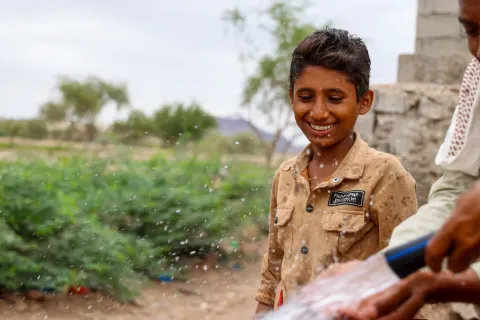
In As Safra’a, a district in Saada governorate, over 9,000 people in Kuna will now have access to safe and sustainable water resources following the construction of solar-powered wells and water tanks as well as improved water networks. That means women and children will no longer have to walk long distances carrying heavy jerry cans and families will spend less money on water. Residents are pinning hope that this will lead to the return of people who left the community and more educational opportunities for children instead of fetching water.
Hope for residents’ return
Saif Muhammad Al-Amri, a resident of Wadi Kuna says, “Before the rehabilitation of the water network, the situation was very challenging due to water scarcity and the difficulty in accessing clean and safe water sources.” He added, “Many residents were displaced because they struggled to secure their water needs and had to purchase water from water tankers, adding a financial burden to their already strained incomes, which were barely enough to cover their basic necessities.”

“Today, after years of hardship, water has started to flow easily into our homes, I hope the people who were displaced due to water scarcity will return because water has become readily available.”
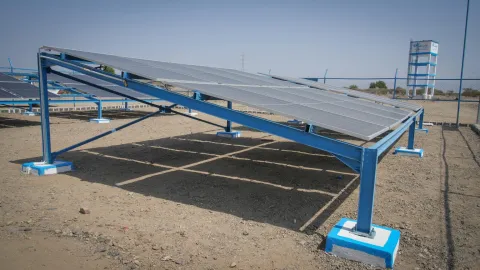
The project installed a 45-kilowatt capacity solar-powered system for the main well and two water pumps, each with a capacity of 30.42 kilowatts. To further enhance water storage capacity, two water reservoirs with the capacity of 100 m3 and 50 m3 were constructed. The water network was also extended to cover a distance of 11,648 meters; this included the construction of new pipelines and the extension of existing ones, allowing for a wider reach and improved access to clean water.
Saving time and effort
Residents of Wadi Kuna used to rely on surface wells and fetch water from distant areas to meet their water needs. Things even took a turn for the worse after the water project came to a halt in 2016, exacerbating the hardships caused by water scarcity and the increased expenses associated with buying water from water tankers.
Abdul Rahman Ali Hashfal, a resident of Wadi Kuna, highlights the positive impact of the project. “The project provided us with access to clean water, saving us both effort and money,” said Abdul Rahman, who is the breadwinner of a family of 15. “Like most of the residents, I couldn't afford to purchase water from tankers and my family had to struggle to find alternative solutions. The project has significantly improved my life and the lives of other residents, sparing us many health problems and bringing stability to the region.”


With funding from the Qatar Fund for Development, UNICEF supported the Kuna water project in As Safra District. This initiative led to the increase of the per capita water consumption per day to 20 liters, compared to the previous 5 liters. The cost of a cubic meter of water is expected to decrease from 5,000 Yemeni riyals (US$ 5) to 250 Yemeni riyals (US$ 0.5).
“The project has truly impacted the lives of residents, particularly in reducing the hardship faced by children and women in fetching water,” says Abdul Khaleq Ali Al Ameri, a local resident. "We no longer struggle for water, as clean water has now become available in homes in ample quantities.”