In Yemen’s Battle Against Malnutrition, Every Minute Matters
Conflict, poverty, and limited access to healthcare have left millions of children at risk
- English
- العربية
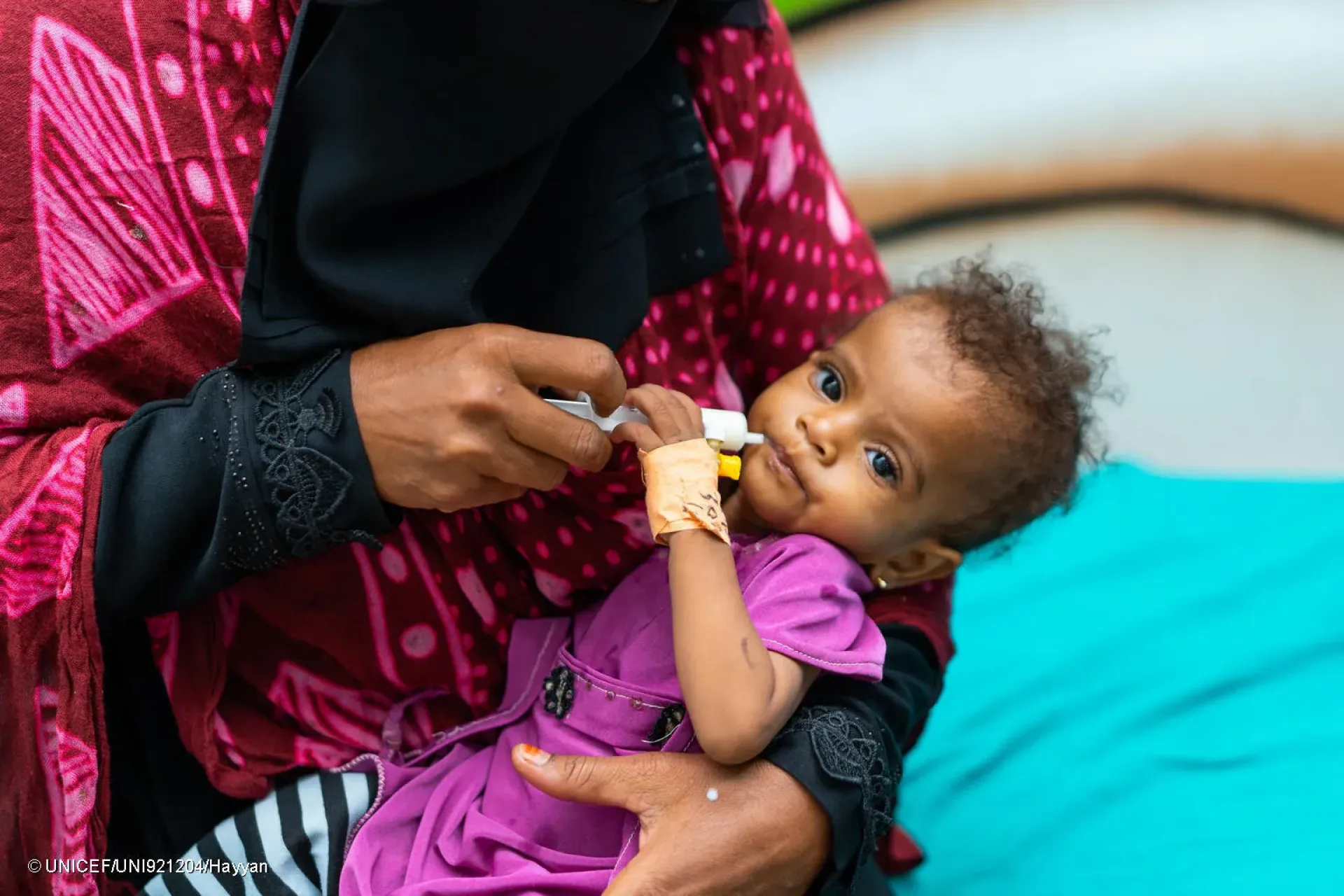
One-year-old Nadia was rushed to a small health center by her mother, Mariam, after repeated vomiting, high fever and difficulty in breathing.
“She couldn’t move at all; she was so weak,” Mariam recalled. “I was terrified I might lose her.”
In Al-Khawkhah district, in the coastal Yemeni governorate of Hudaydah, western of Yemen, the Therapeutic Feeding Centre (TFC) has become a beacon of hope for families who arrive with children like Nadia, on the edge of survival. Conflict, poverty, and limited access to healthcare have left millions of children at risk, and in remote areas like Al-Khawkhah, a single functioning center can mean the difference between life and death.
Nadia’s family comes from very limited means. Her father works using his motorbike to transport people for a small income, and the family could not afford the trip to the Centre. The cost of transportation was 4,000 riyals (2.4 USD), an amount they did not have. Neighbors and kind people in their community contributed the money so that Mariam could bring her daughter for treatment.
Fighting for Survival
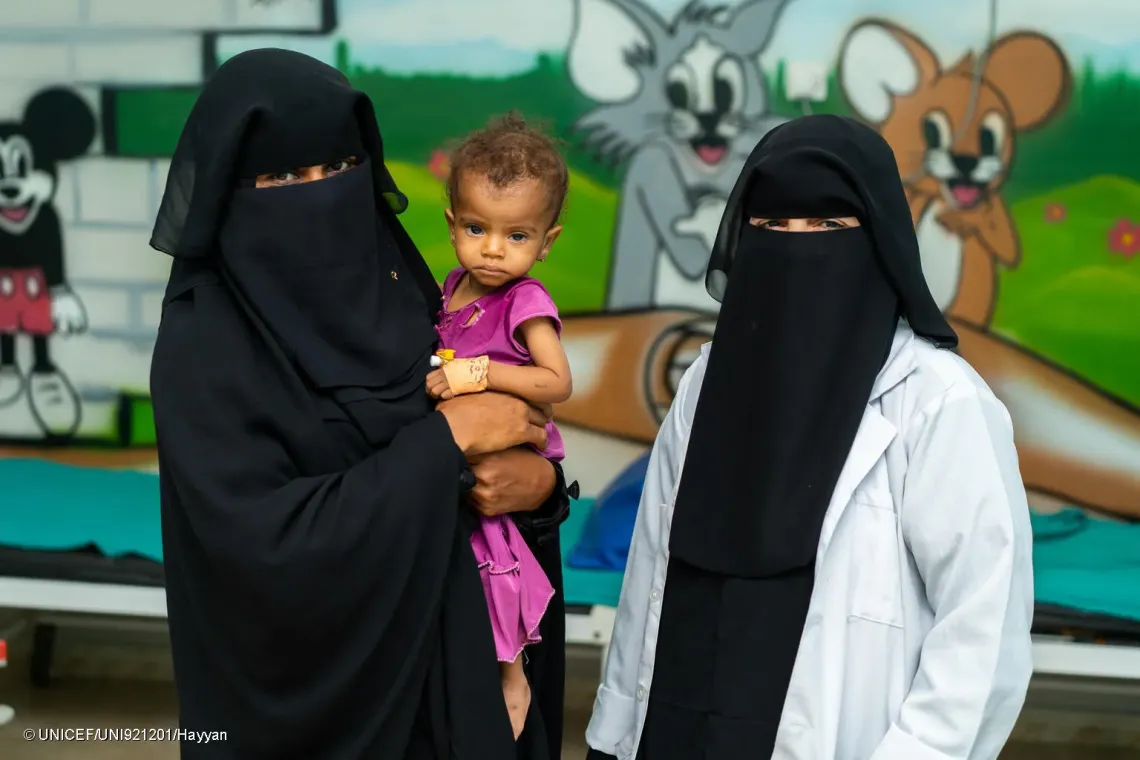
When Nadia arrived, her condition was alarming. “She had severe fever, vomiting, and signs of pneumonia,” explained nurse. Ahlam, one of the health workers at the Centre. “Her case was critical. Without immediate intervention, her life could have been at risk.”
Dr. Abdullah, a senior physician at the Centre who has been treating malnutrition for over seven years, added: "Cases like Nadia’s are unfortunately too common here. Every hour counts, and immediate action can literally save a child’s life."
The medical team acted quickly, admitting Nadia into the TFC ward and beginning emergency care. She was given therapeutic milk, strong antibiotics, and closely monitored for infections and dehydration. Gradually, over the course of seven days, her fever subsided, her breathing stabilized, and her energy began to return.

“Typically, cases like Nadia’s take time to respond, but after 7 days, she began showing positive signs, improved appetite, stable temperature, and a small gain in weight.”
The nurse Ahlam emphasized the human side of treatment: "The treatment is not only about medicine. It’s about comforting the child, supporting the mother, and ensuring the family feels they are not alone."
Mariam never left her daughter’s side. “I am grateful. My daughter started to smile and play again,” Mariam said. “I stayed with her every night in the same room. The doctors cared for her as if she was their own daughter.”
Beyond Treatment
Once discharged, Mariam should continue to follow-up visits at the Outpatient Therapeutic programme (OTP) in a nearby primary health Centre, and to receive essential guidance from the health workers. “They show me how to feed my daughter properly,” said Mariam, “I know how to prevent this from happening again.”
Health workers stress that infant and young child feeding (IYCF) education is as vital as the treatment itself. “Too often, families stop feeding or breastfeeding during illness, which worsens malnutrition,” nurse. Ahlam explained. “Part of our mission is to raise awareness so these children can stay healthy at home.”
Challenges and Hope
Like many health facilities in Yemen, the Al-Khawkhah TFC faces daily obstacles like limited space and increasing number of severe malnutrition cases with complication that put constant pressure on the health workers.
Dr. Abdullah described the strain: "We often see more children than we can accommodate. Each bed is precious, and every delay in care can have serious consequences. Despite this, our team works tirelessly to save as many lives as possible."
“We need more capacity, especially another children’s ward,” Ahlam added. “The cases are increasing, and every bed can mean another life saved.”
Despite these difficulties, the team’s commitment is unwavering. “When we see children leave healthy, it gives us strength to continue,” Ahlam said.
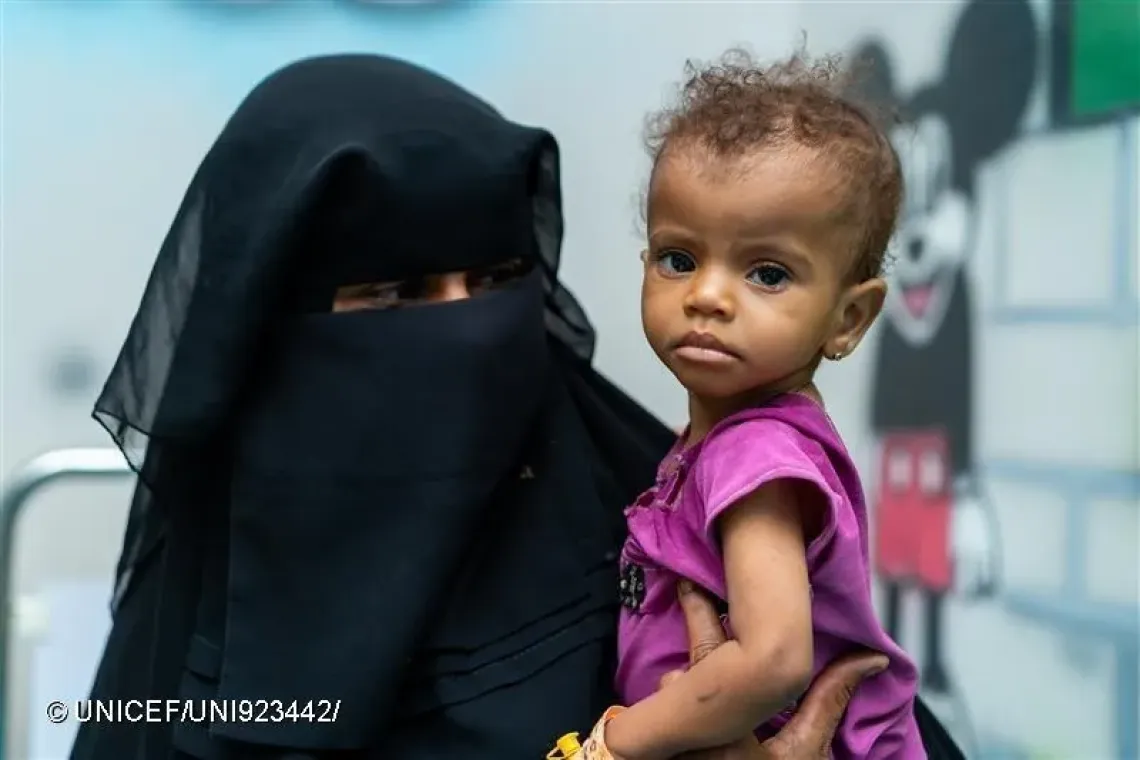
Today, Nadia is back in her mother’s arms, stronger, healthier, and smiling. “This health center [TFC] saved my daughter’s life,” Mariam said. “They cared for her with love, and they gave me hope.”
Dr. Abdullah reflected on moments like these: "Seeing a child recover after days of critical illness is both humbling and motivating. Every success story, like Nadia’s, reminds us why we continue this work despite the challenges we face daily."
UNICEF was able to provide full support to the Therapeutic Feeding Center in Al-Khawkha since November 2024. The support included provision of operation costs, staff incentives, therapeutic milk and RUTF for malnourished children, meals for caregivers, and laboratory support. This direct assistance was possible thanks to UNOCHA (CERF), who supported from Nov 2024 until October 2025. From November 2025 to date, UNICEF is able to continue supporting the TFC thanks to the Foreign, Commonwealth & Development Office (FCDO) of the UK Government.