Health and Hope
The Importance of Health Care in Remote Communities

- English
- العربية
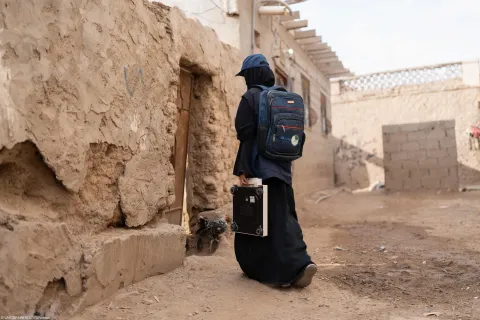
Residents of Azzitan village in Taiz face significant challenges in accessing healthcare due to rough terrain, long distances, and the harsh financial and living conditions exacerbated by nearly a decade of conflict. In response to these pressing needs, with funds from the World Bank, the UK Foreign Commonwealth and Development Office, the European Union, the Pandemic Fund, and Canada, UNICEF has trained 3,600 health workers to deliver essential health services across 90 districts in Yemen, focusing on reaching the most remote and underserved areas. Bardees Abdullah, a 34-year-old community health worker, is one of the many who joined and benefited from this training. She has begun providing essential health services in her village of Azzitan and the surrounding villages, making a significant impact on the health and well-being of her community.
“I decided to become a community health worker because I saw how much the villagers were suffering. Many are unable to reach health facilities for proper treatment due to poverty and the high costs of transportation."

The services provided by Bardees have had a profound impact on around 500 families. By walking door-to-door, she has successfully reached these families with a variety of health and nutrition services tailored for pregnant women, new mothers, and children. In addition to direct support, she also educates them about essential health and nutrition practices and the importance of taking the vaccines.
“Most people are satisfied with the services I help providing, particularly in the areas of prenatal and postpartum care, as well as health and nutrition for children under five. However, many still do not fully understand the serious dangers that malnutrition poses to pregnant mothers and children under five, which can ultimately lead to life-threatening situations.”

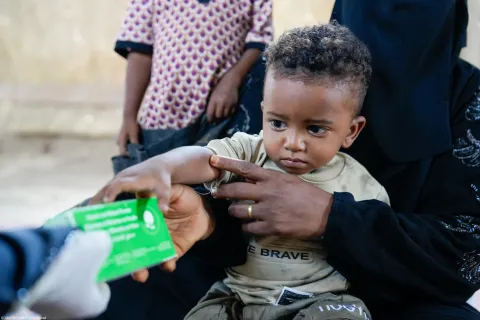
During a field visit in Azzitan village, Bardees measures the Mid-Upper Arm Circumference (MUAC) of a child while standing beside her mother. Drawing on the skills she acquired through her training, Bardees assesses the health of the family members and takes necessary actions.
“When I visit a household, my first step is to check the condition of the mother and her children. If the mother is pregnant, I take her blood pressure and assess her nutritional status. I also look for any complications in the children and measure their Mid-Upper Arm Circumferences (MUAC). If I notice any concerns, I take immediate action by providing any available medication or referring them to the health center if further treatment is required.”

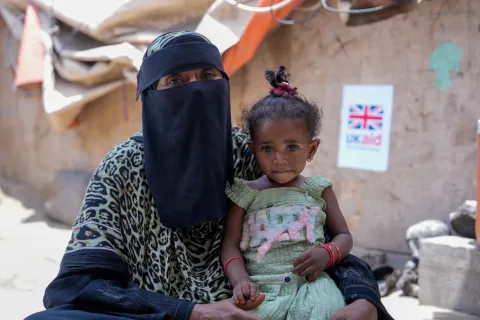
Shadiah Abdullah is one of the mothers Bardees has supported in the same village. After noticing that Shadiah was experiencing a serious health issue following the birth of her child, Bardees promptly referred her to the hospital for further care.
"The hospital is far from us, and reaching there is difficult due to the rough road. I had no idea that my life was at risk after giving birth had it not been for Bardees, who insisted that I should seek treatment quickly. The midwife told me that I would not have survived if I had waited any longer. Bardees would follow up with me weekly during my pregnancy and provide me with many health instructions. I am grateful to Bardees for saving me from death”.

In addition to her outreach activities, Bardees supports the health center by providing different services two days a week. This enables her to reach more patients whom she cannot visit during her field visits.
“I assist my colleagues at the health center with their tasks. For example, I help distribute nutrition supplies, measure the Mid-Upper Arm Circumference (MUAC), and weigh the children.”

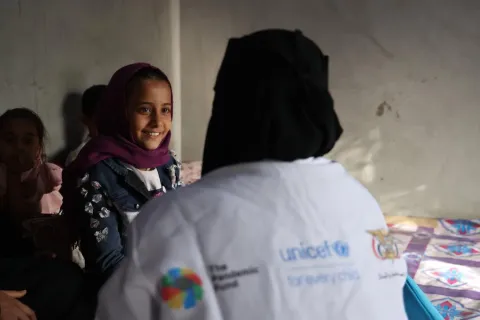
Bardees is actively working to educate and raise awareness among the women in her village in Taizz governorate. She plays a vital role in educating the community about common diseases, preventive health measures, nutrition, immunization, and hygiene practices. Specifically, she conducts educational sessions targeting pregnant and breastfeeding mothers, where she shares essential information on proper breastfeeding techniques and imparts the knowledge she gained during her training.
“It’s my responsibility to conduct educational sessions on common diseases, immunization, and nutrition. This is a remote area where vaccines are rarely delivered, and many people don’t understand their importance. There are misconceptions about vaccines, with some believing they are harmful to their children. However, after these educational sessions, mothers have begun to seek vaccinations for themselves and their children”.

Bardees's steadfast commitment and dedication underscore the vital role of healthcare services in remote areas, showcasing the transformative impact that devoted health workers can have on the well-being of the communities they serve. Her positive influence has significantly improved the lives of those around her, emphasizing the importance of accessible healthcare.