Community Health Workers Network: A life-saving initiative for mothers and children in rural Yemen
The Community Health Workers Network aims at providing an integrated primary healthcare services package to children and their mothers who lack basic health services across 90 rural districts in Yemen

- English
- العربية
Nine years of conflict in Yemen have left more than two-thirds of the country’s population in desperate need for humanitarian assistance. The conflict has led to a deteriorating economic situation, growing food insecurity, and recurring disease outbreaks that have brought Yemen's health system to near collapse. Yemen Humanitarian Needs Overview 2024 indicates that 17.8 million individuals in Yemen will require health assistance.
In response to these challenges, especially with regards to the accessibility to health services, UNICEF developed the Community Health Workers program. The program provides integrated primary healthcare services for children and women in Yemen’s remote communities who lack access to health facilities. This was accomplished by training more than 3,600 female community health workers in 90 districts, as well as providing financial incentives and medical supplies.
Supporting a network of community workers
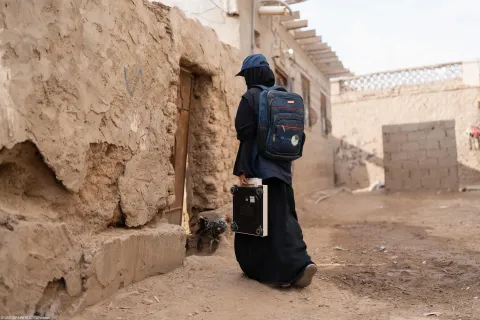
Soon after the idea of a community health workers network crystallized, UNICEF supported the establishment of the network in partnership with Yemen's Ministry of Public Health and Population. Both organizations saw the initiative's potential to restore the structure of the country's health system and improve life for thousands of mothers and children living in hard-to-reach areas. An early priority for the program was to ensure the mobility of community health workers and the accessibility of health services; today, each community health worker is responsible for providing services to around 1,000 people at their homes.

Raising health awareness and screening for malnutrition
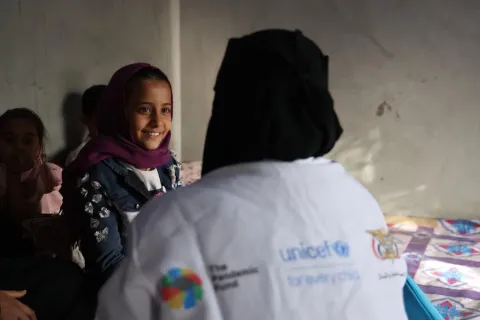
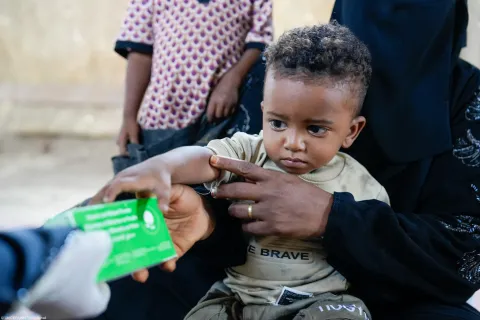
Thirty-four-year-old Ulfat Saeed serves as a community health worker in the village of Bayhan in Tuban District of Lahj Governorate, southern Yemen. She makes home visits to examine children and measure their MUAC, with the aim of early detection of malnutrition and referring complex cases to the nearest health centre. Ulfat also examines pregnant and breastfeeding women, as well as conducts awareness and education sessions on child nutrition, vaccination, prenatal and postnatal care, danger signs for mothers and children, and maternal nutrition. “The area is remote and deprived of health services, and pneumonia, measles, malnutrition, and diarrhea are widespread,” she says, “so I had to work to serve my community.”

Supporting immunization activities
Residents in rural areas face an additional challenge: lack of health awareness and the spread of misinformation about vaccines and malnutrition. Ulfat explains: “Before the project, people refused vaccines and did not know much about malnutrition and its risks, which put their children’s lives at risk.” She adds, “The health awareness information I share with the mothers has positively impacted the society. Whenever I visit people, I realize that they have become better informed about their health, the health of their children, and the importance of immunization to prevent diseases. This makes me very happy.”
Ulfat recalls that there have been several cases of cholera in her area, which have resulted in deaths, in addition to outbreaks of dengue and mumps. However, she reported these cases promptly to the Health Office to prevent further spread of the diseases and conducted vaccination campaigns to control the situation. Thanks to these efforts, many cases were prevented.

Detecting pregnancy and childbirth complications
Female health workers understand the purpose of their efforts and take pride in their expertise and abilities to help their communities. These efforts include the early detection of diseases and complications of labor and childbirth so appropriate referrals can be made. Bardees Abdullah, 34, works in the village of Azzitan in Jabal Habashi District, Taizz Governorate. “I decided to work as a community health worker in order to help people and provide therapeutic and preventive measures to mothers against common diseases or complications that may accompany pregnancy and childbirth," she says. The project has made a big difference in the community. Now primary health care services are more available. Bardees adds, "I leave my house early in the morning. Sometimes, I walk for two hours to reach remote areas. It is not easy, but the people have welcomed me after I gained their trust, and the community has become very responsive, which makes me happy."

Knowledge prevents tragedies and saves lives
“Community health worker, Bardees, followed up on my condition during pregnancy and provided me with health advice,” says Shathia Alwan, a resident of Azzitan village in Taizz. “After I gave birth, Bardees visited me and discovered that I had puerperal fever and referred me to the hospital on time. This saved my life." Shadhia continues, “The role of female health workers is crucial in changing society’s behavior. We have become more concerned with cleanliness, we take care of our children, and we are always keen to vaccinate them.”

Maternal care and counseling
Sumaya Ahmed Salah, 40, lives in Al-Tha’alab village in Tuban District, Lahj Governorate and participated in the training program for community health workers. “The situation in the region is very complex,” she explains. “Children and pregnant and breastfeeding women suffer from malnutrition, and they may not receive the necessary services at the right time." She continues, "The training enabled me to help the community through awareness, education, and detection of malnutrition cases… As health workers, we provide primary health care services, care for mothers and pregnant women, and help with obstetrics, as well as providing advice on family planning and breastfeeding.” Sumaya emphasized the significance of her services, and how the community perceives them positively. She recounted an instance where a family initially declined medical treatment and did not believe in seeking medical attention. However, with increased awareness and frequent follow up visits, Sumaya was able to persuade them to seek medical help. As a result, the mother’s and the newborn's lives were saved.

Helping the community overcome infectious diseases and epidemics
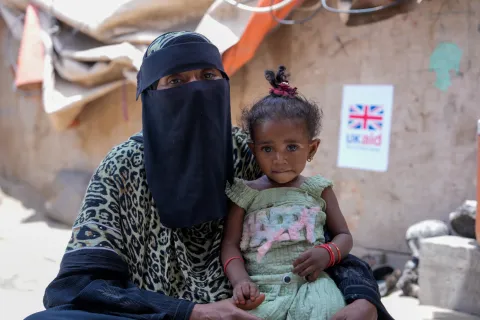
When communities lack basic health services, it's often vulnerable children and women who bear the burden. Soa’dah Ahmed, a 23-year-old community health worker in the Ash Shihr area in Hadramaut, explains: “People in Ashway village suffer from deteriorating health conditions, the spread of infectious diseases, and cases of malnutrition, as there is no health facility nearby in the area. The program allowed me to train and qualify to provide health care, nutrition, and first aid services to children and women.” She continues, “We conduct awareness and education sessions about the importance of vaccinating children, the dangers of malnutrition, and the spread of infectious diseases and epidemics such as polio, measles, and cholera.”

Detecting cases of malnutrition and working to treat them
Thanks to home visits by community health worker, Reem Saleh, 30, in the Mansoura area of Ash Shihr in Hadhramaut, it was discovered that 18-month-old Enas was suffering from malnutrition. "My daughter had no appetite and refused to eat until her body became emaciated," the girl's mother explains. “During the health worker Reem’s visit to the house, she examined my child, weighed her, said that she was suffering from malnutrition, and referred her to the health center for treatment. After we returned home, Reem followed up on my child's condition until her health improved." Reem says, “Thanks to the program provided by UNICEF, I am able to serve my community. I can detect cases of malnutrition, vaccinate children, measure blood pressure for pregnant women, and provide first aid to mothers and children.”
Thanks to the funding from donor from the World Bank, the UK Foreign Commonwealth and Development Office, the European Union, the Pandemic Fund, Denmark, and Canada for these projects, UNICEF can continue to support the expansion of basic healthcare services for children and women in Yemen's most remote communities.