Alarming rates of stunting threaten nearly half Yemen’s children
Story of Bothaina and her mother reveals harsh reality for millions in Yemen
- English
- العربية
While global rates of stunting are decreasing globally,[1] the prolonged conflict and economic collapse in Yemen made it difficult for families to cope. Statistics[2] reveal that nearly half of Yemen’s children under 5 are chronically malnourished, with stunting rates stagnant over the past decade.
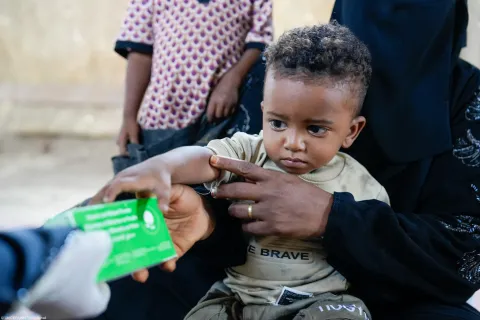
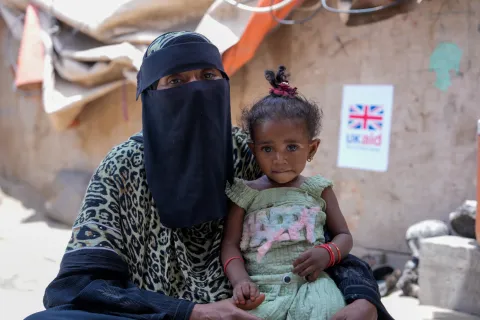
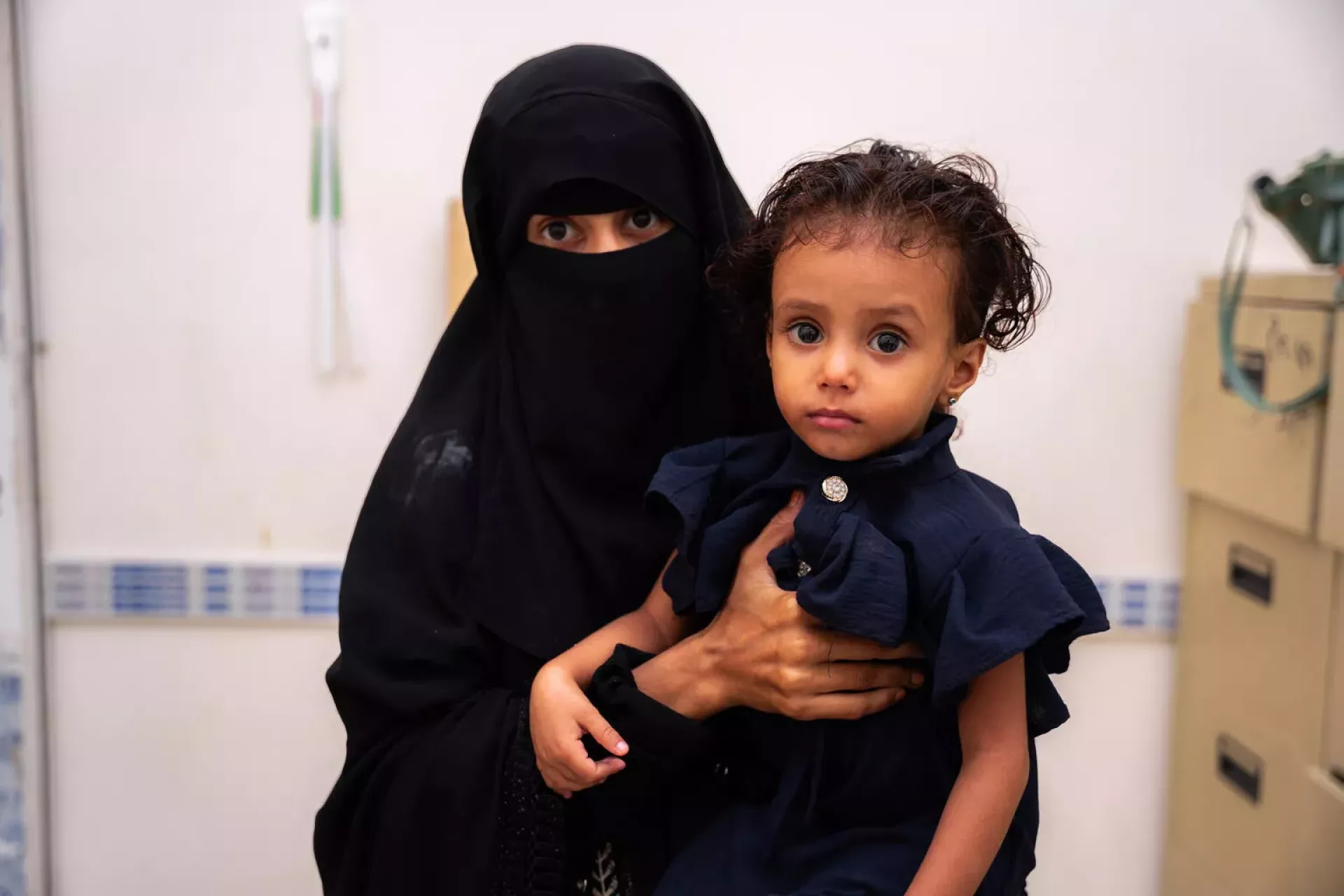
Two-year-and half old Bothaina of southern governorate Abyan is one of Yemen’s stunted children. When her mother took her to the hospital recently, Bothaina was diagnosed with stunting- as she is shorter than normal for her age. She was also diagnosed with severe acute malnutrition for having severely lower weight as well.
Stunting is the condition when height-for-age is more than two standard deviations below the WHO Child Growth Standards median. It is the result of chronic or recurrent undernutrition, usually associated with poverty, poor maternal health and nutrition, frequent illness and/or inappropriate feeding and care in early life[3].
Sadly, Bothaina faced that during the first 1000 days of her life. This first 1,000 days of a child’s life – from conception to their second birthday – are crucial for growth and cognitive development. This formative period shapes not only physical health but also intellectual potential. For Bothaina, that crucial window was marked by scarcity.
Bothaina’s mother, Mariam, who is only 19, had to carry a heavy burden from the time she was about 16. Living with her husband’s family in a small, shared house, she tries to provide for her two daughters, Bothaina and 10-month-old, Bonah – who is also stunted and severely acutely malnourished – while expecting her third child. Their income, which is dependent on her husband’s sporadic work as a motorcycle driver, barely covers the basics.
[1] Stunting rates decreased from 26.3% in 2012 to 22.3% in 2022 globally. In the MENA region, rates decreased from 26% to 18 in 2022. Pennsylvania State University and UNICEF, Regional Nutrition Situation Analysis – Middle East and North Africa (MENA), UNICEF MENA, 2024.
[2] UNICEF, Yemen Multiple Indicator Cluster Survey, Statistical Snapshots 2022–2023.
[3] https://www.who.int/news/item/19-11-2015-stunting-in-a-nutshell and Onis M, Branca F. Childhood stunting: a global perspective. Matern Child Nutr. 2016
May;12 Suppl 1(Suppl 1):12-26. doi: 10.1111/mcn.12231. PMID: 27187907; PMCID: PMC5084763
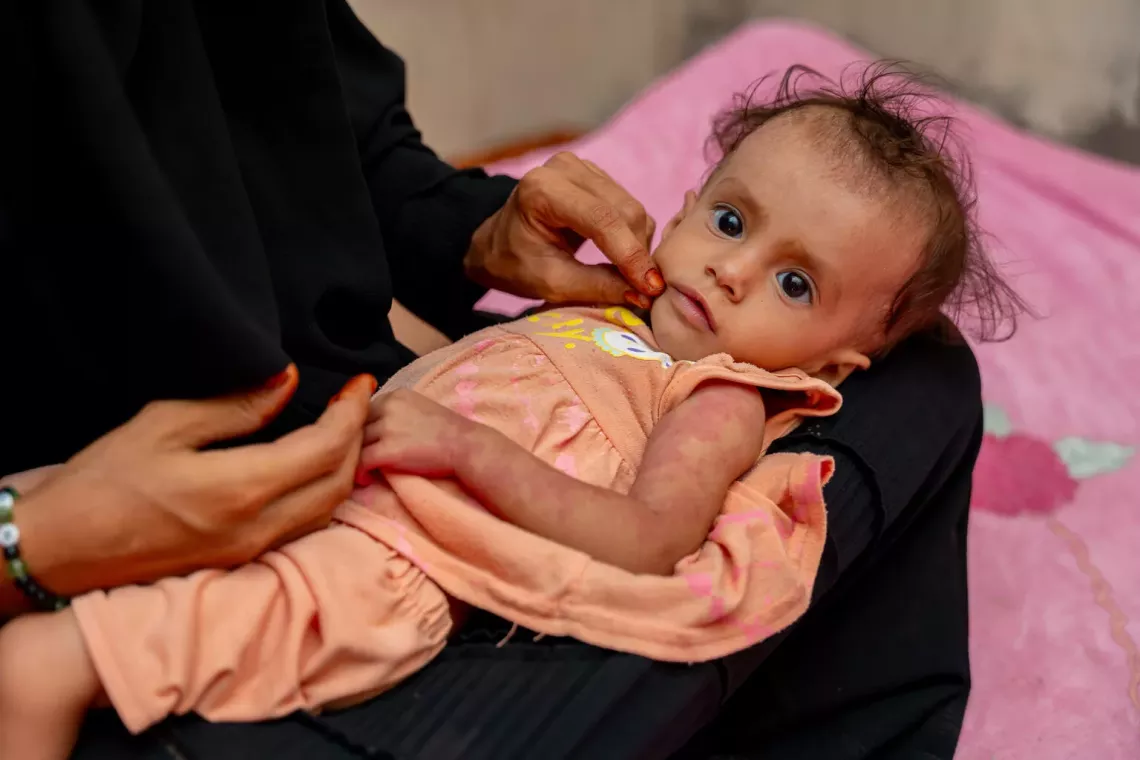
During her pregnancy with Bothaina, Maryam attended antenatal care more than four times, receiving iron-folic acid, which she took only for four months. These visits also provided her with enhanced awareness of pregnancy-related practices. However, she did not practice optimal prenatal care and she experienced blood complications and required a blood transfusion a week before giving birth.
When Bothaina was born, Maryam was malnourished herself and was under stress. Each day, Maryam’s meals consisted merely of bread with tea or milk for breakfast and dinner, and lunches of rice and potatoes. This scant and unvaried diet left her body undernourished, unable to provide the nourishment Bothaina needed. She had to rely on formula because she did not have enough breastmilk to feed Bothania, which is a common perception. By four months, Bothania was fed potatoes and rice – foods her small body was not ready for. The visit to the hospital when she was sick, last year, revealed the consequences: severe acute malnutrition and stunting. Now, Bothaina receives weekly therapeutic food supplements, but Maryam knows the damage is irreversible.
Stunting prevents children from reaching their physical and cognitive potential. Thus, stunted children, like Bothaina, will have delayed cognitive development with the following symptoms: delays in rolling over, sitting up, crawling, and walking, trouble with fine motor skills, problems understanding what others say, trouble with problem-solving, issues with social skills, problems talking or talking late.
Ekram: A story of hope
For Ekram, the first 1,000 days meant receiving all the essential nutrients her body needed, as well as having access to clean drinking water. Her mother’s dedication to exclusive breastfeeding, good hygiene and introducing a varied diet ensured her healthy start.
Ekram’s start in life was different. Samah, her mother, followed the guidance of health workers, breastfeeding exclusively for six months and then gradually introducing a variety of solid foods. Fish from her husband’s work and beans from the market provided essential nutrients. Today, Ekram’s energy and curiosity are boundless.
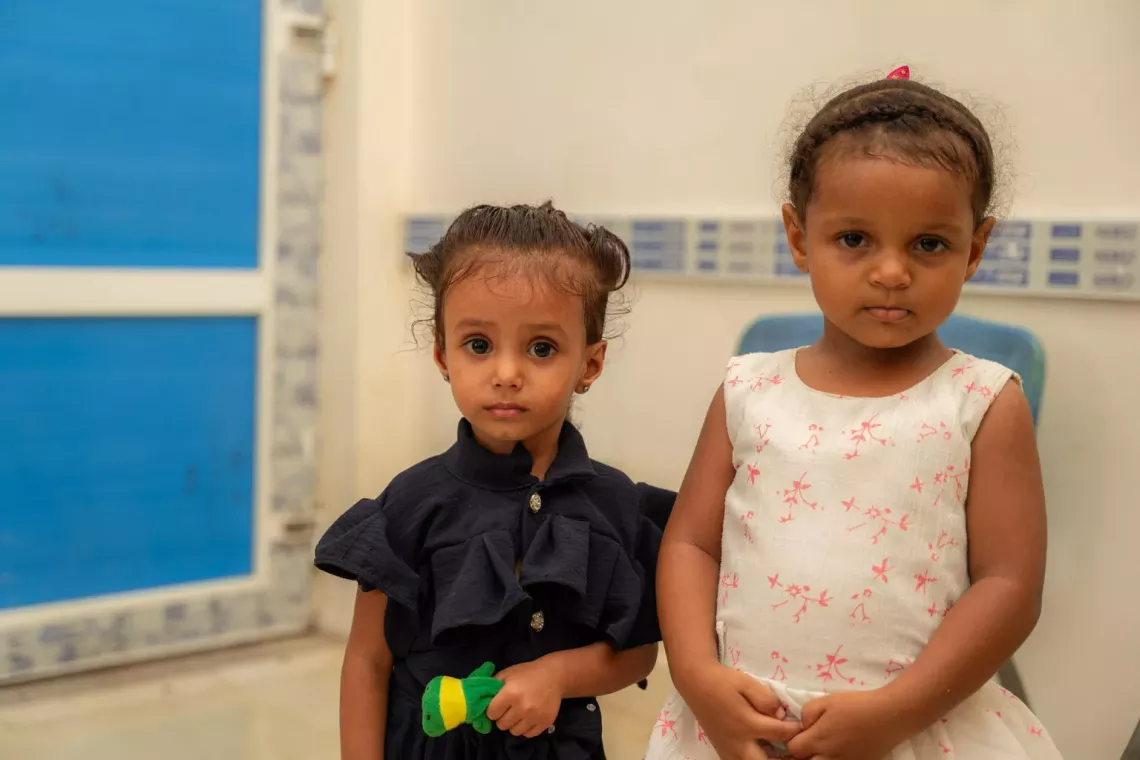
Ekram and Bothaina
The assessment of height and weight of Buthaina’s suggest that she is short for her age (stunted). She is also wasted, where her weight-for-height is too low. On the other hand, Ekram has normal height for her age and normal weight for height, a healthy and well-nourished 2-year-old girl. Ekram was exclusively breastfed from her birth until she was 6 months old.
Children’s nutrition is critical, not only for their immediate survival and development but also for the country’s long-term prosperity and peace. Failure to prevent malnutrition perpetuates cycles of poverty, death and disease, as well as long-term economic stagnation and potential social unrest.
The story of Bothaina reflects the tragedy unfolding in Yemen, where access to nutritious food, appropriate infant and young child feeding practices, health services, and a sanitary and hygienic living environment can change the trajectory of a child’s life.
The UNICEF nutrition programme in Yemen has been effective in treating child wasting, with an 89 per cent coverage and a 92 per cent cure rate. However, preventive nutrition efforts need to be enhanced – to stop malnutrition before it starts. Gaps include the need for improved counselling on infant and young child feeding practices, better promotion of breastfeeding, and increased coverage of Vitamin A and deworming. Additionally, many women and children lack access to health care, highlighting the need for strengthened outreach and community-based services. Increased funding for preventative nutrition actions and long term commitment are key to ensure the sustainability of these actions.