

Nutrition
UNICEF strives to provide children in Yemen with the nutritional support they need for their growth and development

- English
- العربية
The Challenge
Only 15 per cent of children are eating the minimum acceptable diet for survival, growth and development.
The high levels of malnutrition are compounded by lack of food, poor feeding practices at home, sub-optimal functioning of the health, water and sanitation systems, disease outbreaks and deteriorating economy. Around 80 per cent of Yemenis are estimated to be in debt and struggling to pay for food, water, transportation and vital health services. With the deepening economic crisis, 1.8 to 2.8 million children are at risk of being pushed into acute food insecurity and many more children could fall into life-threatening severe acute malnutrition.
Almost 2 million cases of children under the age of five suffering from acute malnutrition are estimated, including 360,000 from severe acute malnutrition (SAM).
The nutritional status of women of child bearing age is also a matter of significant concern in Yemen. Since 1997, there has been no improvement in the nutritional status of women and almost a quarter of women are malnourished. Maternal malnutrition increases the risk of poor pregnancy outcomes including obstructed labour, premature or low-birth-weight babies and postpartum haemorrhage.
The Solution
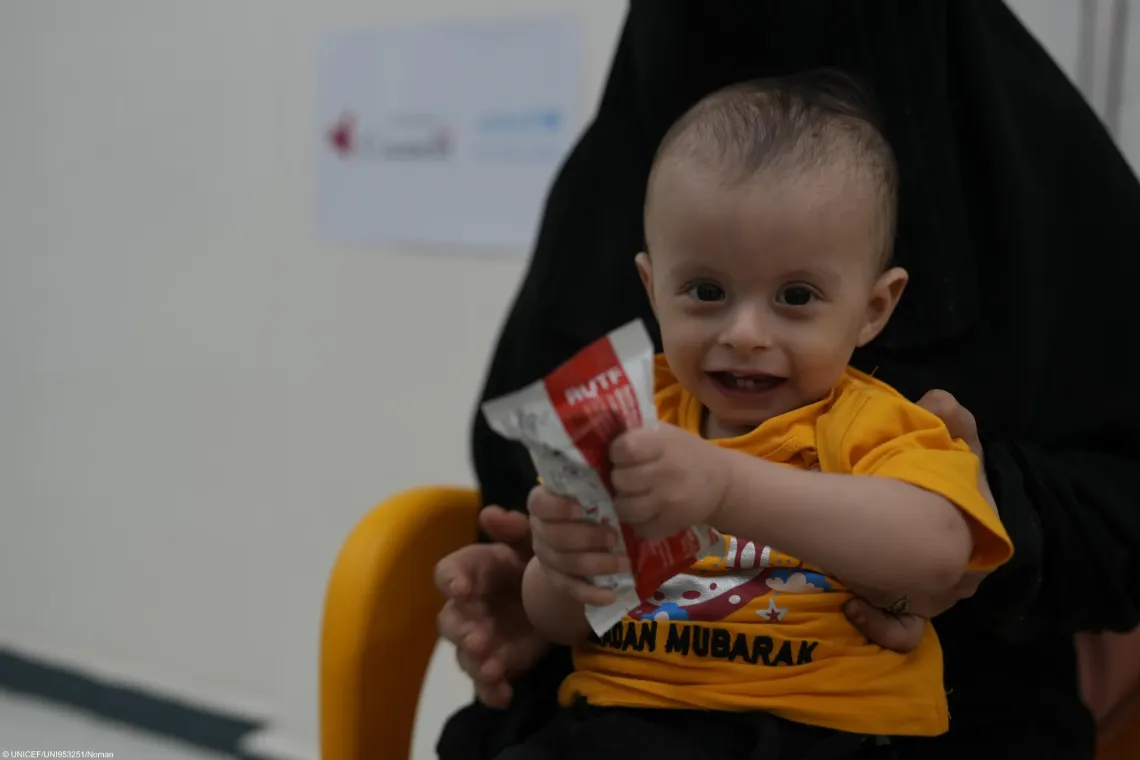
UNICEF has accelerated its nutrition interventions to prevent and treat severe acute malnutrition in children in existing health facilities and using Mobile Teams to access hard to reach areas.
- UNICEF continues to scale up the Community Management of Acute Malnutrition programme. In 2021, UNICEF treated over 315,000 children for Severe Acute Malnutrition thereby saving their lives. Nearly 3.2 million children were given micronutrients supplementation every six months.
- UNICEF supported the treatment of severe acute malnutrition in 4,465 primary health care facilities and 34 therapeutic feeding centres.
In 2022, UNICEF appeals for US$120 million for its nutrition programme. Urgent needs total US$60 million to enable UNICEF’s continued response to the nutrition crisis in Yemen