Children’s wellbeing in world’s wealthiest countries took sharp turn for the worse in wake of COVID-19 pandemic - UNICEF
Pandemic exacerbated trends with children under-performing at school, more likely to be overweight and obese, and generally less happy with their lives
- English
- ไทย
FLORENCE/NEW YORK/BANGKOK, 14 May 2025 – Children in many of the world’s wealthiest countries saw marked declines in their academic performance, mental wellbeing, and physical health in the period since the start of the COVID-19 pandemic, according to analysis published today by UNICEF Innocenti – Global Office of Research and Foresight.
Report Card 19: Child Wellbeing in an Unpredictable World compares data from 2018 and 2022, offering a perspective on how the COVID-19 pandemic and global shutdowns affected children in 43 OECD and EU countries. Since the last comparable Report Card five years ago, the Netherlands and Denmark retained their rankings as the top two places to be a child, based on measures of mental wellbeing, physical health, and skills, followed by France.
However, the report warns many countries experienced sharp declines in children’s academic skills following the pandemic – particularly foundational abilities such as reading and mathematics. School shutdowns of between three and 12 months forced many children to learn remotely and led to learning losses. The extent to which children are behind where they should be academically is estimated to be between seven months and one year, on average, the report says. Setbacks were most severe for children from disadvantaged families.
“Prior to the pandemic, children were already struggling on multiple fronts, and didn’t have access to adequate support – even in wealthy countries,” said UNICEF Innocenti Director, Bo Viktor Nylund. “Now, in the face of rising economic uncertainty, countries need to prioritise children’s education, health and wellbeing to secure their lifetime prospects and happiness, as well as our societies’ economic security.”
Across the 43 countries, an estimated 8 million 15-year-olds – around half of the age group – were assessed as not functionally literate and numerate, meaning they could not understand a basic text, raising concerns about their long-term prospects. This is a four per cent increase since 2018, and the proportions were highest in Bulgaria, Colombia, Costa Rica, Cyprus and Mexico, where more than two-thirds of 15-year-olds were in this category.
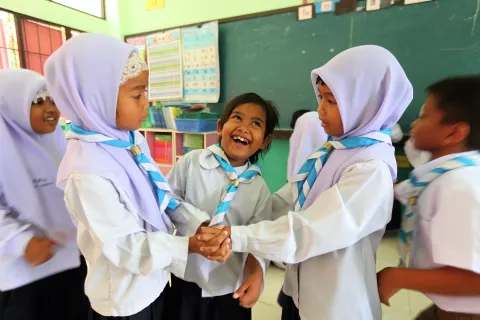
The report also raises concerns around mental health, pointing out that children’s life satisfaction suffered during this time, declining substantially in 14 of 32 countries with available data. Japan was the only country to see a marked improvement in this area.
The report goes on to analyse data on children’s physical health, noting that levels of overweight increased substantially in 14 out of 43 countries with available data, continuing a long-term trend.
Overall, the report indicates that high-income countries may find it challenging to provide children with the conditions for a good childhood and a positive future. Pointing to the pandemic’s impact on children, the report warns that hard-won progress in child wellbeing in wealthy countries is becoming increasingly vulnerable to global events and shocks, such as climate change.
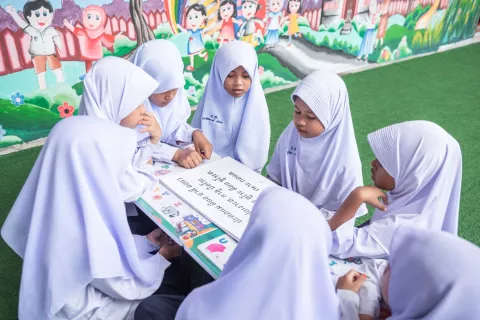
While Thailand is not part of the OECD countries, Children’s literacy and numeracy skills also deteriorated during the pandemic. According to the Multiple Indicator Cluster Survey conducted by the National Statistical Office and UNICEF in 2022, less than half (47 per cent) of Grade 2 and 3 children had basic reading skills, compared with 52 per cent in 2019. Just 40 per cent of children had basic numeracy skills in 2022, compared with 47 per cent in 2019.
The UNICEF Innocenti report calls on governments and stakeholders to take action in several policy areas to address declines in children’s wellbeing, including:
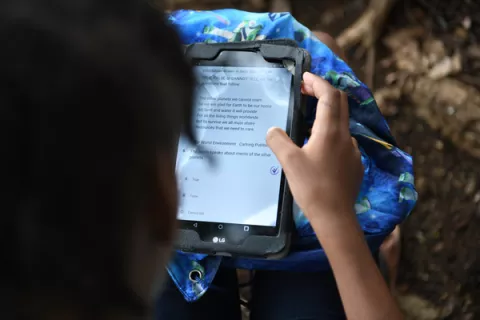
- Supporting the development of skills, including numeracy, literacy and digital skills, as well as social and emotional competencies, especially for children who slipped back during the pandemic and children from disadvantaged backgrounds.
- Improving mental health through promotion and prevention and by providing specialist services, and by tackling violence and bullying, both online and offline.
- Improving physical health by ensuring nutritious food is available to children and limiting marketing and promotion of unhealthy food.
- Engaging children to better understand their experiences and views and working with them to find solutions to promote their wellbeing.
“In the wake of the pandemic, the data set a worrying benchmark for children’s wellbeing, especially for children from disadvantaged backgrounds,” said Nylund. “The extent of the challenges children are facing means we need a coherent, holistic, whole-of-childhood approach that addresses their needs at every stage of their lives.”
Media contacts
About UNICEF
UNICEF promotes the rights and wellbeing of every child, in everything we do. Together with our partners, we work in 190 countries and territories to translate that commitment into practical action, focusing special effort on reaching the most vulnerable and excluded children, to the benefit of all children, everywhere.
For more information about UNICEF and its work for children, visit www.unicef.org/thailand.
For general inquiries, please contact: [email protected].
Follow UNICEF on and Facebook, Instagram, TikTok, and X (Formerly Twitter)