

Every Day is Mind Day for Teacher
For every child, a healthy mind

- English
- ไทย
A happy classroom can make a big difference to your and your students’ life. Explore our page to learn about building a positive learning environment and mindset – because mental health is just as important as physical health, for both you and your students.
Understanding mental health
Mental health is our emotional, psychological and social well-being. It affects our feelings, thoughts and actions. Here are two things to know about mental well-being.
Support your students
How can I support my students?
Amid extended school closures, it can be a challenge to know how to best support your students’ learning recovery and go back to ‘normal’. Instead of integrating learning support into certain classroom activities, a whole school approach will help ensure that every student can feel safe and engaged. Besides supporting their learning, you are also helping your students become emotionally strong and healthy. You may often notice when they are having a tough time and be the first person they turn to for help, as someone they trust and respect. It can be hard to know what to say or do, so here are some tips on helping them make safe and healthy choices.
Reducing stigma
Tackling social stigma at school
Students facing mental health challenges often face stigma at school, similar to students with disabilities or who are LGBTQ, migrants or from an ethnic minority. This means they may be treated differently and made to feel ashamed, due to prejudice and a lack of understanding. This can drive students to hide their concerns and prevent them from seeking help immediately.
Here are two tips on how you can tackle stigma through kindness, speaking up against negative stereotypes, learning more about mental health and sharing resources and your own experiences.
Self-care tips
As you look after your students’ mental well-being, it is just as important to pay attention to your own. Prioritizing your mental well-being can help you have more positive energy not only for yourself but also for your students. Here are some simple tips for self-care.
Mental health resources
- Free hotline | 1323
- Fee-based Mental Health Clinics at general hospitals
- Free empathetic listening service | www.satiapp.co
- Free LINE chat | @Khuikun
- Free self-assessment tool | www.วัดใจ.com
- LoveCare Station, for young people
- Free online counselling (16:00 - 24:00) | www.lovecarestation.com
- Free LINE chat (12:00 - 20:00) | @LoveCareStation
- Childline Thailand Foundation, for children under 18 | www.childlinethailand.org
- Free 24-hour hotline | 1387
- Free LINE chat | @saidek1387
- Free Messenger chat | http://m.me/childlinethailand
- Free screening and training tool, for teachers | learning.hero-app.in.th
Free resources
Here are some resources for simple and practical tips and activities on mental health to try out in the classroom, which can be adapted for your students’ ages and abilities.
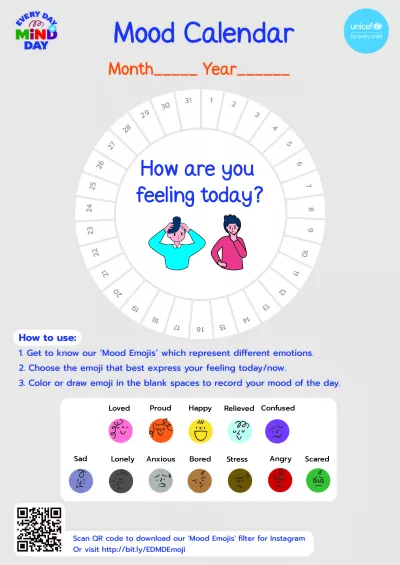
Meet #EveryDayMindDay Mood Calendar, a great tool for your personal mood checker or for a homeroom activity! You can introduce the Mood Calendar to your students and ask them to record their daily mood and see how they have felt in the month. In the homeroom session, you can create a safe space to start conversation on mental well-being together using what they have learned from the calendar results!
Teachers are critical in supporting positive mental well-being for students. This toolkit comes with simple and practical tips and activities that can be applied to and adapted for your students ages and abilities. For every child, a healthy mind.
Looking for ways to support your child’s mental well-being and your own self-care? It’s just one click away! download our #EveryDayMindDay Toolkit for caregivers today and learn simple and practical tips to promote mental well-being for your children and for your own healthy mind.