

Keeping underground classrooms warm in war-torn Ukraine
Children return to school in Pavlohrad, where UNICEF‘s support keeps heating and water systems going for 100,000 residents and 20,000 displaced people seeking refuge from the war.

“We can’t study in school buildings but, in the basement, we don’t hear the explosions and it’s not scary.”
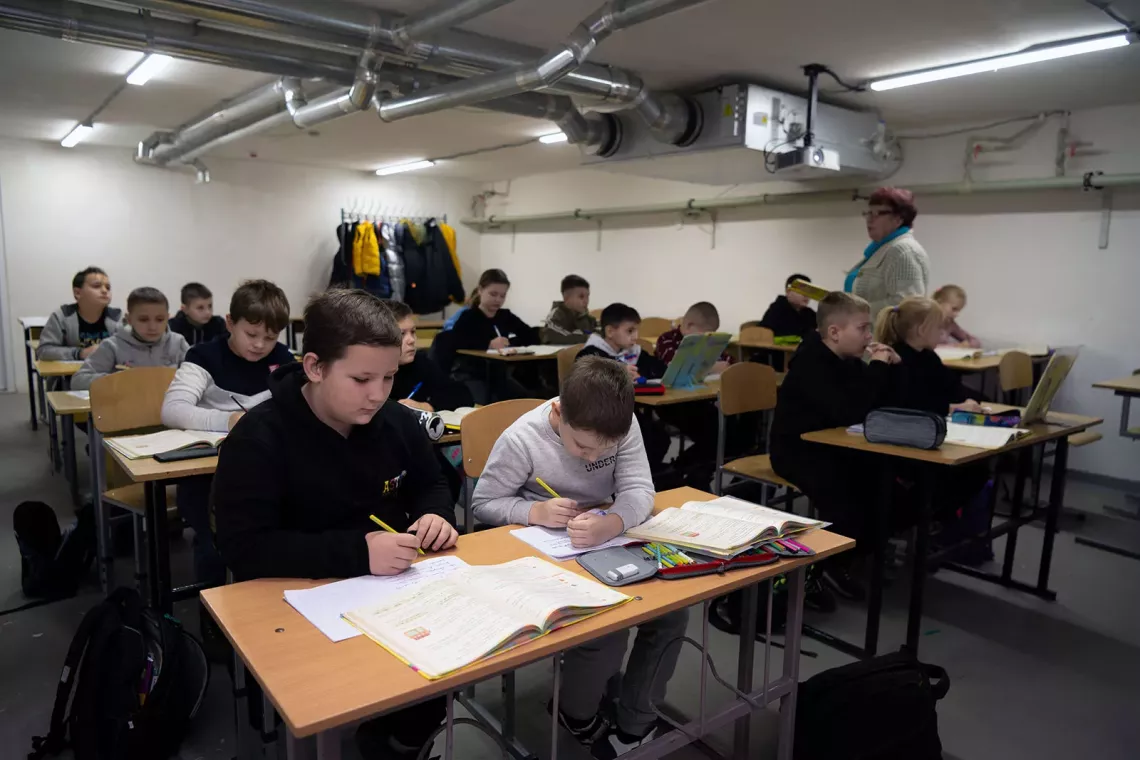
Tykhon is attending school in a basement in the city of Pavlohrad in eastern Ukraine. The city endures regular missile attacks that frequently damage civilian infrastructure, leaving it without heating and running water.
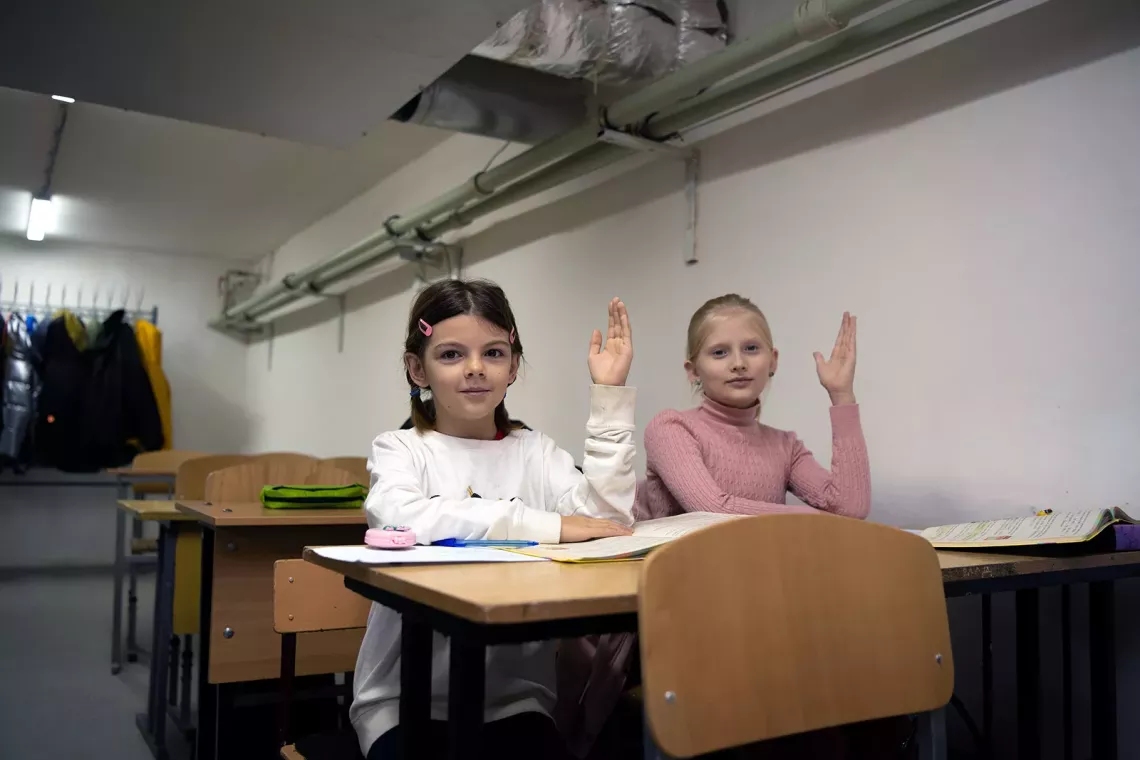
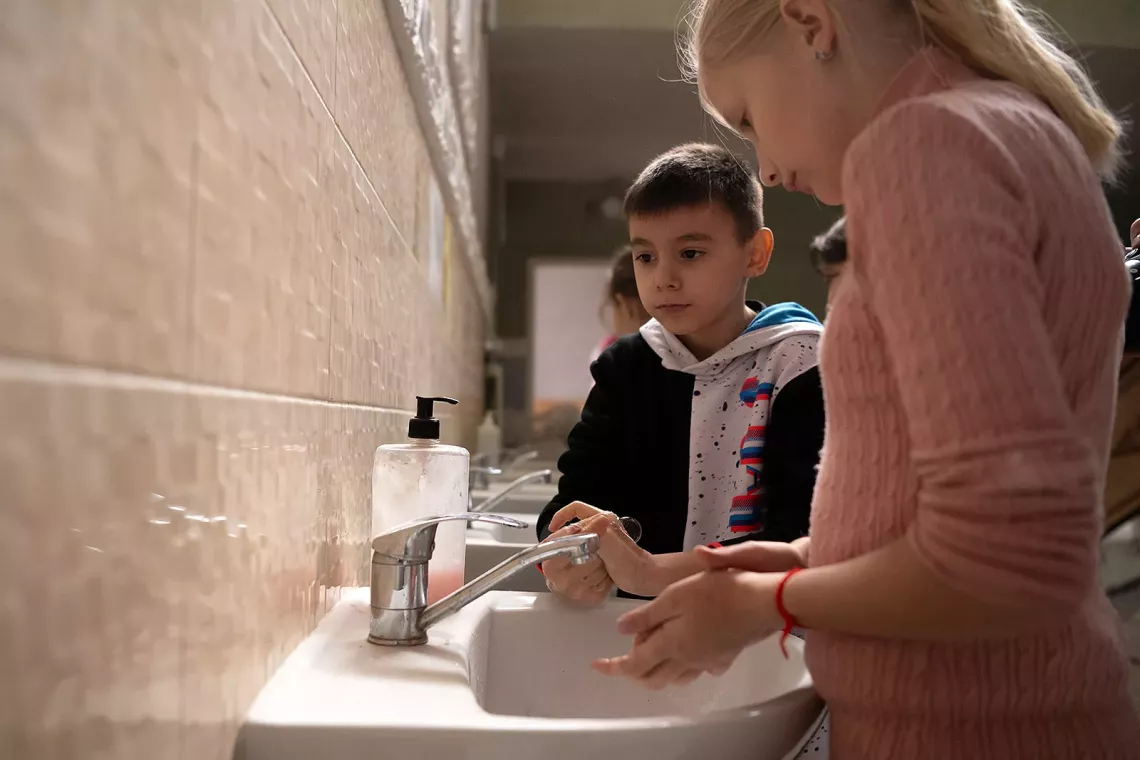
But in the basement-turned-classroom it is warm and light, and clean water runs from the tap. The explosions outside are barely noticeable, and the school bell is easy to hear.
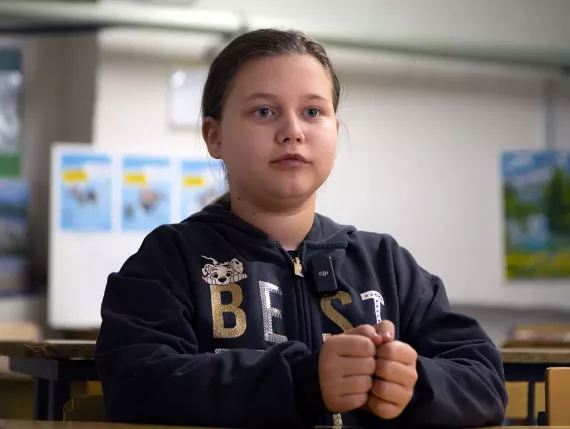
The shelter has allowed younger children to return to in-person learning, although older children must continue to study remotely. The younger children study in shifts after their school was damaged by shelling and had all its windows shattered.
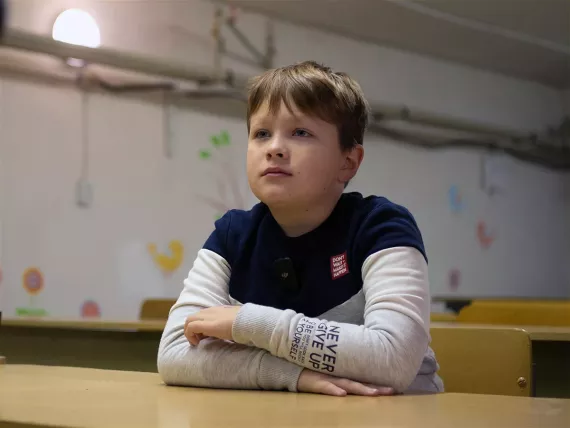
"I like it when we study at school because we can run around during breaks and the lessons are easier to understand than with online learning.”
Returning to school is a relief for many children who, following the outbreak of the war in Ukraine, had no choice but to study online from home due to shelling and infrastructure disruptions such as power, heating and water outages.
Children in Pavlohrad are now able to return to school thanks to a large-scale project supported by UNICEF to restore heating and water.
The city has become a transit centre for people fleeing armed warfare in the Donetsk region, which is further east still, and hit even harder by the war. Currently, Pavlovhrad hosts around 20,000 displaced people, including nearly 4,000 children, adding to its pre-war population of 100,000 residents.
Reduced heat loss
"This year, we were able to start the heating season thanks to UNICEF's support," says Volodymyr Perelyotov, Chief Engineer at Pavlohrad’s heating utility company. The UNICEF-supported project includes repairing equipment damaged by shelling, replacing worn-out assets and introducing modern technologies.
Volodymyr Perelyotov explains that the utility company relies on old, worn-out equipment that has not been modernized due to lack of funds. "We replaced old insulation materials with modern polyurethane foam insulation in several districts of the city. This reduced heat loss by 25 per cent," he says. Volodymyr highlights that the new systems, unlike the previous ones, are automated and do not require human intervention, which partially mitigates staff shortage.
In addition, the city received a cogeneration unit for a large boiler house that will serve 5,000 subscribers and make one of the city's communities more energy independent. The new green energy equipment provided by UNICEF is expected to increase the production of thermal and electrical energy in Pavlohrad.



Stable water supply
"Water supply in Pavlohrad is stable now, with no prolonged interruptions recently,” says Maryna Artemenko, head of the production and technical department at Pavlohrad’s water utility company. “But the high wear and tear of the networks, which are 255 kilometres long, have led to almost daily incidents – more than 300 per year, making water supply to the city more complicated.”

To address these challenges, UNICEF is helping the water utility company to ensure stable supply to schools, hospitals and homes by providing materials for major network repairs and new equipment for water sample analysis and disinfection.
"We will replace more than two kilometres of pipes to reduce water loss incidents in the most problematic areas," says Marina. “We have also received 55 tons of salt, enough for a year, to disinfect drinking water.”

UNICEF's project in Pavlohrad aims to ensure more stable heating during winter in a city where more than 11,000 schoolchildren and more than 2,500 preschool children attend kindergartens.
Based on a story originally published on UNICEF Ukraine.


