From hygiene to happiness: the power of water and sanitation
How new student bathrooms transformed Srer Chhouk Primary School, boosting attendance, health and pride among students in Cambodia’s remote northeast.
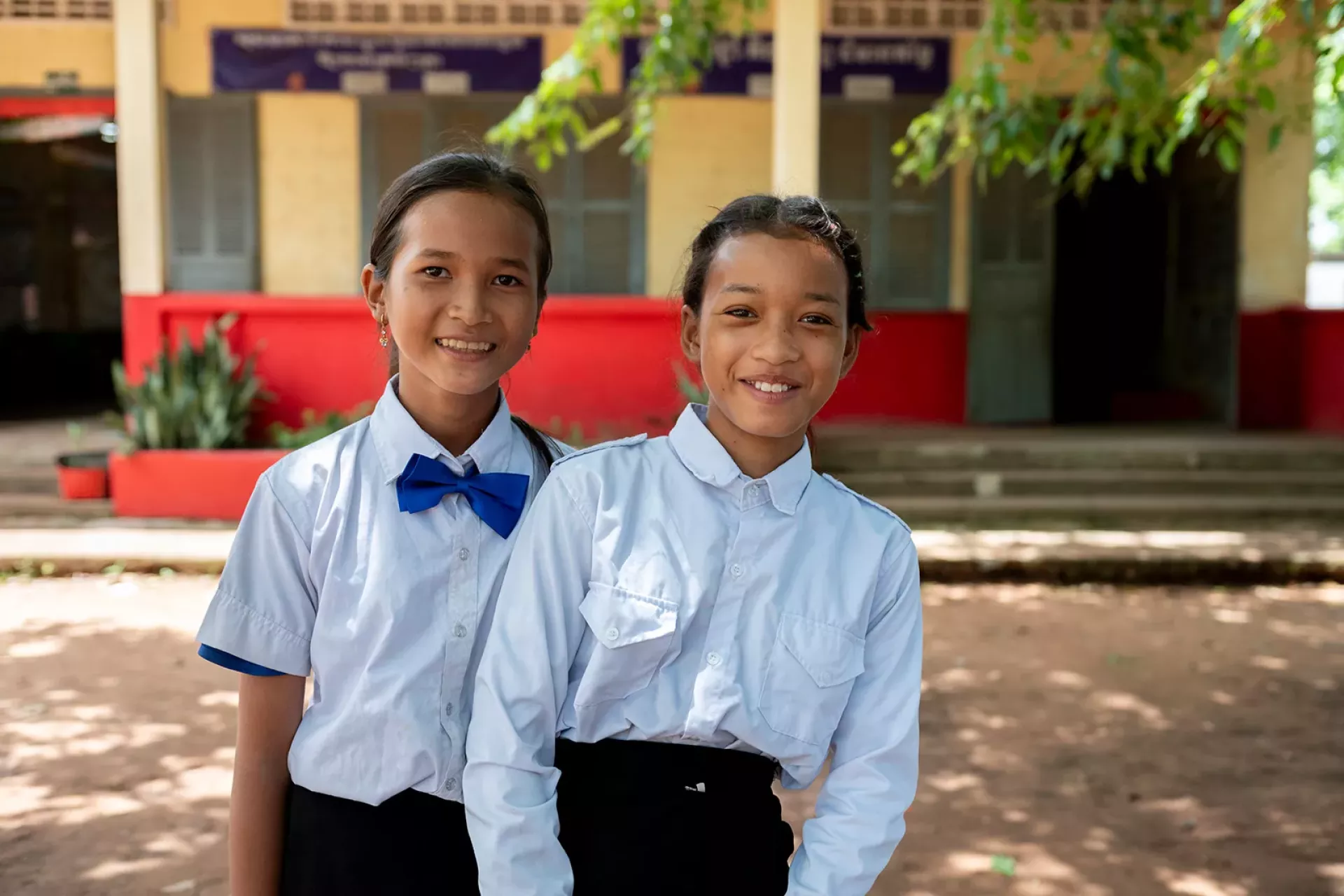
For 13-year-old Pheaktra Vuth, getting to school is nothing short of an adventure. She crosses streams and braves heavy monsoon rains, often relying on a canoe, to reach Srer Chhouk Primary School, the only school in her remote district in Cambodia’s Kratie Province.
At the school, where four teachers educate 100 students up to the sixth grade, a significant change has taken place. Previously, sixth-graders had to take turns fetching water from the school's well, a task that consumed much of their time and energy. For the children of this indigenous Pnong (or Bunong) community in Cambodia's northeast, accessing clean water has always been a daily struggle.
"We spent so much time carrying heavy buckets of water to fill the large bin," Pheaktra recalls. "It was exhausting, and we had less time to study."
Reflections of change
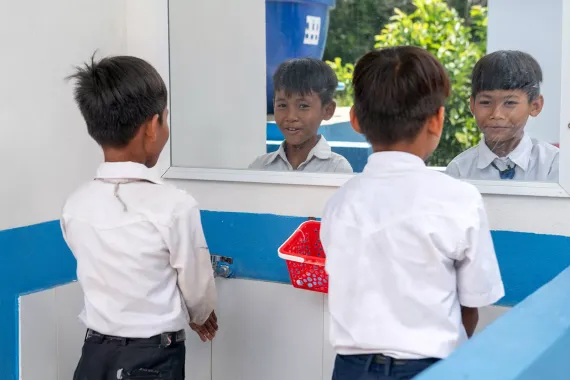
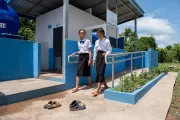
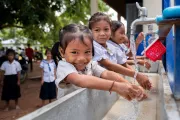
Everything changed when the school's water, sanitation and hygiene (WASH) facilities were upgraded with UNICEF’s support. The once cramped and dark bathrooms were replaced with spacious and light-filled facilities with separate rooms for boys, girls and students with disabilities. The new hand-washing stations also have soap, clean water and large mirrors: a luxury that Pheaktra and many of her fellow students do not have at home.
Dressed in a neatly pleated white shirt with a blue bow tie, Pheaktra smiles as she describes the impact of the new facilities. "The best part about the new bathroom is the mirrors and the sanitation bin in the girls' bathroom. I don't have a mirror at home, so I check for pimples while washing my hands."


The domino effect
Pheaktra’s best friend Chac Chin, who walks to school with her younger sister, has noticed another important change:
“We get sick less often now. Before, the bathrooms were not clean, and we didn't have soap. Now, everything is different; we study, we play, and we stay healthy," Chac says.
The new facilities have not only improved hygiene but also instilled a sense of pride among the students. Pheaktra’s classmate Nerd Krud, admits that he now takes more care in his appearance. "I use the bathroom to check my hair", he says with a grin. "I've got to look good in class!"
For 13-year-old Tien Tola, the changes have had a major impact. "It was so heavy and time-consuming", he recalls of the water-fetching task. "Now, we have more time to focus on our lessons instead of carrying water."
The new bathrooms have also been used as an opportunity to educate students about the importance of hygiene and sanitation for their health and wellbeing. Since then, Principal Sam Chea has noticed clear improvements in the students’ behaviours. "We've seen a 10 per cent increase in attendance, and the students' hygiene has improved noticeably", he says. "They comb their hair, cut their nails, and come to school looking well-groomed. Parents have more confidence in sending their children here, and the students are eager to attend."
“Students are now teaching their families”, Principal Sam Chea adds. “They go home and talk to their parents and siblings about keeping toilets clean and always using soap to wash their hands after using the toilet.”
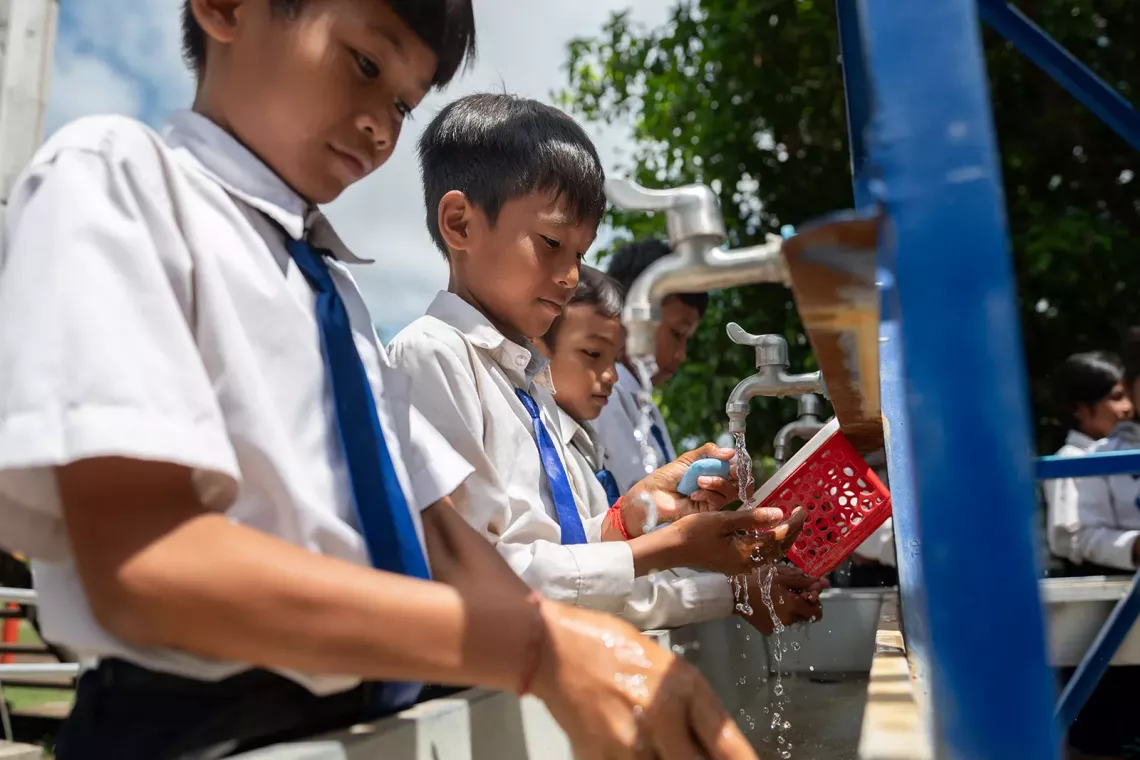
To maintain the new facilities, Principal Chea has implemented a system where students take turns cleaning the bathrooms, fostering a sense of responsibility and pride in their improved school environment.
For Pheaktra and her friends, the changes at their school have made a world of difference.
"Now, we can actually pay attention in class and enjoy being at school," she says, her smile infectious.
Based on a story originally published on UNICEF Cambodia.