Public partnerships
Together we can make a world of difference

UNICEF's work is funded in part by public contributions from United Nations member states, whose governments provide both core and earmarked funding to support UNICEF's work globally and in-country. This public investment forms the foundation of our operations and reflects the international community's collective commitment to children's rights.
Without the sustained support of governments around the world, UNICEF could not maintain its presence in over 190 countries and territories or respond to the scale of need that children face.
National Government
In South Africa, UNICEF works closely with national and provincial government departments, including Health, Basic Education, Social Development, and Women, Youth and People with Disabilities — as well as Statistics South Africa and other public institutions. Our engagement with government is not transactional: we co-design policies, strengthen systems, build capacity, and provide technical assistance grounded in global evidence. We also work within the United Nations Country Team alongside sister agencies, ensuring a coordinated and complementary response to children's needs across all sectors.
Bilateral donors and foreign aid
Foreign aid remains a critical source of funding for UNICEF's work in South Africa. Bilateral donors, governments that provide direct development assistance, contribute earmarked and flexible funding that supports specific programmes, thematic areas, or humanitarian responses. This includes contributions from governments in Europe, North America, and the Asia-Pacific region channelled directly to UNICEF South Africa or through regional and global mechanisms.
UNICEF South Africa actively engages with diplomatic missions and embassies based in Pretoria and Cape Town to deepen relationships with bilateral donor governments, align priorities, and explore opportunities for co-investment in children's outcomes. These relationships go beyond funding, embassies and high commissions are important convening partners, amplifiers of UNICEF's advocacy, and bridges to their home governments' development priorities.
International financial institutions
UNICEF South Africa also engages with international financial institutions, including development banks and multilateral financing bodies, that are increasingly focused on human capital investment, climate resilience, and social protection. These institutions offer opportunities for blended financing, technical collaboration, and policy influence that complement UNICEF's programmatic work.
Get in touch
If you represent a government body, diplomatic mission, bilateral donor agency, or international financial institution interested in co-investing in children's outcomes in South Africa, we welcome a conversation. We are open to a range of engagement modalities — from formal funding agreements and joint programming to policy dialogue, advocacy partnerships, and co-hosted events.
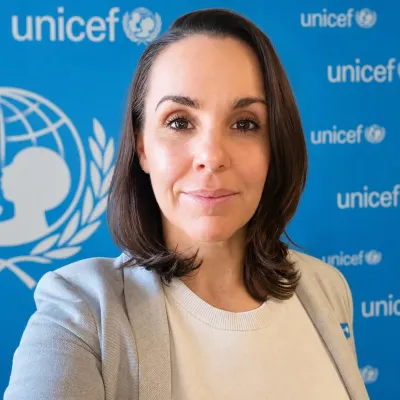
Sophie Chavanel
Chief of Communication, Advocacy and Partnerships
UNICEF South Africa
[email protected]
Drooti Kala
Partnerships Officer
UNICEF South Africa
[email protected]