AstraZeneca Young Health Programme and UNICEF partner to advance health equity in South Africa
AstraZeneca invests over $100 million from 2010 to 2030 in global Young Health Programme, a flagship programme within its health equity strategy, including continued collaboration with UNICEF in South Africa
Pretoria, 23 September 2026– AstraZeneca today announced a total investment of more than US$100 million in its Young Health Programme (YHP) from 2010 to 2030, reaffirming its commitment to advancing health equity in more than 60 countries. In South Africa, where one in five young people may be at risk of future health challenges linked to food-related illnesses, the programme’s prevention-focused partnership with UNICEF South Africa is supporting youth advocates to call for action to improve the school food environment for all young people.
In South Africa, the investment will continue to support AstraZeneca’s partnership with UNICEF. Over the past six years, this partnership has indirectly more than 16.5 million young people in the country with life-saving information on healthy lifestyles and non-communicable disease (NCD) prevention. It has also equipped over 3,700 young advocates to influence health policies, take action on the growing health impacts of climate change and drive change in their communities. This in turn has strengthened youth leadership, shaped national policies on nutrition and NCD prevention, and advanced initiatives such as the Fix My Food movement to create healthier environments for adolescents.
Through the next phase of the programme, the partnership aims to turn policy commitments into measurable results for adolescents across South Africa by training 800,000 youth advocates by 2030. This in turn will strengthen prevention, improve food environments, and ensure that young people are at the centre of the decisions that affect their health and wellbeing.
This commitment comes at a time of growing urgency in global health. South Africa continues to face a growing burden of non-communicable diseases among young people, making sustained investment in prevention more important than ever.
This new five-year phase of the YHP builds on 15 years of impact. During this period, the programme directly reached 23 million young people across more than 60 countries, helped train more than 1 million people and supported youth advocates to positively shape 29 laws and policies. Data confirm that that the YHP generates $4.30 in social return on investment for every $1 invested, reinforcing the long-term value of investing early in adolescent health.
NCDs are the leading cause of death worldwide, and 70% of premature adult deaths are linked to behaviours that begin in adolescence.
By 2050, a staggering 86% of all annual deaths are expected to be caused by NCDs, representing a 90% increase from 2019 levels. Through the YHP, AstraZeneca and UNICEF South Africa are helping address these challenges by strengthen adolescent NCD prevention across schools, healthcare and communities, while supporting young people to play a greater role in shaping policies and holding decision-makers accountable.
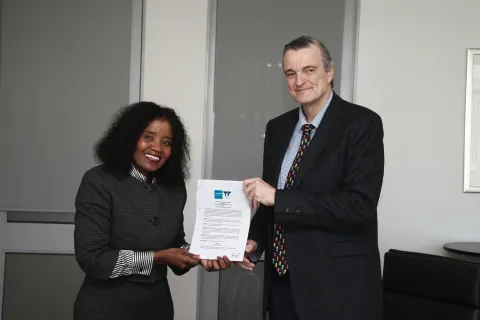
David Gibbons Country President, AstraZeneca Africa Cluster said: “Investing in young people is one of the most powerful ways to advance health equity and prevent non-communicable diseases before they take hold. Through our continued partnership with UNICEF, we are proud to support young people across South Africa with the knowledge, skills and platforms they need to make healthier choices, shape the policies that affect their lives and lead change in their communities. As we look ahead to 2030, our ambition is to reach millions more adolescents and strengthen the environments that enable every young person to build a healthier future, regardless of where they live or their circumstances.”
Johannes Wedenig, UNICEF South Africa Representative noted that "South Africa cannot afford to lose a generation to preventable non-communicable diseases. By extending this partnership, we are investing in healthier schools, stronger health systems, and empowered young people who can lead the change needed to secure a healthier future for our country." He added that "young people are not only the beneficiaries of this partnership, but they are also its driving force. By continuing this work, we will support a generation of South Africans to lead healthier lives, shape public policy, and build a future where every adolescent has the opportunity to thrive."
Through partnering with UNICEF and a wider global network of more than 60 non-governmental organisations, including One Young World and YHP founding partner Plan International, the YHP will support young people to build healthier habits, strengthen the environments and services that shape their health, and advocate for policy change in their communities and countries. The next phase of YHP from 2026 to 2030 will place particular emphasis on youth-led action, health equity and climate responsiveness, recognising that young people are not only disproportionately affected by these challenges, but also powerful agents of change.
Media contacts
About UNICEF
UNICEF, the United Nations agency for children, works to protect the rights of every child, everywhere, especially the most disadvantaged children and in the toughest places to reach. Across more than 190 countries and territories, we do whatever it takes to help children survive, thrive, and fulfil their potential.
UNICEF’s work is funded entirely through voluntary contributions.
Follow UNICEF South Africa on Facebook, Instagram, X Channel, YouTube, LinkedIn, TikTok and WhatsApp Channel