The Impact of Remedial Education in Rwanda
Transforming Communities through Parental Engagement

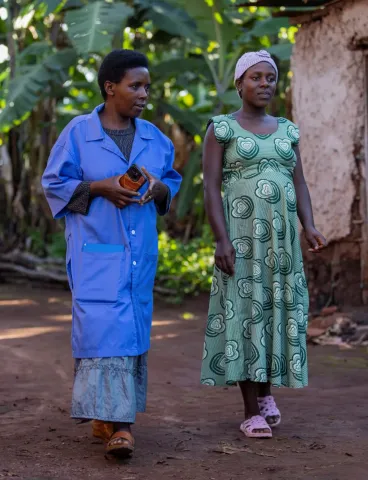
In Rwanda's Eastern Province, particularly at GS Mukarange Catholic School in Kayonza District, remedial education fostered significant change. Thanks to the financial support from the Hempel Foundation, in partnership with Rwanda’s leading Non-Governmental Organisation, the Imbuto Foundation, UNICEF Rwanda launched the remedial education programme in May 2019. The aim of the programme was to assist girls in upper primary classes, who were at risk of dropping out, improve learning outcomes, and help them complete their education journey. Its impact extended beyond the classroom by fully involving parents in their children's education.For parents like Uwamahoro Christine, the programme was uplifting. Christine's daughters, Umurewa Shania, 12, and Umutoni Sonia, 15, were beneficiaries of the programme. Christine had been concerned about how her children were facing challenges in their studies. "Every parent was grateful that UNICEF brought this programme to help our children excel academically," Christine said with a beaming smile. "My children were struggling, and it was painful to see them in that state. But now, they are performing much better, and I am very proud.”

A key to the success of this programme was the close collaboration between teachers and parents. The programme kept parents informed about their children’s progress. Mutesi Scovia, a dedicated mentor and teacher at GS Mukarange Catholic School, played a crucial role. "I was thrilled to be part of a programme that significantly improved students' performances," she shared with pride. "We ensured regular communication with parents, especially mothers, so they were aware of their children’s progress."

Mutesi and her colleagues went beyond traditional teaching; they fostered a strong connection between school and home. They invited parents to discuss their children’s progress, celebrate successes, and address challenges. This consistent interaction empowered mothers like Christine to actively participate in their children's education. "Before, no one talked about what they learned at school. Now, my children discussed their lessons in English and assisted each other with homework. Their grades improved, which we had never seen before the Remedial Learning Programme," Christine explained.
Before the introduction of the remedial learning programme, data revealed that 10per cent of primary and secondary school students dropped out annually. Another 10per cent repeating grades – a significant drain on resources (one-fifth of the education budget, or 3% of the national budget, is spent on repeaters and dropouts). This translates to a substantial loss in potential lifetime earnings for these students (RWF 6.1 million lost per student who drops out before completing primary school), and a considerable economic burden on the nation (RWF 2.9 trillion lost in 2021 alone).
The remedial learning programme, therefore, directly tackled the urgent need to improve learning outcomes and reduce dropout rates, focusing specifically on girls in upper primary classes who were at risk of dropping out.
The programme not only enhanced academic performance but also created a supportive community for each child. Mothers, who often shouldered the primary responsibility for their children’s education, became part of a broader support network. They were encouraged to advocate for their children’s needs and celebrate their successes. This involvement positively influenced the learning environment and fostered a culture of promoting education within the community, equally for both girls and boys.
Implemented across 10 districts in Rwanda from May 2019 to September 2023, the remedial education programme focused on enhancing reading and math skills among Primary 4 and 5 students. It benefited 25,960 students in 150 schools, demonstrating notable improvements in their academic abilities.
The programme's success was attributed to several factors. It provided additional instructional time for students who needed it most, reinforcing fundamental concepts and strengthening their reading and math skills. The inclusion of dedicated mentors like Mutesi offered personalized attention and support, which was often lacking in regular classrooms.
Additionally, the programme fostered a sense of camaraderie among students and their families. As Christine observed, her daughters not only improved academically but also began supporting each other’s studies. Peer support and active parental involvement were critical components of the learning process, encouraging students to engage with their educational material and learn collaboratively.

Though the programme concluded in 2023, its impact continues to resonate in the community. The hope is that similar initiatives will expand and reach more students across Rwanda. With persistent challenges in education, such programmes are crucial for helping children succeed. Ongoing support from organizations like, Imbuto Foundation, UNICEF Denmark and the Hempel Foundation holds great potential for further improvements in reading and math skills, ensuring every child has an equal opportunity to succeed.
The remedial education programme exemplified how innovative teaching methods combined with robust parental involvement could significantly impact students and their communities. It serves as a powerful reminder that with the right resources and commitment, educational challenges can be addressed, paving the way for a brighter future for all children.