

Unlocking Every Student’s Potential
How Rwanda is addressing learning gaps and improving education outcomes through a nationwide remedial learning programme

Every child deserves the chance to learn, progress, and succeed. In Rwanda, more learners are strengthening their skills, gaining confidence and engaging more actively in their education. Through a nationwide remedial learning programme, students are receiving the support they need to build strong foundations and move forward with confidence.
At Groupe Scolaire (GS) Cyivugiza in Nyarugenge District, the school has a total of 2,793 learners, 50 per cent of them girls. Here, they gather with a shared goal: to understand, improve and keep progressing. Their exercise books are open, their attention focused, and their willingness to try again is visible in every answer they give. Similar efforts are taking place in schools across the country.

The weekend remedial learning programme, led by the Ministry of Education and supported by the Global Partnership for Education and UNICEF, is helping learners who need additional support to strengthen foundational skills and stay on track. It is implemented in all public and government-aided schools in Rwanda, supporting learners in early grades as well as those in key transition classes, including Primary Six, Senior Three and Senior Six.
Among the learners participating in the remedial learning programme is Irebe Teta Nadege, a Primary Six student at GS Cyivugiza. She says the programme has helped her improve her English, especially in areas she once found difficult.
“Before, I had difficulty understanding certain elements of the English language like question tags,” she explains. “I had repeated Primary Six and had an average of 54 per cent. After attending remedial classes, my average score improved to 72 per cent by the end of the first term. Now I understand better because the teacher explains step by step.”
For Teta, learning has become more engaging and interactive. She attends the sessions because she wants to improve and succeed in school.

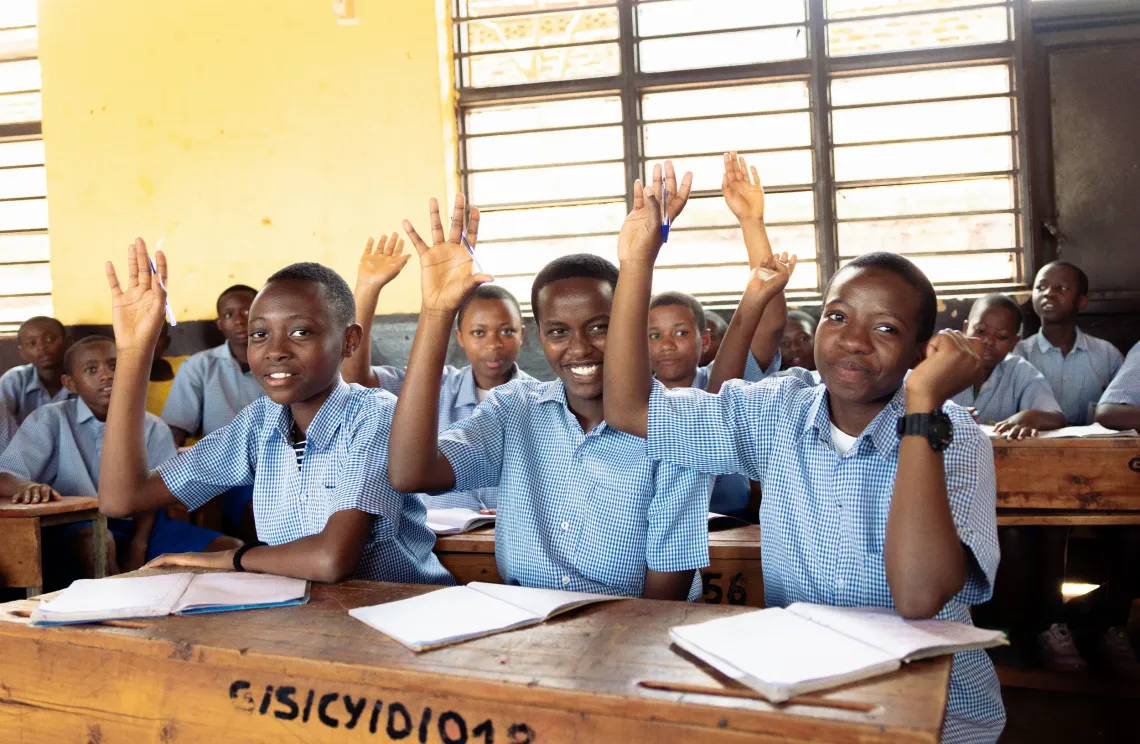
“I come here so I can learn more and not stay behind,” she says. What she values most is the way the lessons are delivered.
“The teacher focuses on the areas in which we need improvement,” she says. “And we are fewer in class, so everyone gets a chance to ask questions and practice.”
This smaller and more focused environment allows her to ask questions freely, practice without hesitation, and build her understanding gradually.

With more time and support, she now participates more actively and feels confident in her learning. Looking ahead, her ambition is clear.
“I want to become a doctor,” she says. “I want to treat people and help find solutions to diseases. I would like to work on vaccines and research, even for serious diseases like Ebola.”
For Teta, remedial learning is helping turn that ambition into a real possibility.
In Kamonyi District, at GS Kagarama Adventist with a student population of 895 (51% of them female), teachers are seeing similar progress among their students. Kwizera Innocent, a Chemistry teacher in Senior Three, explains that the programme responds to a clear need in classrooms. He was trained as part of the remedial learning programme to support learners who need additional help and strengthen their understanding of key concepts.
“Students do not learn at the same pace,” he says. “Some understand quickly, while others need more time. This programme helps us support every learner.”
Through this approach, he uses more focused methods during remedial sessions, breaking down complex concepts and giving learners additional time to fully understand. The sessions complement regular classroom teaching by providing space to revisit key ideas, respond to learners’ questions and allow more practice, helping students build confidence step by step.

“We go back to the basics and explain step by step,” he says. “Students have time to ask questions and practice until they are confident.”
This approach is strengthening how learners engage with subjects they once found challenging. Kwizera recalls his previous class as a strong example of what targeted support can achieve.
“Last year, I had 63 students in my Chemistry class, and 60 performed well in the national examination,” he says. “This showed me that with the right support, students can succeed.”
He is already seeing similar improvements through the remedial programme. Learners who once hesitated are now attempting answers, those who needed more support are following explanations more closely, and confidence is growing alongside understanding.

“You can see the progress in their understanding and confidence,” he says. “I believe the results will continue to improve.”
Rwanda has achieved significant progress in expanding access to education – more children are in school than ever before. The focus now is on ensuring that every child acquires strong foundational skills in literacy and numeracy.
“Remedial learning is helping us ensure that every child in Rwanda has the opportunity to succeed,” says Dr. Mbarushimana Nelson, Director General of the Rwanda Basic Education Board. “By giving learners, the time and support they need to strengthen foundational skills, we are building a more inclusive education system where no child is left behind.”
By targeting learners who require additional support, particularly those at risk of falling behind, the programme prevents the risk of early learning gaps from compounding into grade repetition and school dropout. This approach supports smoother grade progression, improves internal efficiency of the education system, and reduces the long‑term costs associated with repetition.
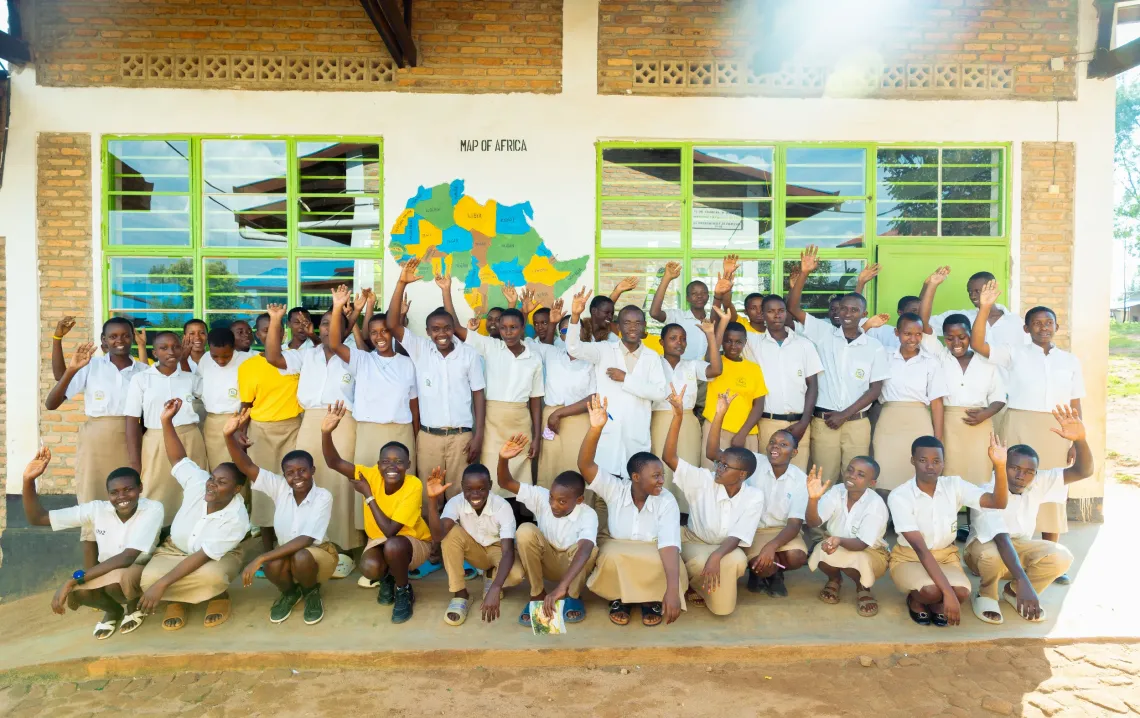
For UNICEF, the programme reflects a shared commitment to ensuring that every child not only attends school but makes meaningful progress in learning. “Every child deserves not only to be in school, but to learn and thrive,” says Charles Avelino, Chief of Education at UNICEF Rwanda. “Remedial learning is a practical and effective approach that helps children progress at their own pace and stay on track throughout their education.”
In classrooms, these changes are making a visible difference. Learners are asking more questions, participating more actively and gaining confidence in their abilities. Remedial learning helps children understand, progress and stay on track in school. From Nyarugenge to Kamonyi, that progress is already visible, and with each lesson, more children are moving forward with confidence, ready to learn, succeed and shape their future.
Behind this progress is a structured effort to reach learners who need extra support. The weekend remedial learning programme focuses on Primary 6, Senior 3 and Senior 6 students who score below 50 per cent in overall assessments or in specific subjects, giving them the time and support to strengthen their understanding. Teachers, working closely with school leaders, identify learners who are struggling, whether through performance, participation or difficulty completing assignments, and guide them through focused sessions that respond to their needs.
Today, the national remedial education programme, including with financial support from the Global Partnership for Education is reaching 236,073 learners in 3,227 schools across Rwanda, with 58 per cent of them girls, and is delivered by 32,727 teachers and 10,246 school leaders. Sustaining and expanding this effort means ensuring that every learner who needs support can access it, so that progress continues, confidence grows, and more children are able to stay on track and succeed in school.


