

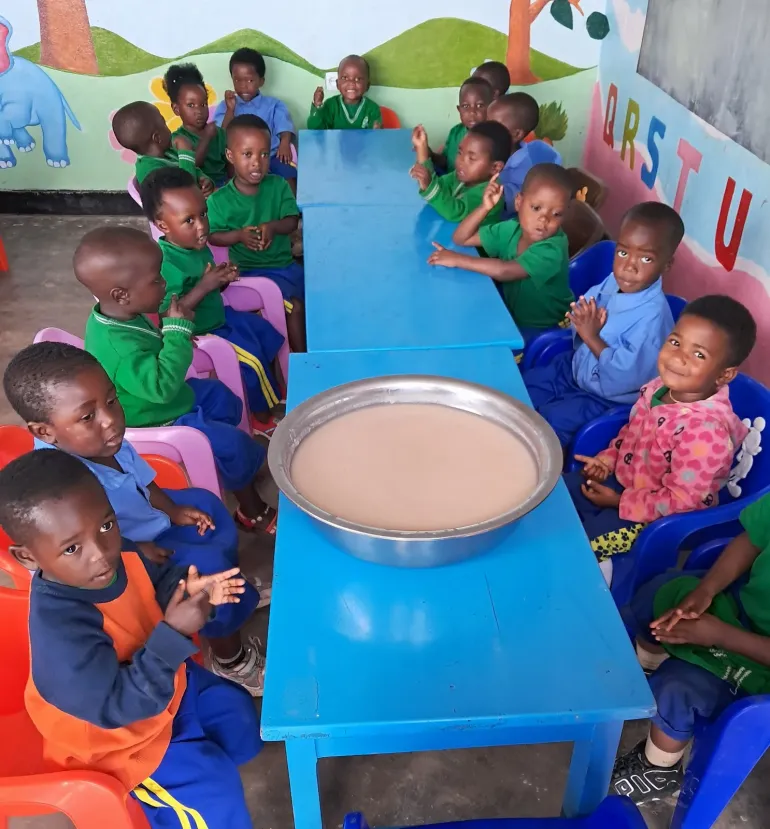
When I first met Mr. Jean Pierre Gatari, President of cooperative owned CEMINYAKI mine in Rubavu in 2021, the world was still recovering from the COVID19 pandemic. He welcomed us warmly, openly sharing both the achievements and challenges of leading a cooperative employing over 1,200 workers — the majority being women.
What stayed with me from that first conversation was his honesty.
“Yes, the need is there,” he admitted. “But opening and running an ECD center without enough resources will be difficult.”
At the time, children of miners were everywhere around the mining site — not because they belonged there, but because many parents had no alternative. Mothers trying to earn enough for the day often had no choice but to bring their children close to unsafe working areas or leave them somewhere nearby, hoping they would remain safe. Officially, children were not allowed on site. Reality, however, was much more complicated.
The challenge was bigger than childcare. It was about safety, dignity, productivity, and the impossible choices women were making every day.
Jean Pierre did not deny the problem. He simply wasn’t sure the solution was possible.
But every time we met after that, I reminded him: it was possible.
Over the years, together with Rwanda Extractive Workers Union (REWU), Rwanda Mines Petroleum and Gas Board (RMB), and National Child Development Agency (NCDA), advocacy efforts were already showing results. Six mining companies had begun setting up ECD centers by 2024. UNICEF supported by training caregivers, play material and providing CEMINYAKI with a temporary mobile tent so they could start somewhere — because sometimes transformation begins with a small and simple first step.
Then came Jean Pierre’s call in October 2025.
His voice carried excitement.
“We are finally launching,” he said. “And we want UNICEF to be part of this milestone.”
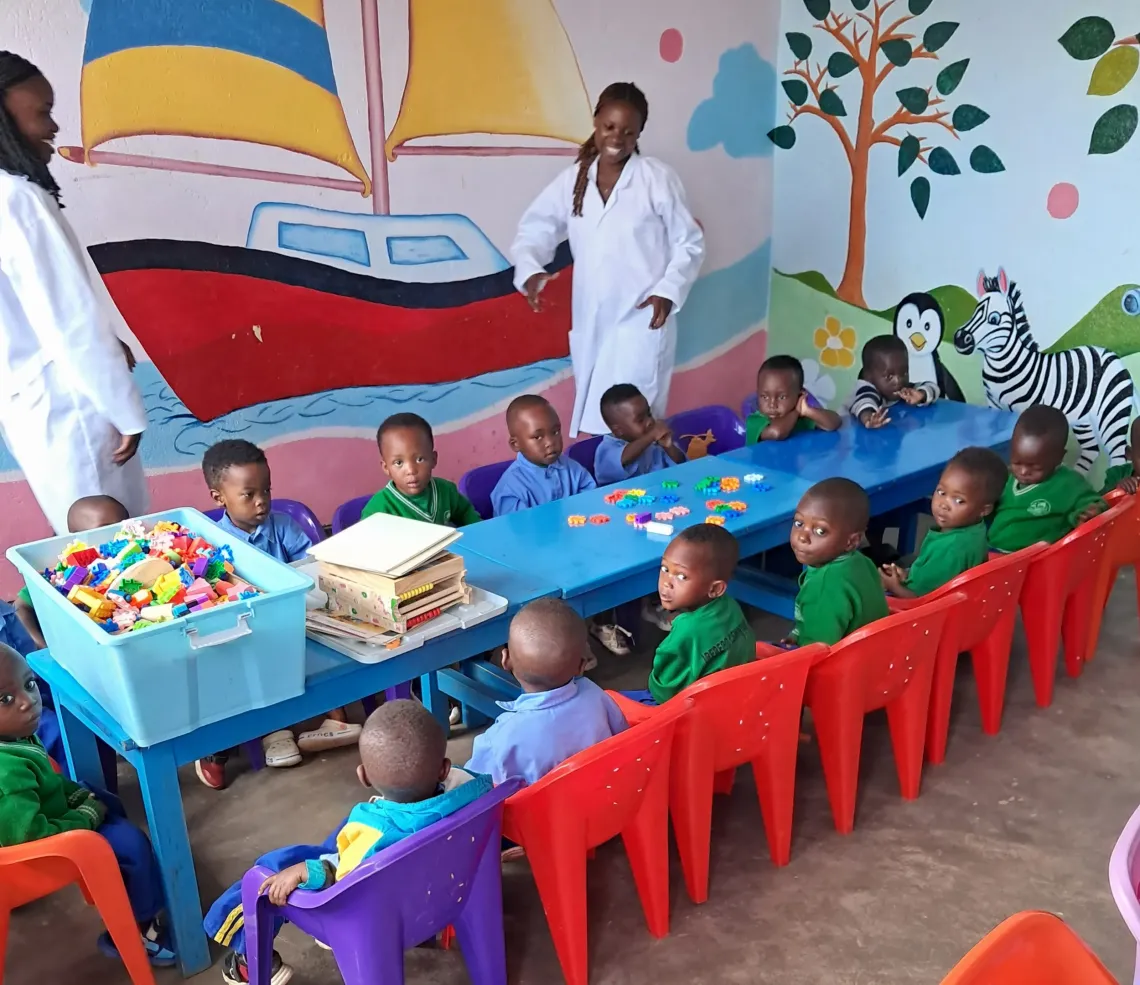
What followed was bigger than any of us imagined. The launch became such an important moment that Rubavu District hosted the official ECD Day celebrations at the newly established center, drawing thousands of people. It had become more than inauguration of an ECD. It had become a trendsetter.
One of my colleagues attended the launch, but something kept pulling me back there. I needed to see it myself.
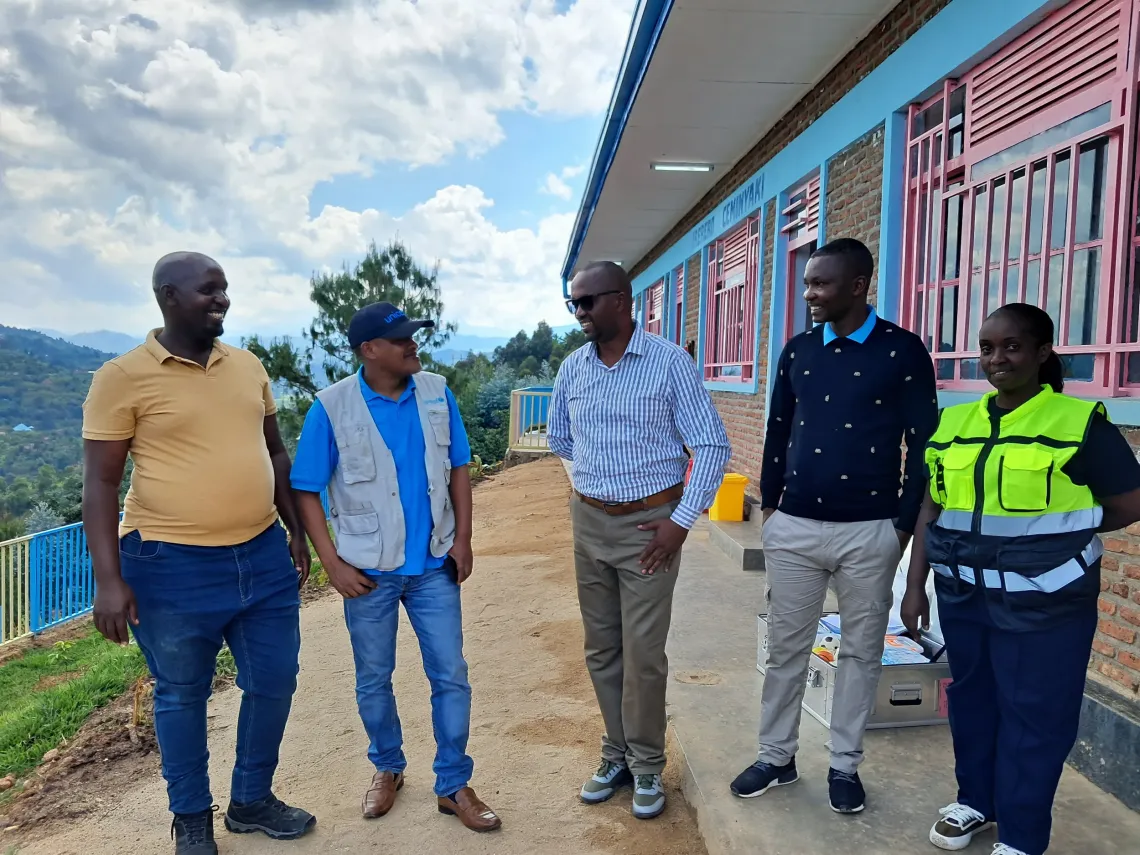
So, in May 2026, together with REWU and the Chief of Health, Nutrition and Early Childhood Development (ECD), we made the journey to CEMINYAKI.
And what awaited us was remarkable.
Standing proudly outside the center, Jean Pierre greeted us with the same smile I remembered from years earlier — except this time, there was something new behind it: pride.
Not pride in building the ECD, it was the Pride in the transformation brought in the lives of children and families.
Today, over 100 children are attending the center. What began as a temporary tent has transformed into a fully functioning ECD facility providing daycare, nutrition, hygiene support, early learning, and recreation for children whose parents spend long hours working. Mothers now work more efficiently knowing their children are safe, learning, and cared for.
The change is visible everywhere.
Before the center existed, many women came to work carrying children on their backs or constantly worrying about those left behind. Unsafe environments, stress, absenteeism, and reduced productivity were everyday realities. The center by creating a safe space where children can learn and thrive while parents work with peace of mind, has completely changed the earlier scenario.
Jean Pierre explained the transformation in simple words:
“Workers now work confidently because they know their children are safe. We are not only investing in today’s workers — we are investing in future generations.”
He paused before adding something even more ambitious.
The dream is bigger now.
The cooperative has already acquired land and hopes to expand beyond early childhood services into primary education so children can continue learning without interruption. Financial limitations remain the biggest challenge, but the vision is clear: no child should start strong and then lose momentum because the next step does not exist.
As discussions continued during our visit, one message became clear: this vision cannot belong to one cooperative alone. Samson Desie, UNICEF Rwanda’s Chief of Health, Nutrition and ECD, believes that leaders like Jean Pierre can become powerful champions for children.
“What CEMINYAKI has demonstrated is that investing in young children is not simply a childcare intervention; it is an investment in human capital, productivity, gender equality, child protection, and community development all at once. When a leader like Jean Pierre chooses to prioritize children, the benefits ripple far beyond the ECD center itself. Children are safer and better prepared for school, mothers are able to work with peace of mind, businesses become more productive, and communities become stronger. We need more champions like him across Rwanda.”
Reflecting on CEMINYAKI's ambition to expand into primary education, Samson added:
“This cannot be only his responsibility, or government responsibility, or community responsibility. It has to be a joint responsibility. If we all agree that children deserve the best start in life, then we must all play our part in making that happen.”
As UNICEF celebrates 40 years in Rwanda this year, I could not help but reflect on how progress often begins: with one person willing to believe that something better is possible.
Four years ago, Jean Pierre saw a challenge that seemed too big to solve. Today, more than 100 children are learning, playing, and growing in a safe environment because he chose to act. Today, he sees in them budding engineers, teachers, leaders, and investors.
Standing in the courtyard of the ECD center, surrounded by smiling children and proud parents, I was reminded that the most powerful investments are not always measured in buildings or profits. They are measured in opportunities created, futures protected, and dreams made possible.
Forty years into UNICEF's partnership with the Government of Rwanda, CEMINYAKI stands as a powerful example of what can happen when government, communities, workers, and the private sector come together around a simple belief: every child deserves the best start in life. And sometimes, that belief can transform an entire community.
We left inspired!

