At home in a new country
The story of two Ukrainian siblings navigating adolescence in Romania

- English
- Română
Becoming an adolescent is never easy. Even in the best of times, those in-between years bridging childhood and adult life feel like a series of tests that everyone failed to tell you about: figuring out how to talk to people, where you belong, who you’re becoming. For Tanya and Slavic, two siblings from Ukraine who are 11 and 13 years old, those tests became literal when the war in Ukraine started: going to new schools, learning a new language, and getting used to an unfamiliar country they suddenly had to call home.
Together with their parents, Tanya and Slavic arrived in Brașov, Romania, as refugees three years ago, just before their teenage years really began. Overnight, their childhood turned into a constant exercise in translation, not just of words, but also of emotions, routines, and even identities. All of a sudden, every little daily interaction with strangers required an effort. Asking for a bus ticket. Finding the right classroom. “Do you need a bag?” a cashier once asked Slavic at a supermarket, and he froze, the stark language barrier preventing his answer. It seemed so small, but Slavic remembers it to this day, because that mundane moment felt to him like yet another challenge, and one more thing he didn’t know how to react to.
The siblings speak about their experience of moving to Romania now with the casual ease of teenagers who don’t dwell too much on things. “Our parents explained what was happening,” Tanya says with a shy smile. “They told us we were doing what we had to do. So… we just did it.” Slavic, who was just ten when they left, shrugs casually and adds: “I didn’t understand much. I was too young to be stressed.”

In Ukraine, life had been simple for them. They lived in a village, in a big house, with a yard, friends down the road, and familiar routines of school and play. When they arrived in Romania, everything changed around them. “At first, we didn’t understand anything,” Tanya remembers.
Tanya has always liked languages, so she was the one who fully committed to her Romanian classes quickly, picking up bits and pieces until things began to fall into place. “When I started school, I recognised some of the words from my Romanian lessons. That helped.” For Slavic, it was harder. “I’m not great with languages,” he says plainly. “It took me a long time to learn Romanian.” But Tanya helped him, and their teachers were understanding, standing by their side and taking the time to accommodate their needs. “If we didn’t know something, they said it was OK. They explained things again. They were really kind,” Slavic adds.
Their mother played an important role in getting them settled, researching everything from health care to school registration, enrolling them in classes, and finding a summer school programme with other Ukrainian children. For Tanya, this changed everything. “It helped me feel less alone,” Tanya says. “I made other Ukrainian friends.”

Today, Tanya and Slavic are preparing to start the seventh grade in a local Romanian school. They were the only Ukrainian students in their class when they first arrived, but found support from a Moldovan classmate who spoke Russian and helped them with translations. “At the beginning, I didn’t get anything,” Slavic admits. “Now my favourite subjects are Biology, Math, and Physics. I am learning coding at home, and my dream is to become a computer programmer.” Tanya prefers English, Romanian, and art, and dreams of going to art school one day.
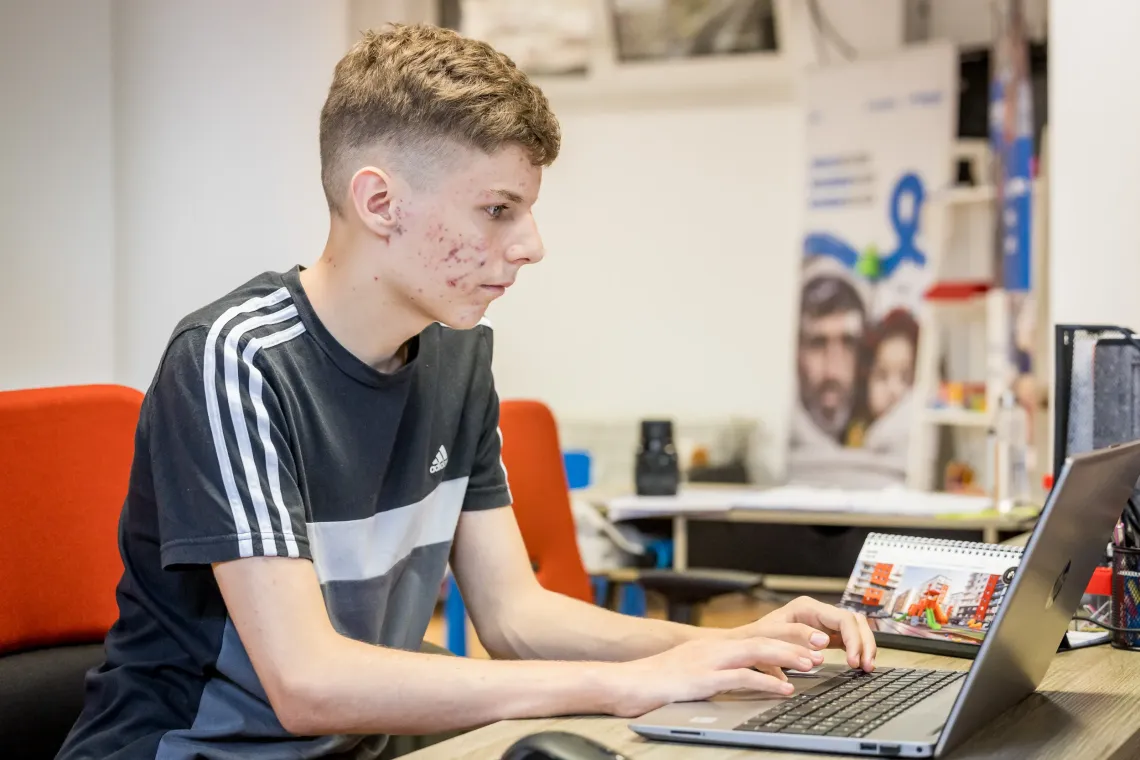

While they have adapted to their new life in Brașov, there are still things they miss from back home. Tanya talks about the cats they left behind with their grandparents, and Slavic misses the yard, the open space to play and run. However, both siblings say that Romania is starting to feel like home.
“I think we’ll be here for at least a few more years,” he says. Tanya nods: “It’s become like a second home for us.”

Their hopes for the future are simple and shared. Slavic says, “I want the war to end. I want Ukraine to find peace.” Tanya chimes in, “And I want the people who had to leave their homes to be able to go back and feel safe there.”
Since the outbreak of war in Ukraine, UNICEF has offered assistance to the Katya Centre in Brașov, with the support of the United States Department of State Bureau of Population, Refugees, and Migration, a strong partner in safeguarding and advancing the integration of Ukrainian refugee children in Romania. Katya Centre is a welcoming space where Ukrainian children and their families can begin to rebuild their lives. Teenagers like Tanya and Slavic can take part in activities, learn the Romanian language and find support as they adjust to a new life. More than anything, the centre offers a sense of community and a place where no one has to navigate this new beginning alone.