Securing the cold chain
Through Canada for COVAX, UNICEF has supported Lumbini Province to significantly expand its vaccine storage capacity and strengthen immunization infrastructure

Rupandehi, Nepal – "I believe it is going to be an immense help for health facilities across the province," says Hari Acharya, Cold Chain Supervisor at the Province Health Logistic Management Center (PHLMC).
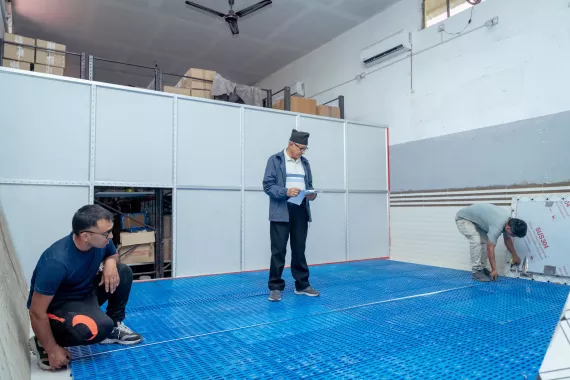

Hari is referring to two newly installed walk-in coolers at the PHLMC, which will strengthen vaccine storage in Lumbini Province. This has been made possible through support from Canada for COVAX, as part of the UNICEF Global COVID-19 Vaccine Delivery initiative, aimed at bolstering the Government of Nepal’s vaccination efforts.


With Canada’s support, UNICEF is enhancing cold chain systems across Nepal—ensuring vaccines are safely stored and efficiently distributed.
This includes introducing solar-powered solutions in areas with unreliable electricity, identifying storage gaps, and providing targeted support based on local needs.
In Lumbini, limited storage capacity has long been a challenge. "Previously, we had only 7,000 liters of storage, which often fell short of the 10,000 to 15,000 liters needed, especially during special campaigns," explains Hari.
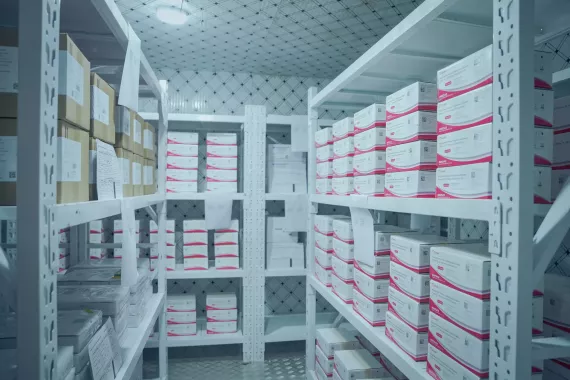
The new coolers, each with a 10,000-liter capacity, now provide ample space to store vaccines for routine immunization, special campaigns, and COVID-19, strengthening the province’s ability to respond to both urgent and long-term needs.
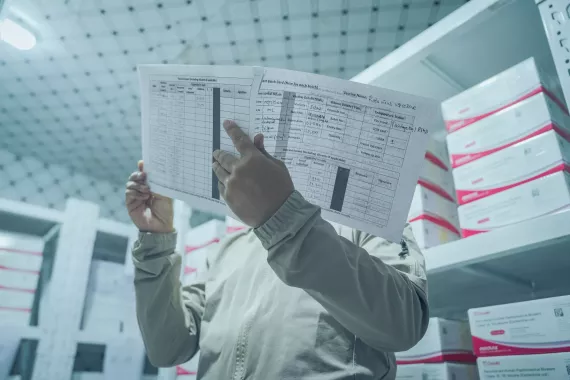
"Now, however, we have the space to arrange vaccines properly on the racks, according to their bin cards. We’re able to keep different vaccines separate, ensuring they don’t touch, allowing air to flow. This also helps us keep the vaccine vial monitors (VVM) stable and secure."
These improvements are critical in a province with nearly 5 million people, where vaccines must be distributed to 2,962 vaccination centers. Dr. Rajendra Kumar Giri, Director (a.i.) of the PHLMC, emphasizes the significance of this upgrade:
"The new coolers will ease things a lot for us, increasing our storage capacity significantly."
With new vaccines being added to Nepal’s routine immunization program each year, the expanded storage capacity is more important than ever.

"The new walk-in coolers will help ensure that any upcoming vaccine requirements for the province, including the introduction of new vaccines, can be managed without issue," says Dr. Rajendra.
With these advancements, Lumbini Province is now better positioned to meet the vaccination demands of its growing population and strengthen the resilience of its health systems.