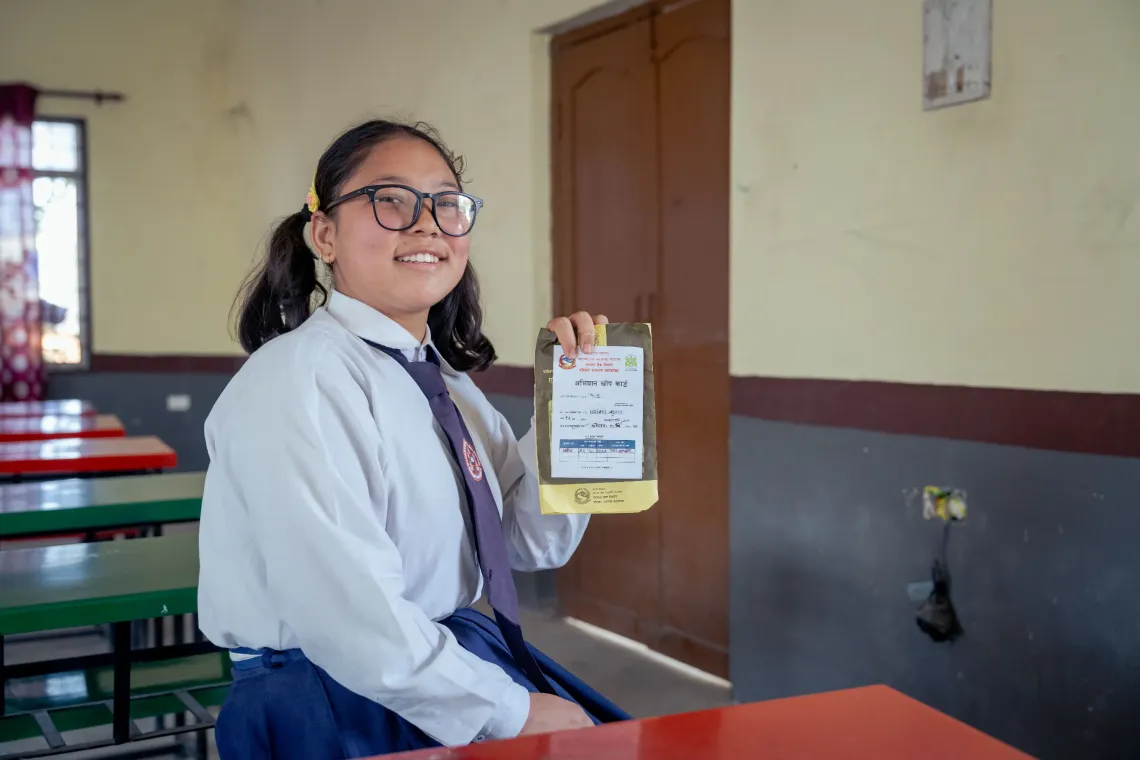
Protecting girls against cancer
Nepal’s first nationwide HPV vaccination campaign
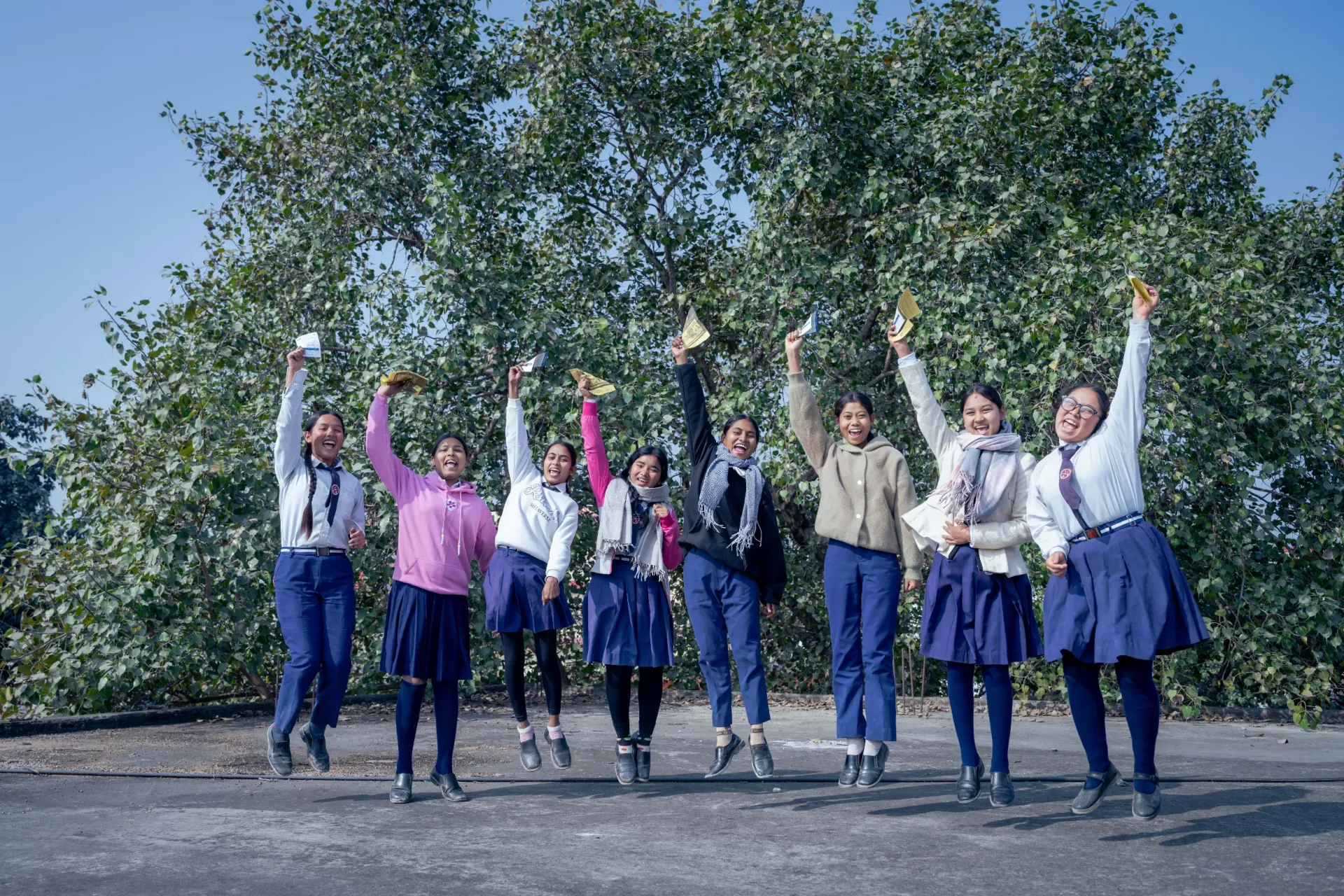
In Nepal, UNICEF’s core resources and flexible funding were crucial to the success of the country’s HPV vaccination campaign for adolescent girls, enabling extensive outreach and social and behaviour change activities. This support helped fast-track Gavi and government funding, resulting in 94 per cent coverage - reaching 1.46 million girls in the target group - and making Nepal the 145th country to introduce the HPV vaccine into its routine immunization programme.
Over the past two decades, Nepal has made significant progress in advancing children’s development, including their health. Yet major challenges remain, as the country is still among the poorest in Asia. To further protect the future health of girls in Nepal, a nationwide HPV vaccination campaign was conducted in 2025 to introduce the vaccine. UNICEF leveraged core resources to ensure that no girl was left behind.
HPV, or human papillomavirus, can cause several forms of cancer, including cervical cancer. In Nepal, cervical cancer is the second most common cancer among women and the leading cause of cancer-related deaths. An estimated 80 per cent of women and men will be infected with HPV at least once in their lifetime.
Fortunately, the HPV vaccine can prevent infection and protect against more than 90 per cent of cancers associated with the virus.
In February 2025, the Government of Nepal launched a nationwide HPV vaccination campaign with support from Gavi, UNICEF, WHO and other partners. It was the largest single cancer prevention initiative ever undertaken in the country, marking a major step in protecting adolescent girls from cervical cancer and laying the foundation for their long-term health.
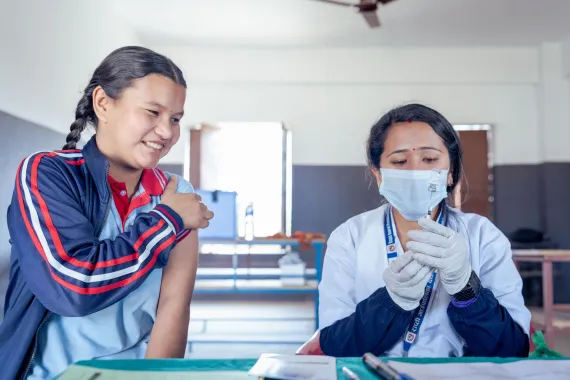
The campaign targeted girls aged 10 to 14 years, with the goal of vaccinating more than 1.6 million girls nationwide. Vaccines were delivered to 27,100 vaccination points, most of them in schools.
More than 27,000 health workers, including Laxmi Shrestha, were mobilized to administer vaccines and respond to questions from girls and their families.
“The vaccine is most effective when given during adolescence,” she explained. “That’s why this campaign is so important.”
In rural and marginalized areas of Nepal, however, girls often face significant barriers to accessing life-saving HPV vaccinations, including financial hardship, limited awareness and social stigma. This is where UNICEF stepped in, using core resources to ensure that even the most marginalized girls - including those who are out of school - were reached. To improve vaccine acceptance, UNICEF gathered insights on social and cultural barriers to vaccination and shared them with relevant authorities.
The aim was not only to raise awareness, but also to build trust in a vaccine that had never before been offered at such scale in the country. Community concerns were not dismissed; they were acknowledged and addressed through open, respectful dialogue.
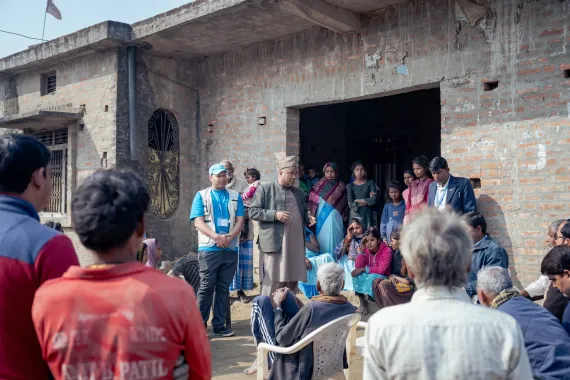
Teachers, religious leaders, youth volunteers and other community members played a vital role in building trust through face-to-face engagement. One such leader, Maulana Mashood Nepali, worked to reach both school-going and out-of-school girls.
“We have 347 girls in our community who are out of school,” he said. “To reach them, we met with their guardians and explained the importance of this vaccine.”
Peer-led advocacy was another powerful tool in expanding the campaign’s reach. In Dailekh District, Pushpa Rawat played a key role in mobilizing her community. She participated in a workshop organized for girls aged 10 to 14, designed to deepen understanding of HPV, cervical cancer and the vaccine. During the sessions, myths were debunked, challenges identified and solutions developed - including a targeted action plan to reach out-of-school girls identified through a municipality-led survey supported by UNICEF.
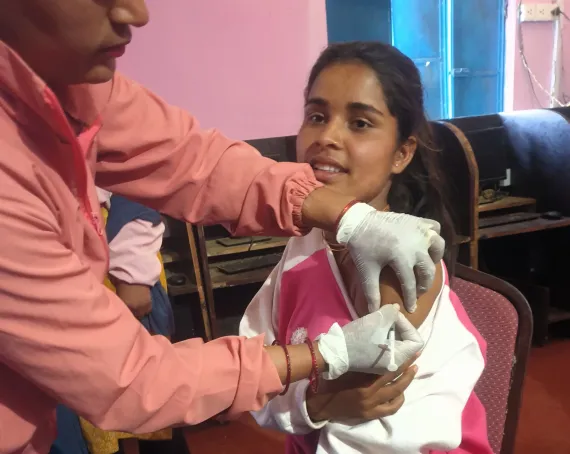
Following the workshop, Pushpa led local efforts to ensure that all adolescent girls in her area, including those out of school, received the vaccine.
Through her advocacy and the mobilization of youth clubs, 14 out-of-school girls were vaccinated in just two days.
“Before the workshop, I didn’t know much about cervical cancer,” Pushpa shared. “It helped me understand its importance and the role of vaccination for adolescent girls, especially those who are out of school.”
Thanks to the combined efforts of community leaders, students, religious leaders, health workers and teachers - supported by UNICEF’s core resources - the campaign achieved 94 per cent coverage nationwide. The HPV vaccine has now been integrated into Nepal’s routine immunization programme.
Nepal’s experience demonstrates how strategic communication and strong community engagement can shift perceptions, rebuild trust and turn vaccine hesitancy into action, ultimately protecting girls from cervical cancer
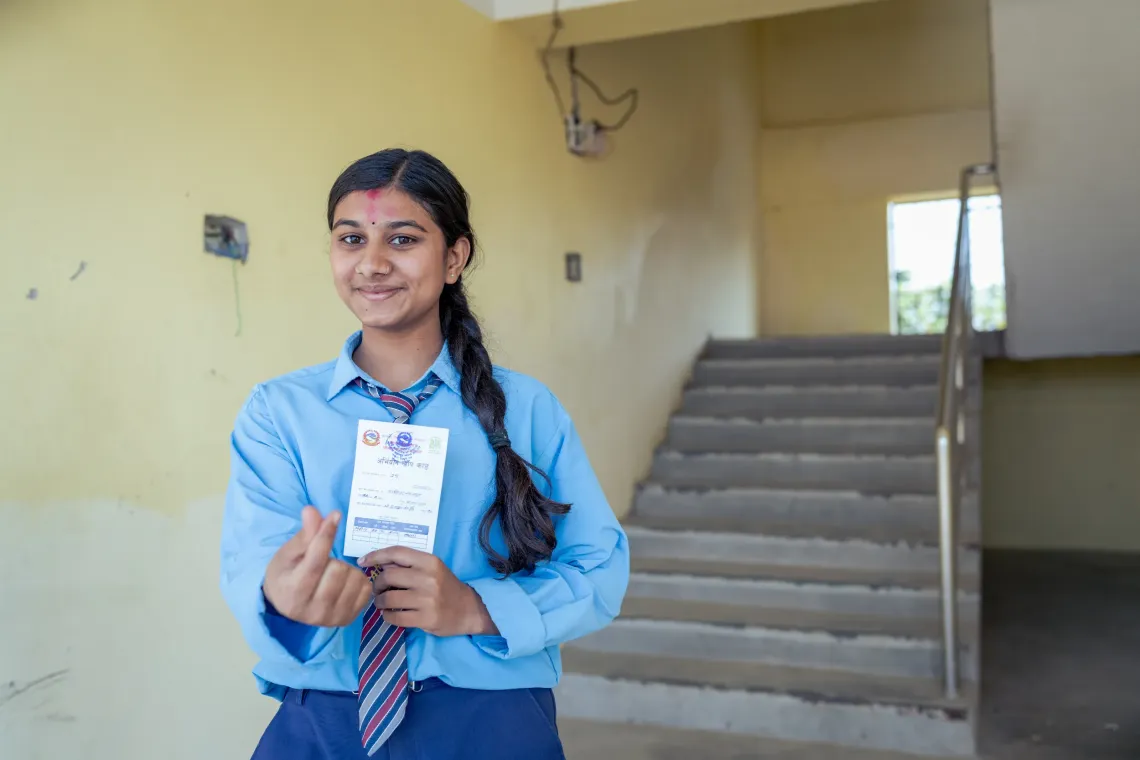
“I feel confident now that I am protected from the possibility of cervical cancer in the future.” — Sangita, Grade 10 student
“With the HPV vaccine, I feel assured that I’m not at risk of cervical cancer.” — Prasamsa, Grade 10 student