Out of the shadows
A mental health worker reflects on the rewards and challenges of catering to the mental health needs of children and adolescents in rural Nepal

Dhanusha, Nepal: Nirmal Mahato is constantly on the move.
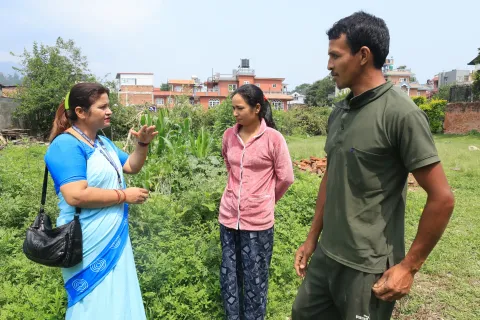
His first appointment of the day is with a group of female community health volunteers (FCHVs), a session on common mental disorders afflicting children and adolescents. Nirmal goes through the list of conditions, pointing out their symptoms and manifestations one by one, before underscoring the role of the FCHVs – often the first point of contact for most members of their communities – in finding and referring these cases to trained health workers or doctors in nearby hospitals.
Nirmal then heads to the home of a child identified by one of the FCHVs as potentially suffering from a mental health problem. Once there, together with the FCHV, he counsels the parents, explaining to them at length what the condition entails, and laying out options for treatment and care. This is then followed by a visit to the local health worker to discuss recent child and adolescent mental health cases that have come to the OPD or been located through active case findings.
As the mental health coordinator for the Mithila Municipality in Dhanusha District in Nepal’s south, Nirmal has considerable responsibility on his shoulders. In partnership with the municipal government, UNICEF had initiated a community child and adolescent mental health project in Mithila with financial support from the 7 Fund. As a result of that collaboration and UNICEF’s continued advocacy, the municipality had then brought Nirmal onboard through their own budget, the very first person to be appointed to such a position anywhere in the country.

“The work is incredibly rewarding,” he says. “There are so many mental health problems among young people that go undiagnosed because health workers and facilities are not equipped to assess them.”
Global data shows that up to 20 per cent of adolescents experience mental disorders. Suicide is the third leading cause of death among 15-19-year-olds worldwide, and around 15 per cent of adolescents in low-and middle-income countries have considered suicide. A recent report found that every year, over 475,000 Nepali adolescents have planned suicide, with 340,000 going further and attempting it.
“I’ve made over 200 home visits and diagnosed over 50 children with some kind of mental health disorder,” Nirmal says.
These diagnoses have ranged from autism, intellectual disability and attention deficit hyperactive disorder to anxiety and substance abuse. “The next step is to refer them to the closest hospital,” Nirmal explains. “If treatment is not available locally, I advise the parents to take the child to facilities elsewhere in the country.”
This, however, is easier said than done. According to Nirmal, the shortage of specialized care services in rural areas is one of the major challenges in his job and facing the mental health field in Nepal. “Children with development disorders and other issues need focused attention,” he says. “And it’s not always possible for parents to take them to treatment facilities far away – both in terms of the cost of travel and the physical toll it can take on the children.”
“Even Janakpur, which is just around 30 kilometres from here, is not a viable option for some.”
Nirmal cites the case of a six-year-old boy with autism disorder that he was recently put into contact with by an FCHV. Even after the child had been diagnosed, there were no facilities nearby to recommend sustained care. The mother, Punam, said she had not been able to get a job because she had to stay home to take care of the boy. “If only there was somewhere he could go to get trained on some skills so that he can make a living and support himself when he gets older… that’s all I want,” she had said.
That case had a particular impact on Nirmal, especially because he has witnessed multiple cases of autism in the municipality and around Province 2.
“It hurts not to be able to help everyone,” Nirmal says.
“Although it’s great that we have started to identify mental health issues in children and young people, without the necessary services and trained human resources to actually treat these cases on the ground, we are only at step one.”
After supporting the development of a mental health training package for health professionals at different levels, UNICEF is now working with the Government of Nepal to adapt and scale up the package nationwide. The ultimate aim is to provide quality mental health care for all.