An eye on early detection
How community members are being mobilized to strengthen local-level disease surveillance in Nepal with UNICEF support thanks to the Pandemic Fund
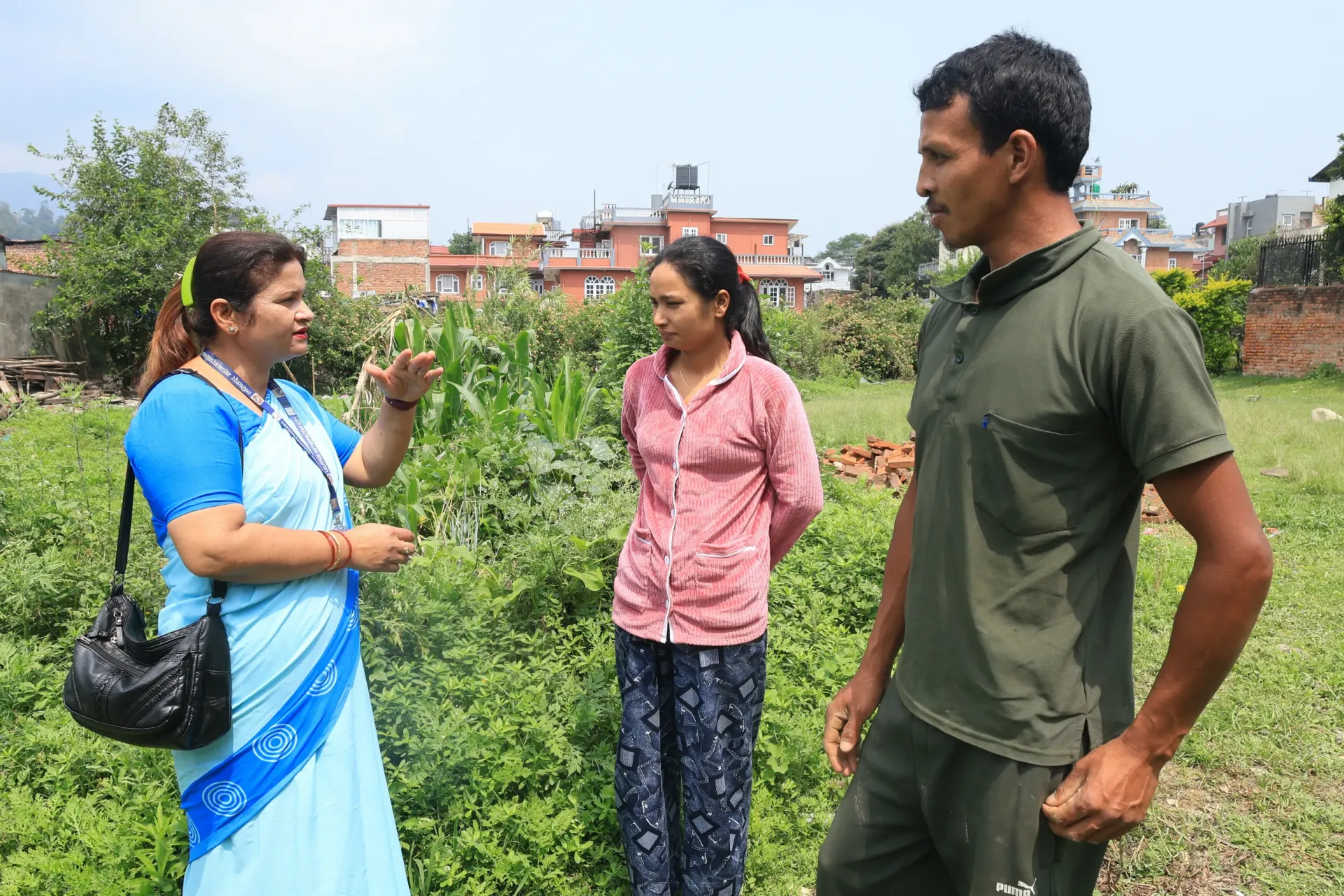
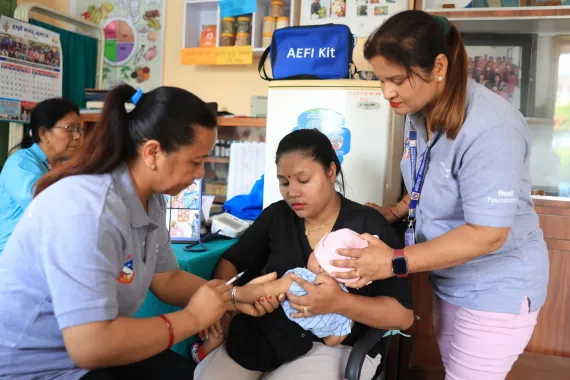
Lalitpur, Nepal: For more than two decades, Bimala Rana has been a familiar and trusted presence in her community. Long before she became a Female Community Health Volunteer (FCHV) 12 years ago, she was already following in the footsteps of her mother, who also served as an FCHV. As a child, Bimala remembers walking beside her mother as she moved from home to home, holding on to the distinctive blue sari that marked her role in the community.
Today, Bimala carries that legacy forward. Families know her, trust her and often turn to her first when someone is unwell. “They tell us everything, even small things, and ask for our advice,” she says.
That trust is exactly what makes community health volunteers like Bimala central to Nepal’s efforts to detect and respond to disease outbreaks early.
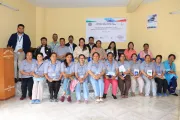
It was for this reason that Bimala and other FCHVs were invited to participate an orientation on community-based surveillance of diseases in Lalitpur Metropolitan City.
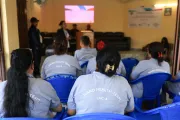
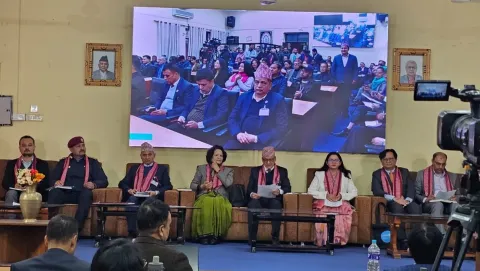
Held by the local government, in partnership with UNICEF, thanks to the generous support of the Pandemic Fund, the orientation also brought together ward representatives, youth, local government officials, educators and Nepal Police officials. The aim was practical: to help communities recognize early warning signs, report them quickly and support a faster response.
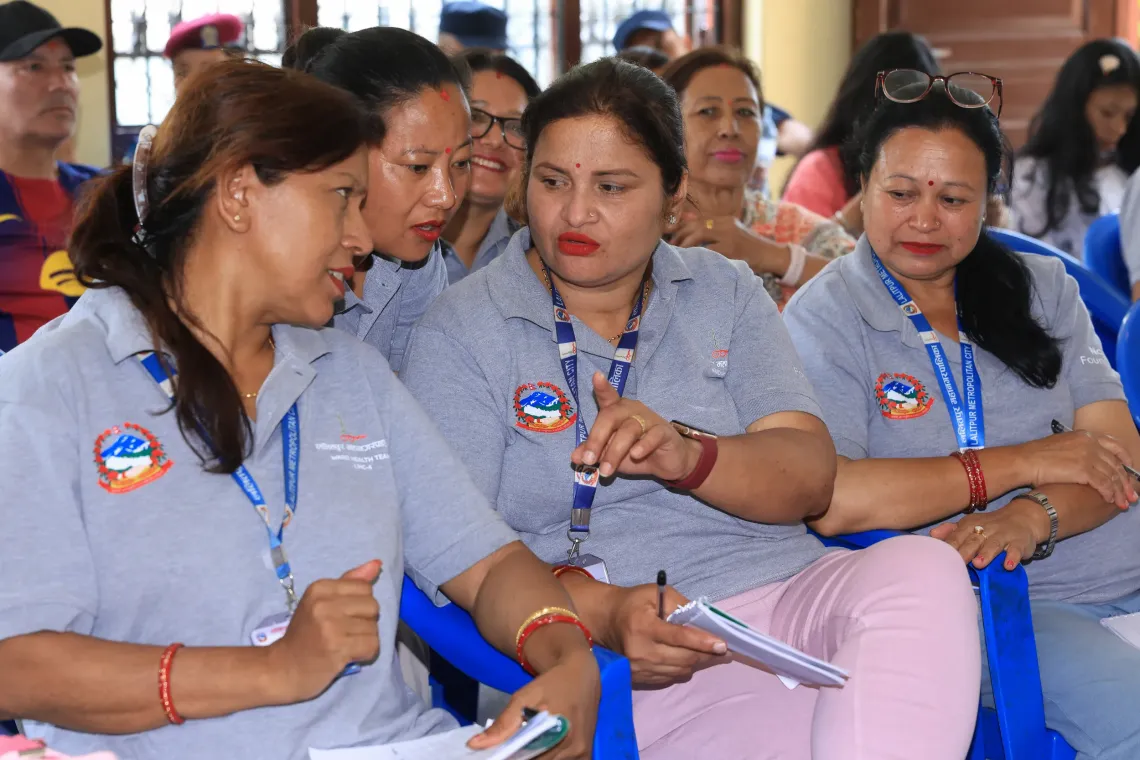
For Bimala, the training felt immediately relevant to her daily work. She and other FCHVs were already referring people to health facilities when they noticed illness in the community. But the orientation helped underline the urgency of response. “Before, when we saw symptoms or many people becoming sick at the same time, we worked more slowly,” she says. “Now we know we should not wait. We should report immediately to the health facility and call the 1115 helpline.”
That simple shift from waiting to reporting can make a critical difference. In dense urban areas such as Kathmandu Valley, where communities are highly mobile and some groups may be harder to reach with health information and services, early signals from people like Bimala can help authorities identify unusual patterns before they grow into larger outbreaks.
Sarita Maharjan, Senior Health Officer at Lalitpur Metropolitan City, says Nepal has identified a range of priority diseases for notification and response, and local, community-level information is essential to better understand where diseases are appearing, how intensely they are affecting people and how quickly support is needed.
“Although some level of this was already being done, thanks to the training, reporting of disease is expected to become more systematic,” Sarita says. She recalls the 2016 cholera outbreak, when Lalitpur Metropolitan City was among the areas with a high case burden. The response required water testing, contact tracing and close coordination with tole health volunteers and ward health committees. Experiences like that, she says, show why preparedness cannot rest with one institution alone.
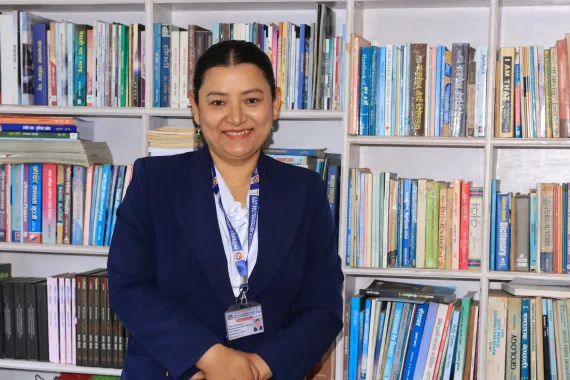
“The community is a common place of habitat for many different people,” Sarita says. “It is essential for all, not just one, to become watchdogs so that we are prepared to prevent morbidity and mortality, and respond to any events.”

That multisectoral approach was visible in the orientation room. For Ward Representative Shradha Thapa Magar, the training helped organize existing knowledge into clear steps.
“COVID was a big lesson for us,” she says. “Because of that experience, we now know how important preparedness really is.”
Nepal Police Inspector B.B. Bohara also sees awareness as a frontline tool. Outbreaks are unpredictable, he says, and communities need to know what signs to watch for, where to go, whom to contact and how to report. “This training is a very important step, and the Nepal Police is keen to play its role,” he says, adding that similar orientations could be useful for other local governments as well.


For 17-year-old Rishpa Mangranti, a child club member with an interest in health, the orientation made disease surveillance feel like a responsibility shared across generations. Having experienced dengue twice, and remembering times when several people in her family and neighbourhood fell sick, she says she now better understands how early reporting could help prevent serious situations.
“I am more informed about how to inform,” Rishpa says. With the monsoon season increasing the risk of water- and vector-borne diseases, she sees her role as one of raising awareness among friends, neighbours and other young people.
“It is not enough to know this myself and leave it to others,” she says. “We all need to take responsibility.”