Bringing light and life
How solarization of healthcare facilities in Nepal through Canada and Gavi support is enabling healthworkers to better serve their communities

Sindhupalchowk, Nepal: "Before the solar installation, I would often deliver babies by turning on a generator or even torchlight," recalls Dr. Sushila, a medical doctor at the Bahrabise Primary Health Center in Nepal's hilly Sindhupalchowk District.
"Now, with reliable power, I can focus entirely on the mother and baby, knowing our equipment will work when we need it most."

Unreliable electricity has long been a challenge for health facilities in Nepal, especially those based in remote areas. Many clinics struggle with power cuts, making it difficult to run essential medical equipment, store vaccines safely, or provide care at night.
A new solar power project is helping change that.
Launched in 2024, the initiative — led by UNICEF in partnership with the Government of Nepal and made possible through support from the Government of Canada and Gavi — has already equipped 65 per cent of its target 20 health facilities with stable power systems.
For the half a million people served by these clinics, this means more than just keeping the lights on; it ensures access to life-saving care.
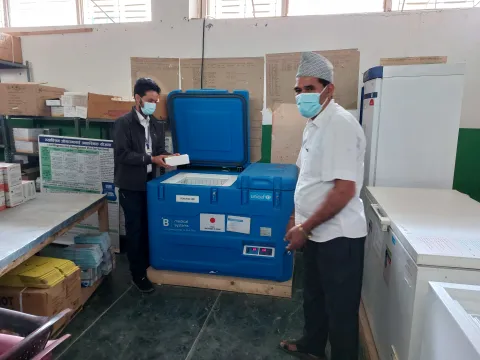
At the Bahrabise facility, the difference is clear. Vaccines can now stay refrigerated even during outages. Medical equipment can run without disruption. Health workers no longer have to delay procedures or turn patients away because of power shortages.

"The change in our ability to serve the community has been significant," says Dr. Sushila. "We can now operate diagnostic equipment reliably, maintain our cold chain for vaccines, and provide emergency care at any hour."
"The solar system’s real-time monitoring dashboard also helps us ensure the system is always functioning optimally."
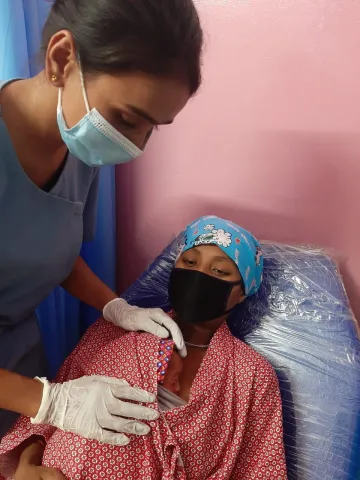
For mothers like Manju Badal, who lives far from the nearest health centre, this reliability brings peace of mind.
"During my first pregnancy last year, I was always worried about whether the health centre would have power when I needed it," she says. She recalls not having easy access to ultrasound services.
"Now, I feel more confident knowing the facility can provide proper care day or night."
The project’s impact goes beyond maternity care. Health workers say their jobs have become less stressful, knowing they can provide the care their communities need.
"Before, when we were using a generator for backup, it made a lot of unpleasant noise and consumed a lot of fuel. We had to continuously monitor the fuel level to ensure it wasn’t running low," Dr. Sushila adds.
"Now with the solar system, we are free of that hassle. And it’s also environmentally friendly."
As the project nears completion, it is showing how solar power can help bridge gaps in healthcare delivery. In remote areas of Nepal, each solar panel installed is making a real difference — not just in keeping the lights on, but in ensuring safe deliveries, timely treatments, and better health outcomes for families.