Social and Behavior Change (SBC)
We work to promote behavioural and social change by engaging with key stakeholders at all levels, strengthening their capacities and promoting meaningful dialogue and positive actions that contribute to social change
- English
- नेपाली
The Challenge
The analysis of key deprivations in children’s and women’s rights in Nepal concludes that alongside shortfalls in the enabling environment and the systems for response, there is the underlying challenge of undesirable beliefs, attitudes and entrenched social norms that strongly influence behavioural practices. There is a complex interplay between an individuals’ behaviours and the perceptions that individuals have about what others do and expect them to do at household and community level.
These perceptions reinforce behaviours even where individual knowledge and attitudes might suggest otherwise. Addressing negative social norms and changing behaviours is a long-term endeavour. Yet without a greater understanding of and response to social norms and behavioural issues, results for children and women cannot be achieved.
While designing and implementing programmes, community voices are often unheard. This affects the relevance and effectiveness of developmental programmes. Positive changes in practices and norms can be achieved through the active engagement of children, adolescents, women, men and relevant duty bearers in social action and change processes, to help realize the survival, development, protection and participation rights of children with equity in all contexts, including humanitarian situations.
In order to ensure that this gap is met and policy makers and implementers take community feedback into account, mechanisms to understand community perceptions and satisfaction related to social services (access, quality, inclusiveness, gender sensitivity etc.) needs be established. Information gathered from these mechanisms should be fed back on a regular basis to policy makers and implementers for necessary actions.
The Solution
The C4D programme is based on the Socio Ecological Model (SEM) which posits that “Individual behaviour both influences and is influenced multiple levels of influence”. This essentially means that individual behaviour does not develop or even change in a vacuum. There are several factors at multiple levels that influence individual behaviour. Therefore it is essential to understand and address barriers/constraints and drivers to change at multiple levels.
System Strengthening and Capacity Building
In order to ensure that social and behaviour change initiatives are given due importance, it is critical to equip the government, CSOs and media partners with the necessary capacities in the area. Strengthening the capacity of community level communicators who operate as part of the government system is vital if sustained and quality engagement around key behaviours is to be carried out at the family and community level.
Partnership and Innovations
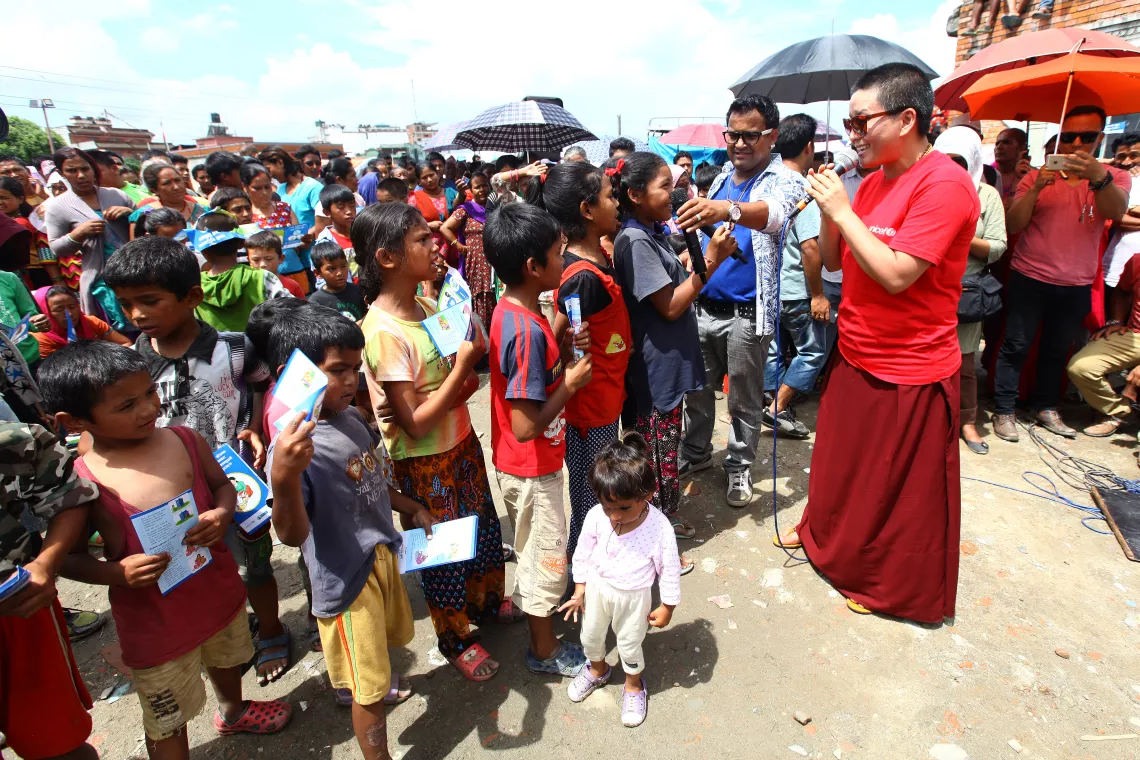
Building broad – based, multi-sectoral partnerships needs to be established to reach out to families and communities at scale. Partnerships with organizations that have extensive reach such as the Ex.Army officers association, religious networks, women’s cooperatives etc needs to be buiilt to ensure that members of their networks, especially at the community level can act as messengers of social and behavioural change in their localities.
Community Empowerment and Social Norm Change
It is necessary to select geographies based on identified deprivations and marginalization to develop and implement specific and tailored C4D interventions to ensure that those most in need of information, support and empowerment are engaged with in a focused and intensive manner. The core of this approach would be to empower communities to become partners in the process of their own development and change.
Knowledge Management, Research, Monitoring and Evaluation
To design appropriate C4D interventions, a formative research needs to be carried out to better understand the barriers and motivators/ drivers behind prioritised behaviours. Partnerships with professional/ academic institutions needs to developed and trainings should be rolled out a course on C4D.