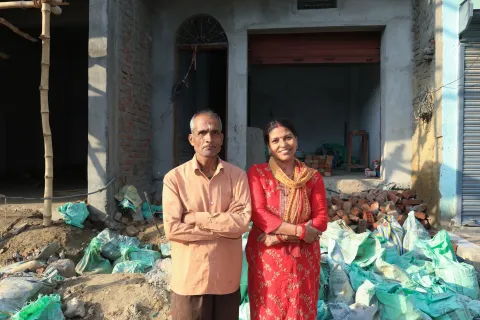
Radio Drama Series on Child-Centred Disaster Risk Reduction
A weekly 20-minutes radio programme round key messages and critical information focusing on maternal and child health, nutrition, hygiene as well as DRR was created to positively impact knowledge, attitudes and practices among families and communities

Highlights
In 2017, Nepal ranked 144th out of 188 countries rated in the Human Development Index. Despite improvements over the last decades, many children, young people and adults are still deprived from basic needs. One in ten births are assisted by no one. One in 25 children in Nepal do not survive to their fifth birthday. More than one-third of children under the age of five are stunted, or too short for their age as a result of chronic undernutrition. Undernutrition in children can have serious, irreversible and lifelong consequences on their development. Seventeen percent of adolescent women aged 15 to 19 are already mothers or pregnant with their first child, whereas many of them are anemic.
Poverty, food insecurity, poor access to services as well as poor infant and child feeding and caring practices, maternal and child infections are some of the key reasons for above mentioned challenges.
Existing vulnerabilities are further intensified due to Nepal’s complex geological formation which makes it highly prone to rapid- as well as slow-onset natural disasters such as earthquakes, landslides and floods. Social and Behavior Change Communication (SBCC) plays an important role in addressing existing gaps in knowledge around childcentred disaster risk reduction, emergency preparedness and in promoting positive attitudes and behaviours.
Aiming to improve the wellbeing of women and children and to increase family and community preparedness for natural hazards, UNICEF collaborated with the World Association of Community Radio Broadcasters (AMARC) Asia-Pacific, the Association of Community Radio Broadcasters (ACORAB) Nepal and Ujyaalo Multimedia Nepal (UMM).
At the core of the ‘Child-Centred Disaster Risk Reduction’ programme. was an ‘edutainment‘ radio series located in the imaginary village of ‘Milan Chowk‘. Spread over a year, key messages on maternal and child health and disaster risk reduction were embedded in a national drama. In addition, local content was produced by 16 selected radio stations across the country.