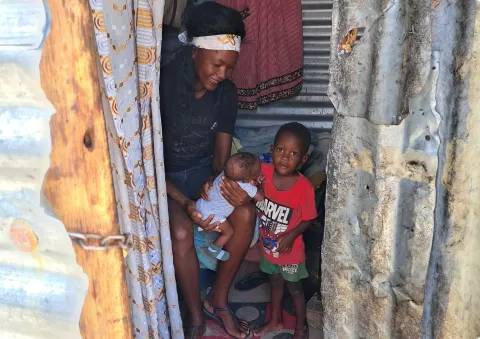
The guardians of Kavango West
How three health workers bring hope to rural families
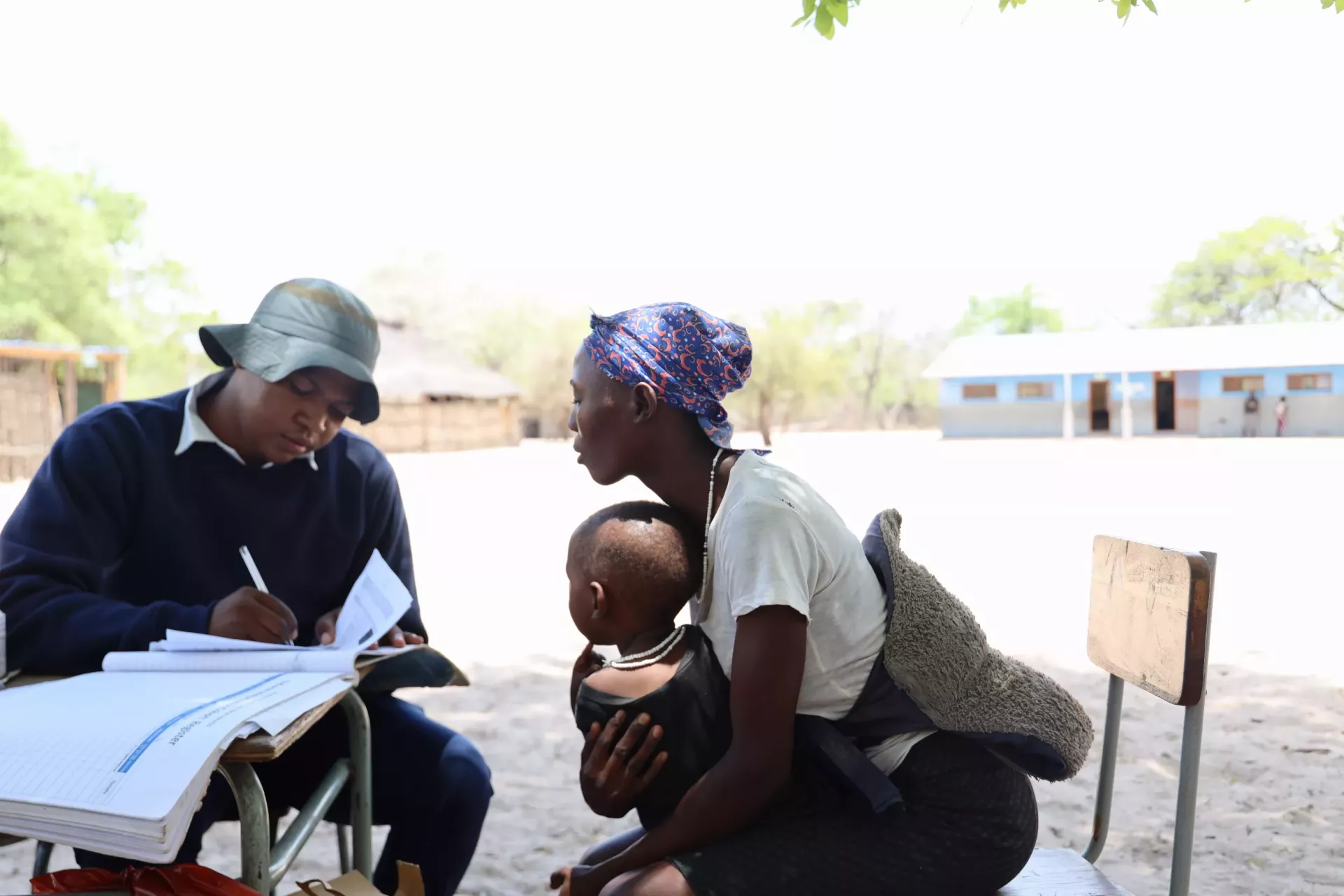
November 2024 - Kavango West - NAMIBIA - Every month, a small team of three health workers—Endunde Romanus and Zuze Padus, both dedicated and compassionate young men, and Nehadi Johanna, a determined and nurturing woman—embarks on a challenging yet deeply rewarding mission across the vast and rural expanse of Kavango West.
With no guaranteed transportation, limited equipment, and the occasional need to work under the punishing sun, their journey is filled with obstacles. Yet for these three dedicated health workers, every session is a testament to the resilience of the human spirit and the universal love mothers have for their children.
The villages of Kavango West are scattered, remote, and often inaccessible. Many are off the grid, without electricity or proper roads. For families here, accessing healthcare means traveling great distances—sometimes 60 kilometers or more—to the nearest health center.
“Without outreach programs, children would miss vital vaccinations, and mothers would go without the advice they need to keep their families healthy,” explains Zuze Padus, who has been part of the outreach team for two years.
But running these programs is not without its challenges. The team relies on rental vehicles, and when none are available, sessions must be postponed, leaving children without essential doses of vaccines. Equipment shortages further complicate their efforts. Without tents, tables, chairs, or partitions, the health workers often conduct screenings in the open, sitting on the ground with little privacy.
“Sometimes, there’s no shade,” says Nehadi Johanna. “We sit in the sun with the mothers and children. It’s not ideal, but we do it because these families need us.

Their task is simple yet monumental: to bring life-saving healthcare to families in the region's most remote villages. From health screenings to immunizations, nutrition advice to early childhood care, their work changes lives, one family at a time.

Each session is carefully planned and executed. The team conducts health screenings, administers immunizations, provides nutrition advice, and answers questions from mothers eager to learn more about their children’s health. Their days are long, often starting at dawn and ending only when the last family has been seen.
Endunde Romanus, the newest member of the team who joined in May 2024, shares his perspective:
“When I joined, I didn’t realize how much this work would mean to me. It’s not just about giving vaccines or doing screenings—it’s about building trust, listening to families, and helping them see that their children’s health matters.”
For the health workers, the most rewarding part of their job is seeing the difference they make in the lives of families. They speak of mothers who wait patiently for hours, often walking great distances to attend the sessions.
“Mothers will sit in the sun with their children for as long as it takes,” says Zuze. “You see their love and determination, and it reminds you why this work is so important.”
Endunde recalls a moment that stayed with him: “A mother came to one of our sessions with her baby. She was so worried because she had been unwell, and she couldn’t afford to take her to a clinic. We were able to vaccinate her, give her advice on feeding, and reassure her. The relief in her eyes—it’s something I’ll never forget.”
Nehadi reflects on the children they serve, finding inspiration in their resilience and innocence:
“Children are at the center of everything,” she says. “When we see them growing healthier and happier, it’s like seeing hope come to life. Every mother’s care and love for her child is universal, no matter how far they’ve traveled or how long they’ve waited.”
Despite these challenges, the trio remains undeterred. Employed by the Ministry of Health and reporting to the regional health office, they organize monthly outreach sessions, bringing healthcare to communities that would otherwise go without.
While the team is deeply committed, their work would be more effective with additional support. Reliable transportation is a critical need. Without a dedicated vehicle, outreach sessions are often delayed or canceled, leaving families without care.
“Our biggest fear is that a child will miss their vaccine because we couldn’t get there in time,” Nehadi shares.
Equipment is another pressing issue. The lack of tents, chairs, tables, and partitions not only makes their work physically demanding but also affects the quality of care. Screenings lack privacy, and mothers and children are often left exposed to the elements.
“We do what we can with what we have,” says Endunde. “But with proper support, we could do so much more.”
Despite these challenges, the team’s work is transforming lives across Kavango West. Each month, dozens of children are vaccinated, mothers receive critical health advice, and families leave with a renewed sense of hope.
“It’s not just about the healthcare we provide—it’s about showing these communities that they matter,” says Zuze. “When we see a child thrive because of the care we gave, it’s the greatest reward.”
The team also sees the ripple effects of their work in the communities they visit. Mothers are more engaged and enthusiastic about their children’s health, and families as a whole are beginning to prioritize preventive care.
“This work is hard,” says Endunde, “but it’s worth it. Every child we help, every mother we support—it’s all worth it.”
“Without outreach programs, children would miss vital vaccinations, and mothers would go without the advice they need to keep their families healthy”

As the day’s light softens and shadows stretch across the vast landscapes of Kavango West, the three health workers take a moment to reflect on their journey. The fatigue from hours of dedicated work lingers, yet their hearts remain full. For them, this is more than a profession—it’s a mission to light the way for families in even the most isolated corners, ensuring no child is left behind.
Endunde, Zuze, and Nehadi understand that the path forward is not without challenges. They face obstacles like unreliable transportation and a lack of essential equipment, yet they press on. What fuels their determination is the love shining in every mother’s eyes and the unspoken promise of a brighter future they see in every child’s smile.
With the support of UNICEF and the Ministry of Health and Social Services, these three health workers are not merely providing medical care—they are weaving lifelines of hope, trust, and resilience. In the remote villages of Kavango West, they stand as beacons of change, ensuring that every child, no matter how distant, has a chance to thrive.