
A lifeline across borders:
A journey of survival on the Kavango river. When every second counts, trained hands save lives

November 2024 | Namibia, Kavango River - As dawn broke over the Kavango River, a woman in labor set out on an urgent journey to Namibia, her destination a health center that promised safe delivery and care. She began her trek at 4:00 a.m., leaving behind her Angolan village, braving the cold river crossing with her family’s help. But fate had other plans. Halfway across, her labor intensified, and before she could reach Namibia, she gave birth right there, with retained products intact, stranded on the river’s edge, weak and bleeding. The newborn lay beside her, cold and exposed, with no protection from the early morning chill.
For many mothers in Kavango West, accessing healthcare is a matter of life or death. With health facilities few and far between, expectant mothers often journey for hours—on foot, by canoe, or across rough terrain—just to reach skilled care. In this case, every moment was critical; alone and in dire need, this mother was vulnerable to complications that could endanger both her life and her newborn’s. The challenges she faced are familiar in Kavango West, where many women take the same risky path, hoping they will reach help in time.
In response to the emergency call, Registered Nurse Likuranuo, a health worker trained by with UNICEF support/resources, acted without delay. Together with her team, she navigated the river, reaching the mother where she lay with her newborn. What they found was dire: the umbilical cord was still attached, and both mother and child were dangerously cold. Without hesitation, Registered Nurse Midwife, Likuranu ocut the cord, removed safely the newborn in warmth, and stabilized the mother as best as she could, all while in a canoe.
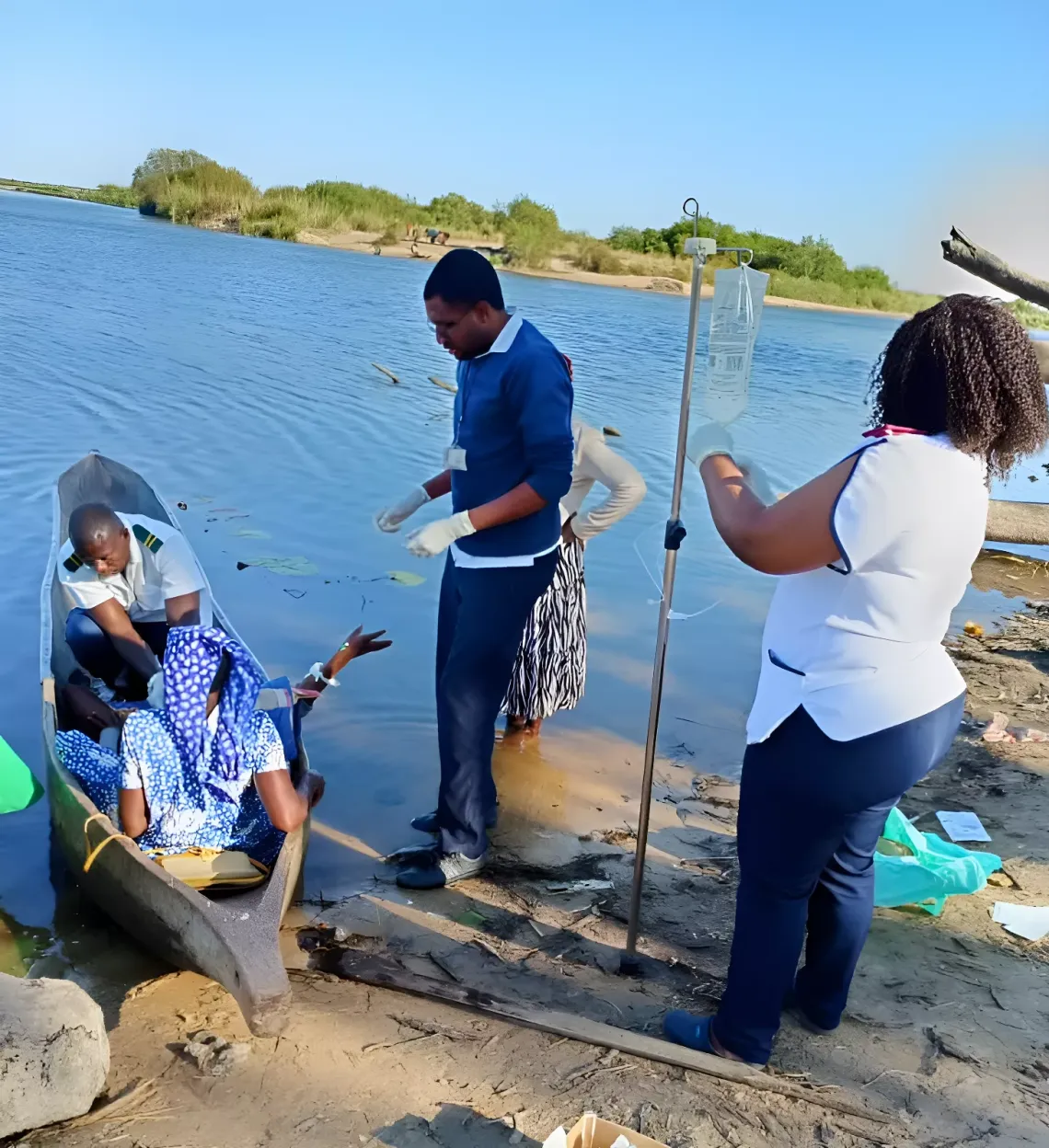


The dedication of these workers, the resilience of mothers who make dangerous crossings, and the courage of everyone involved underscore the urgent need for continued support.
A woman in a blue dress—another traveler on the river—lay beside the exhausted mother, holding her close to provide comfort and support. As they carefully made their way back, navigating the rugged paths by river and car, they knew every second counted. After stabilising the mother, which includes insertion of an Intravenous line to provide glucose and lost fluid, both the mother and the baby were taken to the nearest health center, for 24 hours observation, before discharged home.
Thanks to the trainings provided with technical and financial support from UNICEF Namibia, Sr. Likuranu had the skills and confidence to take decisive action in a crisis. Both mother and baby are now safe, a testament to the impact of committed healthcare workers and the transformative power of essential newborn skills trainings. This success is a powerful reminder of how essential trained health workers are to the region. Sr. Likuranu, once a trainee herself, coached by the senior Registered Nurse Midwife, who is UNICEF trainers in several lifesaving skills, has become a trainer, passing her life-saving skills on to others and ensuring that more women can rely on skilled hands in moments of critical need. These interventions don’t just change outcomes—they save lives, providing hope to families in even the most isolated corners of Kavango West.
For mothers in Kavango West, the journey to healthcare can be as treacherous as childbirth itself. Thanks to UNICEF’s steady support, skilled health workers like Sr. Adeline Kuduomo and Sr. Likuranuo are a lifeline, bridging the gap for those who need it most. The dedication of these workers, the resilience of mothers who make dangerous crossings, and the courage of everyone involved underscore the urgent need for continued support. With more resources, more training, and more hands-on deck, each life saved strengthens the community, proving that no journey is too long when it means giving life a fighting chance. UNICEF Namibia is urgently seeking resources to skill more midwives, with essential lifesaving interventions and support with procurement of essential pediatric supplies and equipment.


