Bringing healthcare close
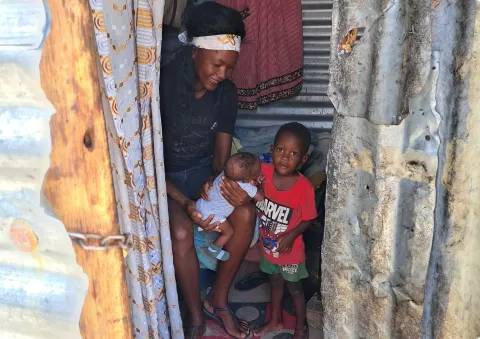
How health outreach brought life-saving care to Kavango West
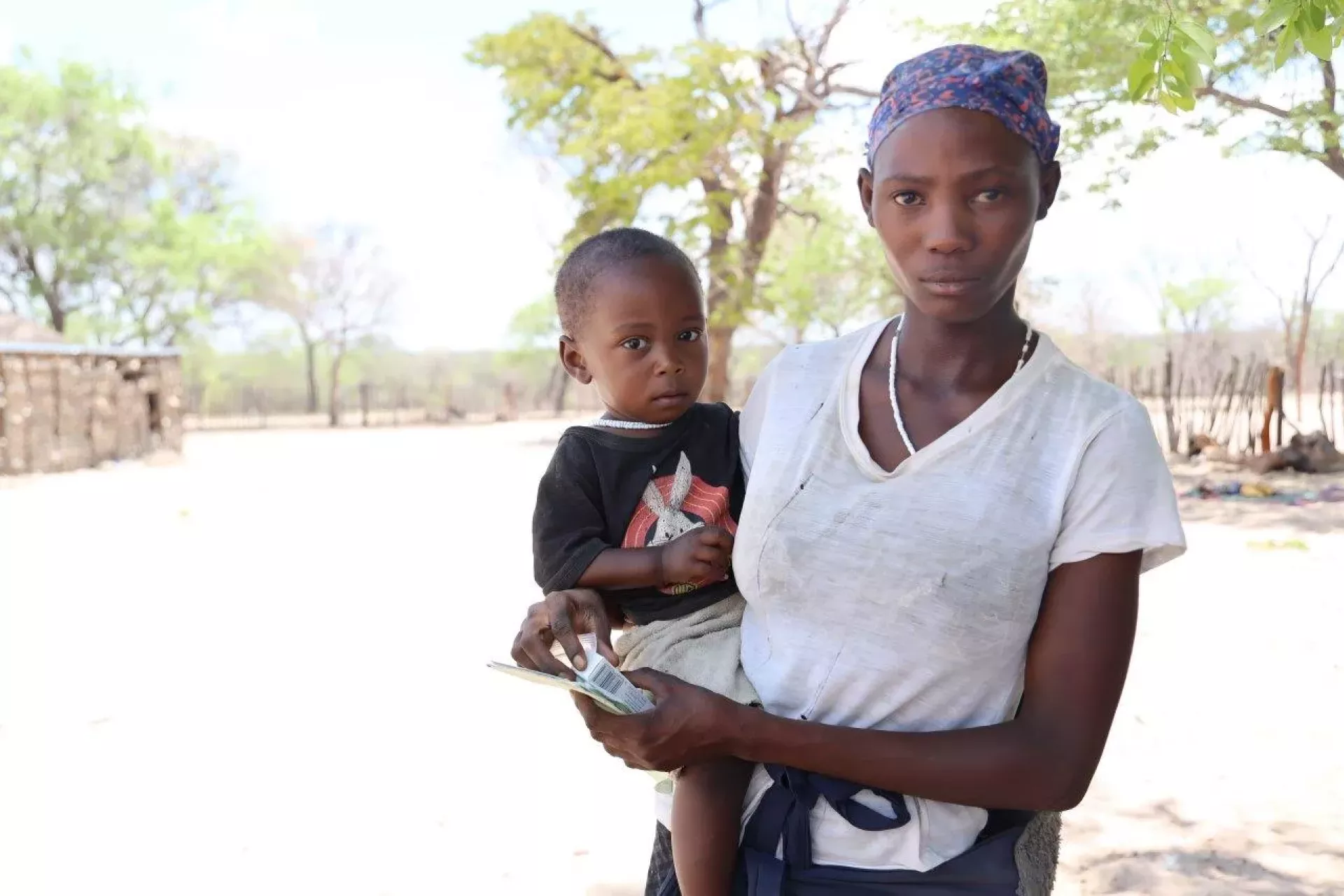
Kavango West - The sun rises over Kavango West, casting long shadows across sandy paths that weave through the remote village of Kwaki. Esther Kandjimi, a young mother, carries her one-year-old son on her hip as she heads toward the large tree at the center of the village. It’s a rare day of excitement in this community, where life is shaped by isolation and struggle.
Her village lies 110 kilometers from Nkurenkuru and 10 kilometers off the nearest tar road, with no electricity and no healthcare facilities nearby. For families like hers, basic medical services are often an unreachable dream. But today is different. Today, the schoolyard will become a lifeline, thanks to the health outreach program organized by the Kavango West Regional Health Office with support from UNICEF through the Ministry of Health and Social Services.
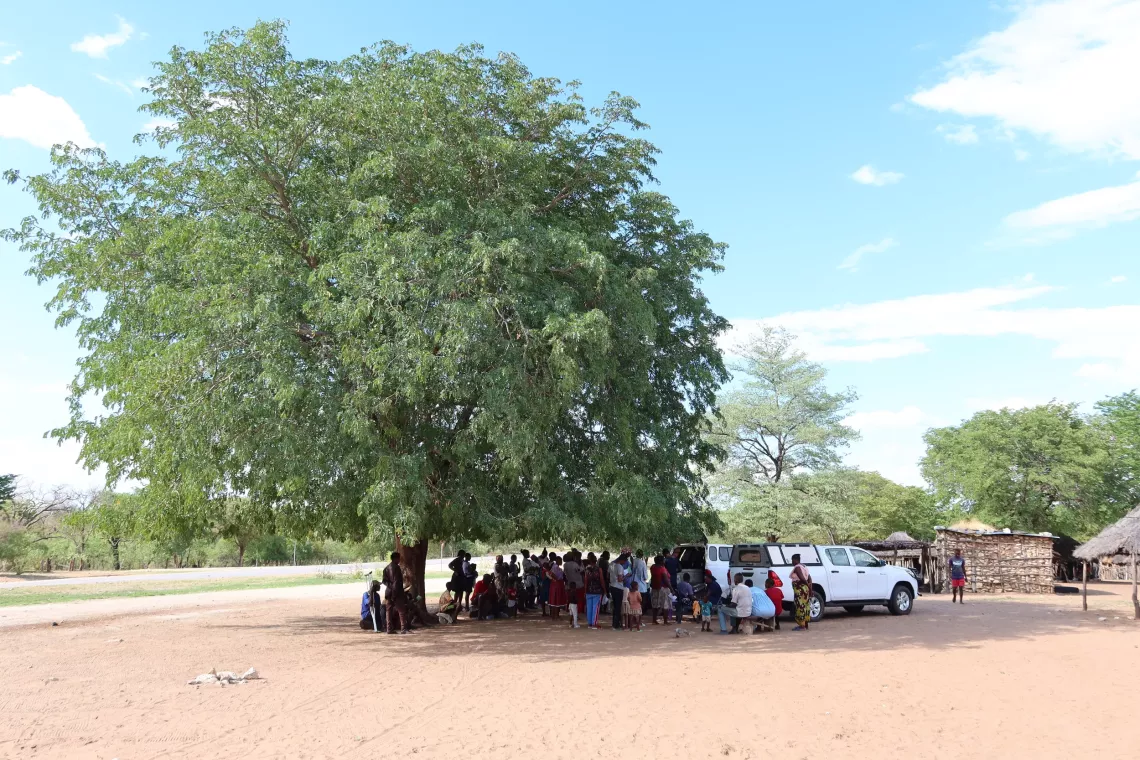
As Esther walks, she’s joined by other mothers and their children, all heading toward the makeshift clinic. Some carry chairs, others bring mats, and laughter ripples through the growing crowd. Beneath the shade of the tree, they form a circle, their eyes reflecting a mix of joy and relief. For the first time in weeks, service has come to them.
For mothers like Esther, access to healthcare is a grueling challenge. The nearest health center is 60 kilometers away—a journey that means hours of walking under the relentless heat, navigating sandy paths with young children in tow.
Her one-year-old son had already missed critical vaccinations, leaving him vulnerable to preventable diseases. Without immunizations, children in remote villages face higher risks of illness and death. For Esther, the thought of losing her son was unbearable, but she felt powerless.
The barriers to care were too high. Esther isn’t alone.
Her story echoes across the village, where mothers share similar struggles—walking impossible distances for medical help or going without entirely. The challenges are compounded by the village’s lack of electricity and transport options, isolating families from essential services.
That isolation was shattered by the arrival of the health outreach team. Organized by the Kavango West Regional Health Office and supported by UNICEF, the program was designed to bring healthcare to families who could not reach it otherwise.
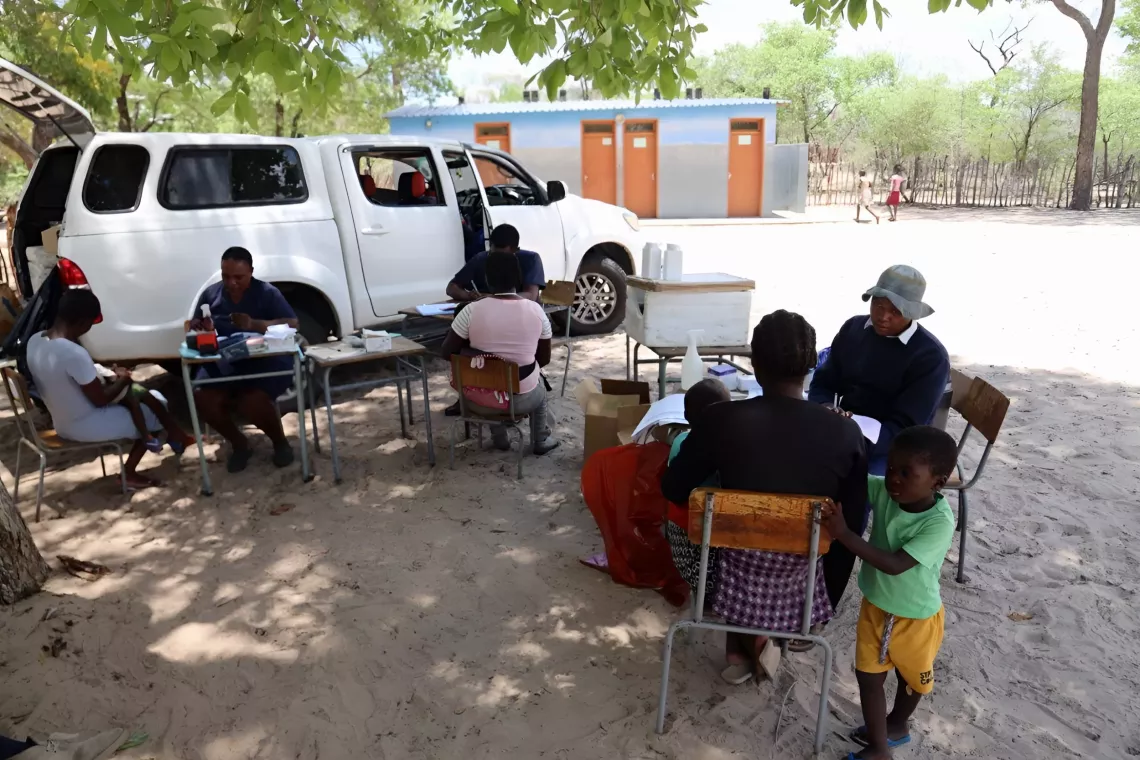
As the team’s vehicles pulled into the village, a ripple of activity spread. Mothers began gathering, carrying their children, chairs, and mats. The schoolyard transformed into a temporary clinic, with health workers setting up under the shade of the tree. The atmosphere was electric with hope. Mothers sat in a circle, their faces lighting up with laughter and relief. For many, it was a rare moment of connection and joy.
The outreach team provided a range of services, from immunizations to health screenings and education sessions. Esther’s son received his overdue routine vaccinations, safeguarding him against diseases that had once loomed as a constant threat. For Esther, it was a moment of profound relief.
“Today, my son is protected,” she says. “I feel like I can finally breathe.”
But the program didn’t stop at immunizations. The health workers also conducted screenings and offered advice on nutrition, child development, and hygiene. Esther joined other mothers in a session on early childhood development, learning practical tips to help her son grow and thrive.
“Now, I feel like I know how to take care of him better,” she shares. “They gave me knowledge and hope.”

As the sun began to set, casting golden light over the village, the health workers packed up their equipment. But they left behind more than medical supplies and advice. They left hope—a tangible reminder that even in the most remote corners of Namibia, no family is forgotten.
For Esther, this day was life-changing. She walked home with her son in her arms, his health safeguarded and her heart lighter than it had been in weeks. The memory of the circle under the tree, filled with laughter and camaraderie, will stay with her as a symbol of what is possible when compassion meets commitment.
Through the support of UNICEF and the Ministry of Health and Social Services, the health outreach program has become more than a service—it’s a lifeline. For the women in Kavango West, it’s proof that no journey is too far, no challenge too great, to ensure every child gets a chance to thrive.