The sun brought us clean water
How solar power Is transforming life and dignity in Myanmar’s dry zone
- English
- မြန်မာ
Every morning before dawn, 56-year-old Daw Win Kyi would lift her two youngest children from their sleeping mats and begin the long walk — nearly 400 metres — to Chaung Wa’s only dug well. Set beside a dry seasonal stream bed, the well was often surrounded by long queues of families waiting in the half-light, hoping to collect water before the sun became unbearable. Her husband, a casual labourer, left even earlier each day in search of farm work or carpentry jobs. Some days he returned with enough to buy rice; on others, the family survived on whatever they could stretch from their small garden.
“We were never hungry enough to starve,” she said, “but we were always hungry enough to worry.”
Water was the heaviest burden. With no groundwater to drill and no other source nearby, the family relied entirely on the shallow, unprotected well. The walk home was slow with heavy containers balanced on bamboo poles, and the heat grew harsher each year.
“My children grew up helping me carry water,” she recalled. “Their hands were small, but the work was big.”
What Daw Win Kyi endured each day was the reality of the entire village. In Chaung Wa, every family had their own version of the same struggle. Some used bullock carts; others carried buckets on shoulder poles. Children missed school to help. Older people rationed water to avoid the exhausting walk. Mothers woke before sunrise to beat the heat, while fathers saved precious daylight hours for income-earning work.
Life in this Dry Zone community revolved around constant uncertainty. Rainfall had grown unpredictable, temperatures climbed higher each year, and the shallow well — Chaung Wa’s only lifeline — shifted with every change in weather.
In the rainy season, sudden storms washed debris into the exposed well, muddying the water and raising fears of diarrhoeal disease. In peak summer, the level dropped so low that families worried it might disappear altogether.
“It felt like we were living on the edge every single day,” said farmer U Gyaw Kar. “When the water turned dirty, our children got sick. When the level dropped, we didn’t know if we’d have enough to cook or drink. Our whole life depended on that one fragile well.”
A turning point powered by the sun
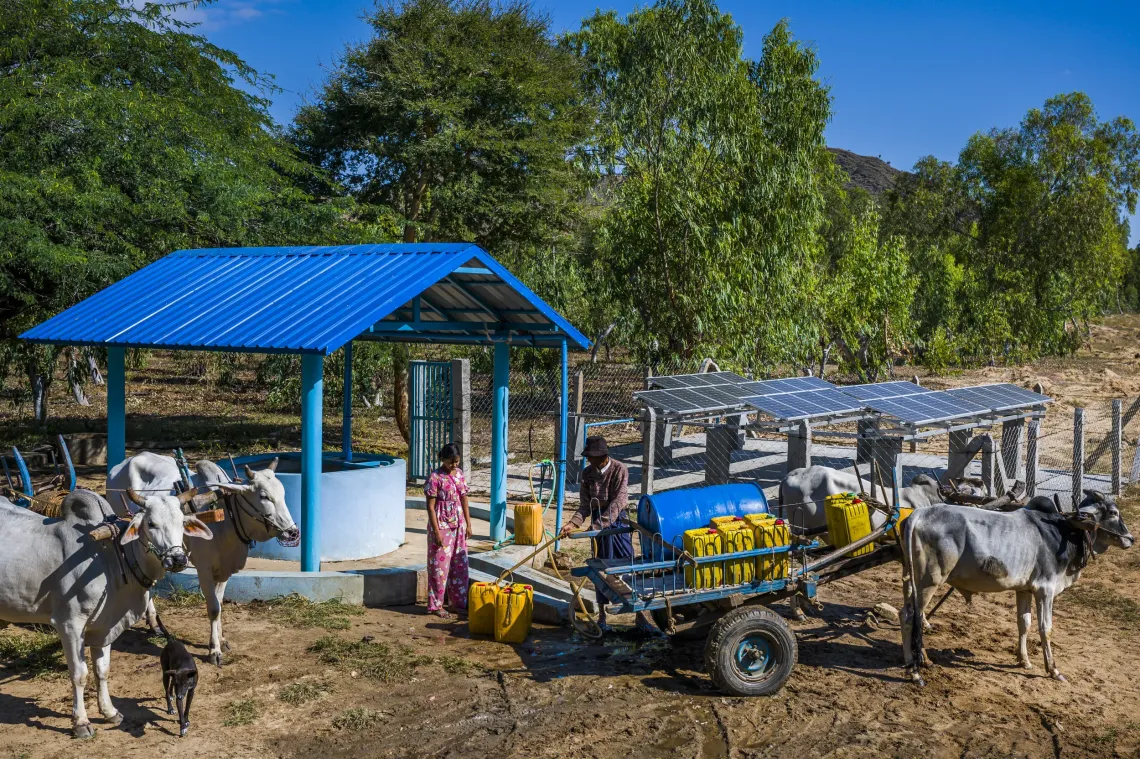
Hope arrived when UNICEF — with generous support from Kakao Bank — introduced a solar-powered water supply system (SPWS) designed specifically for the extreme conditions of the Dry Zone. For many villagers, the idea felt almost unbelievable.
“When they explained that sunlight could bring us clean water, I wondered if it was really possible,” Daw Win Kyi said. “The sun used to exhaust us. Now it gives us life.”
To ensure the water source was safe and sustainable, UNICEF and its partner rehabilitated the dug well, adding roofing, aprons and proper drainage. Solar panels were installed to pump water efficiently, and a new reservoir and piped distribution network now delivers water directly into household compounds. Upstream, villagers planted trees around the watershed to protect the fragile ecosystem and improve water retention.
A community that built its own future
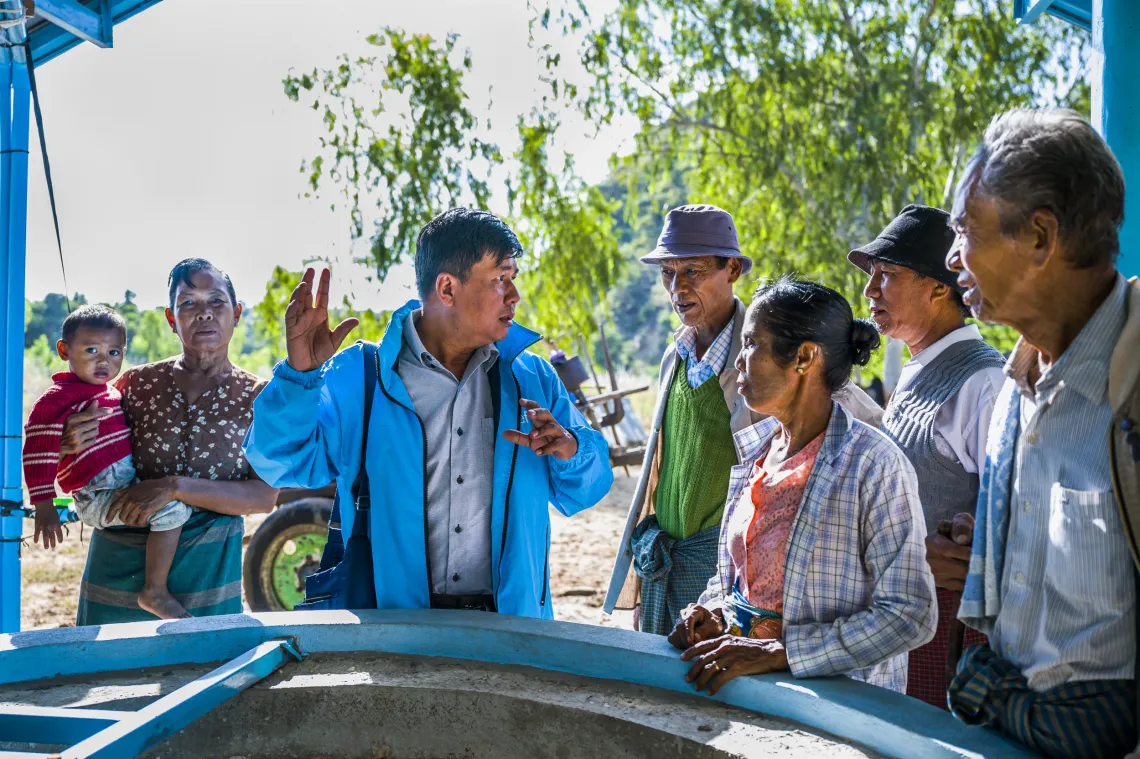
Chaung Wa did not simply receive the system — they built it. Men and women volunteered to dig trenches, secure fencing, plant trees and help position the solar structures. The project strengthened community dignity as much as it strengthened water access.
“We built this with our own hands,” said 20-year-old Ma Su Hnin, who joined her parents in trenching work. “That’s why we will protect it.”
UNICEF trained villagers in every part of managing the system, from cleaning the pump to running village accounts, and in using climate-resilient water safety plans to navigate risks from extreme heat or sudden rainfall.
“I have confidence now,” said U Gyaw Kar. “I know how to keep it working. And I know what to do when the weather changes. This is our lifeline.”
A village transformed
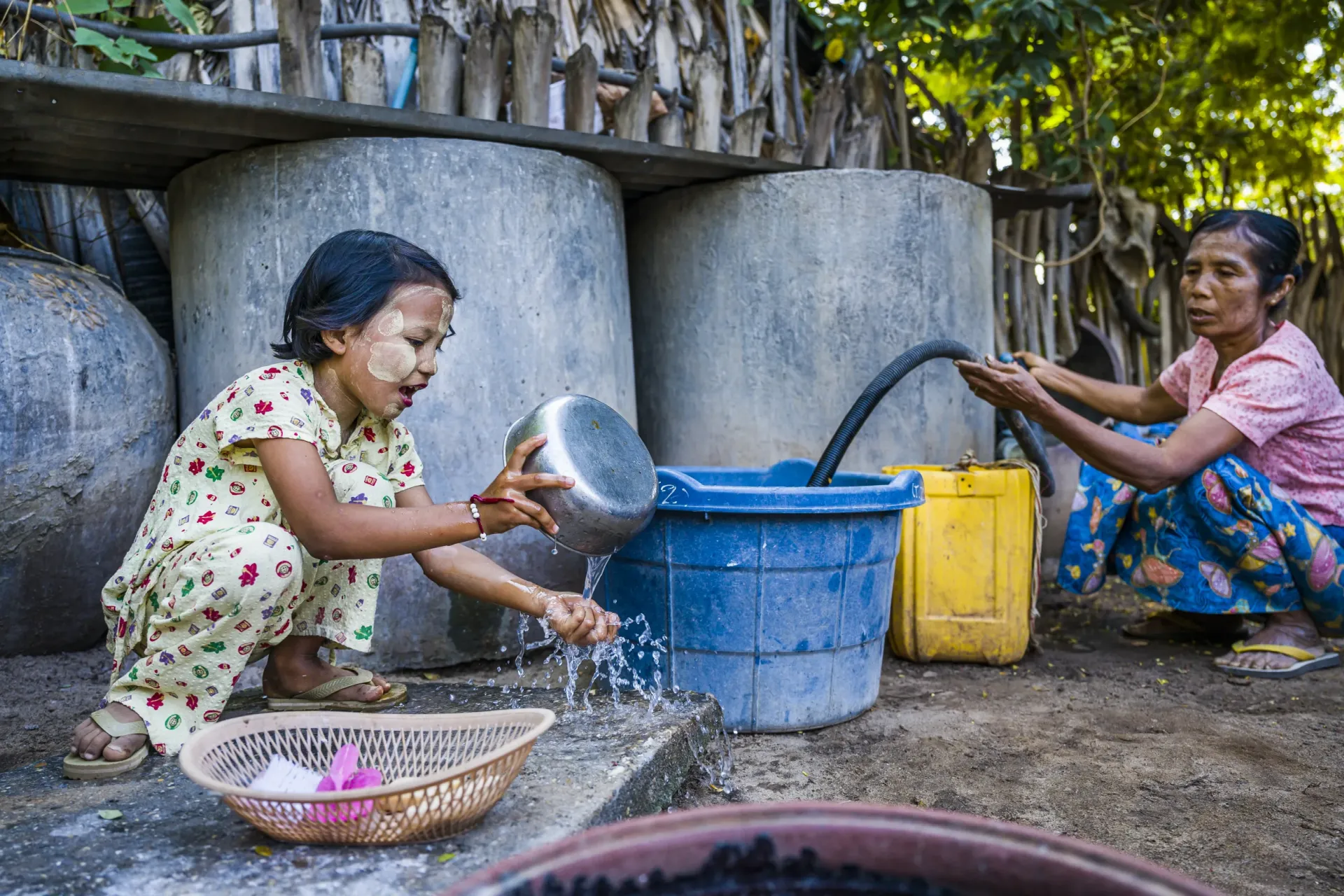
Today, clean water flows safely and reliably into household compounds. For Daw Win Kyi’s family, it is life-changing.
“My granddaughter can drink clean water at any time,” she said, watching the little girl rinse her hands at the tap. “That alone changes our whole life.”
Women have more time to work and rest. Children attend school instead of queuing at the well. Health has also improved. Trees are taking root. And for the first time, Chaung Wa feels resilient in the face of a changing climate.
Thanks to Kakao Bank’s support, the sun — once harsh and punishing — has become Chaung Wa’s most reliable partner in delivering clean water and renewed hope.
“Our village has changed,” Daw Win Kyi said. “This project didn’t just bring water. It brought dignity. It brought strength. It brought a future.”