A Simple Turn of a Tap
How clean water and safe sanitation are helping a seven-year-old girl and her family rebuild their lives after the Myanmar earthquake
- English
- မြန်မာ
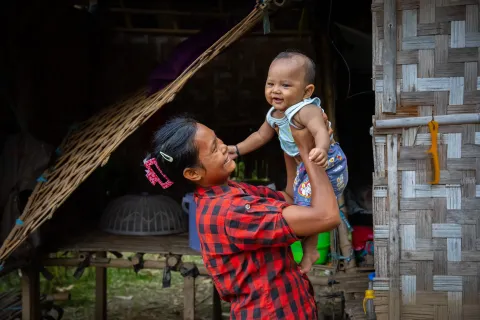
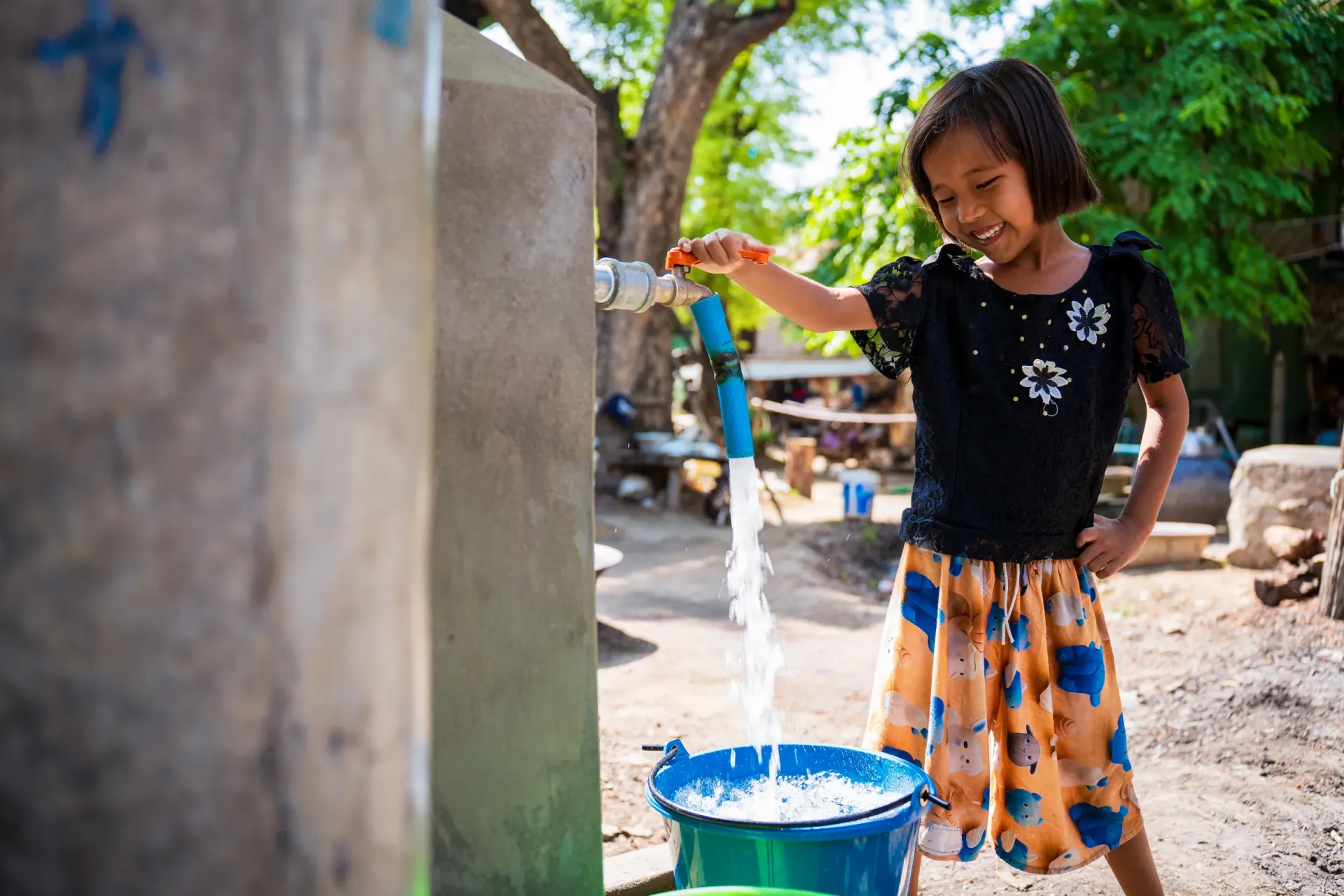
Seven-year-old Jue Jue San used to find fetching water exhausting, but now a simple turn of a tap brings clean water to her hands. On a warm May evening in Bandar Village, Amarapura, Mandalay, Myanmar, she cheerfully fills a container at the new solar-powered community water tap stand. "The new tap stand is not tiring, you just have to turn it on," the second-grader explains with a bright smile. For her and her family, this simple daily task represents a massive shift in their lives after a year of hardship.
This hardship began when a devastating earthquake struck the Mandalay Region in March 2025. It shattered more than just buildings, leaving traditional cotton-weaving and farming families across the village without safe drinking water for weeks.
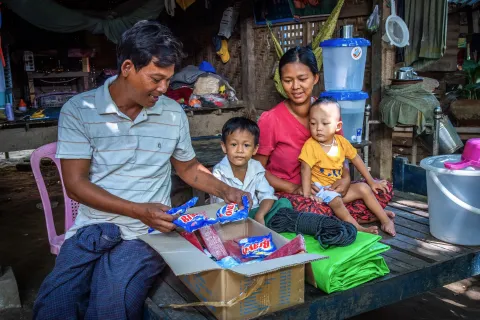
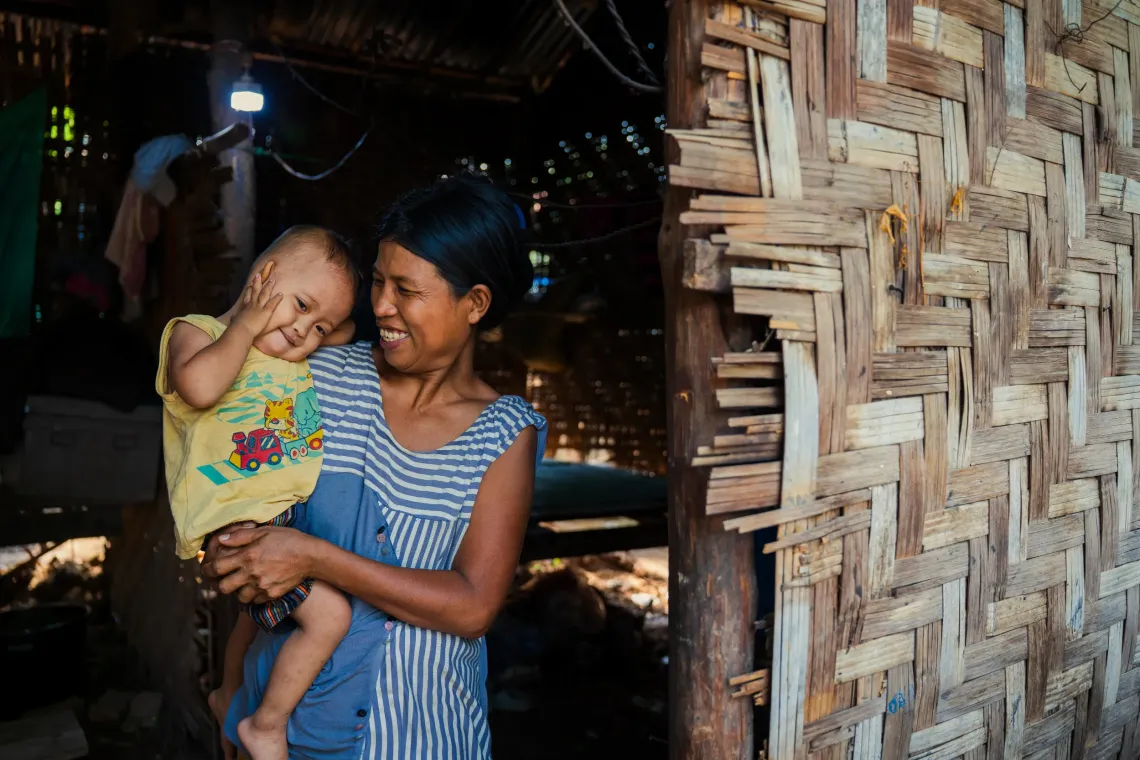
For Jue Jue San, the trauma was deeply personal; she vividly remembers running in panic as a nearby building collapsed, an ordeal that left her ill for days. In the aftermath, her mother, 41-year-old Daw Khine Khine Min, faced the overwhelming challenge of caring for Jue Jue San, 15-year-old Zaw Lin Htun, and three-year-old Myint Myat Bo, who has Down syndrome. Relying on irregular daily wages alongside her husband, 41-year-old U Aung Thu, the family struggled just to meet their most basic needs.
Beyond their struggle, compromised access to water and sanitation quickly became one of their greatest daily hurdles. With their own latrine destroyed by the quake, nine people had to share a single toilet at a neighbour's house. This loss of a safe, private facility took a particularly heavy toll on the youngest and most vulnerable family members. For young children like Jue Jue San, the lack of immediate access to a toilet made maintaining basic hygiene incredibly difficult, increasing the risk of preventable illnesses.
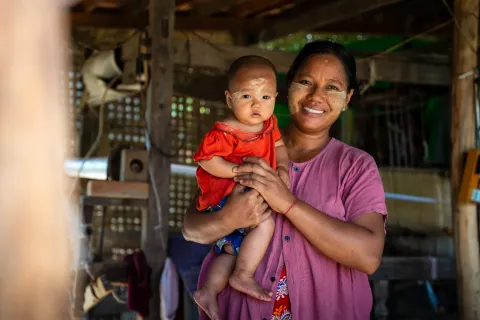
The situation was even more distressing for three-year-old Myint Myat Bo, who has Down syndrome. Navigating unfamiliar, shared spaces disrupted the safe routines vital for his well-being and placed an immense caregiving burden on Daw Khine Khine Min, who constantly had to seek permission to meet her children's most basic needs. "Many times, we had to wait our turn to use the toilet," she recalls.
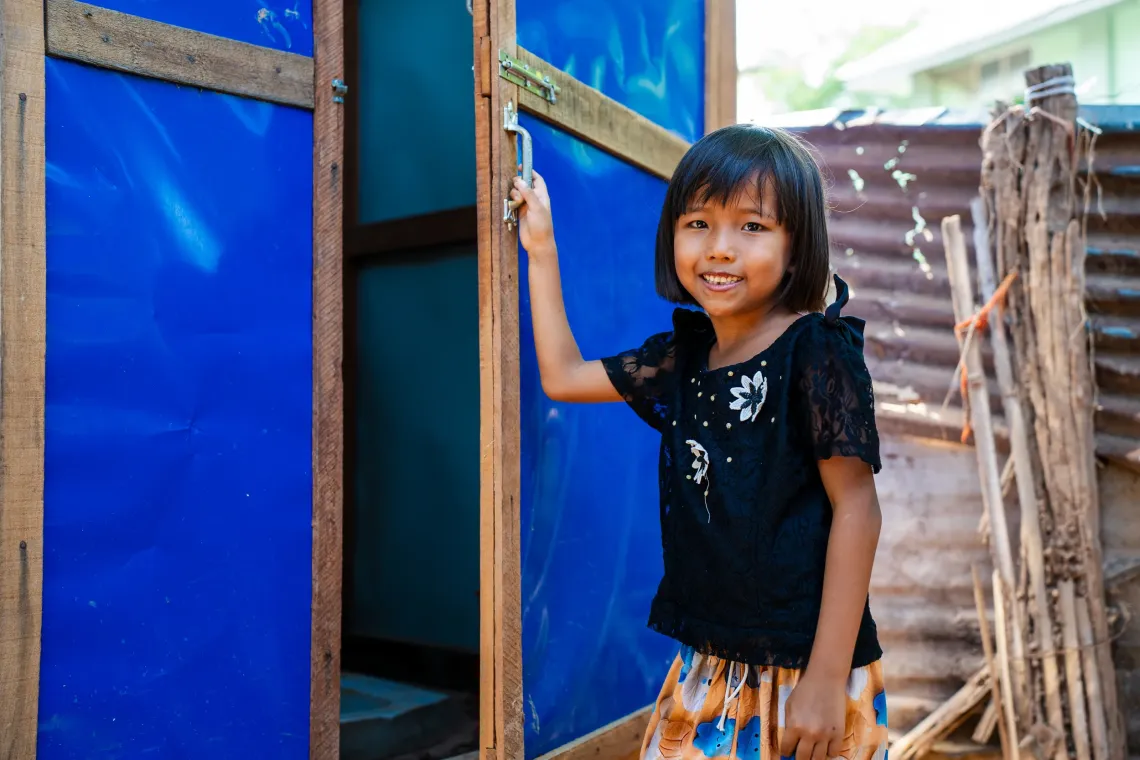
Relief finally arrived when essential services in Bandar Village were rebuilt through a community initiative called Integrated WASH Recovery and Hygiene Promotion Project. The project installed a new solar-powered water supply system and constructed fly-proof latrines, including a private toilet for Daw Khine Khine Min's household.
"The moment we received the new toilet, I felt a great sense of relief," Daw Khine Khine Min shared. Alongside the new latrine, the family received a 20-liter water container and hygiene kits. Having free, clean water access means the money they once spent buying water can now be used for family essentials, like food and medicine for the children.
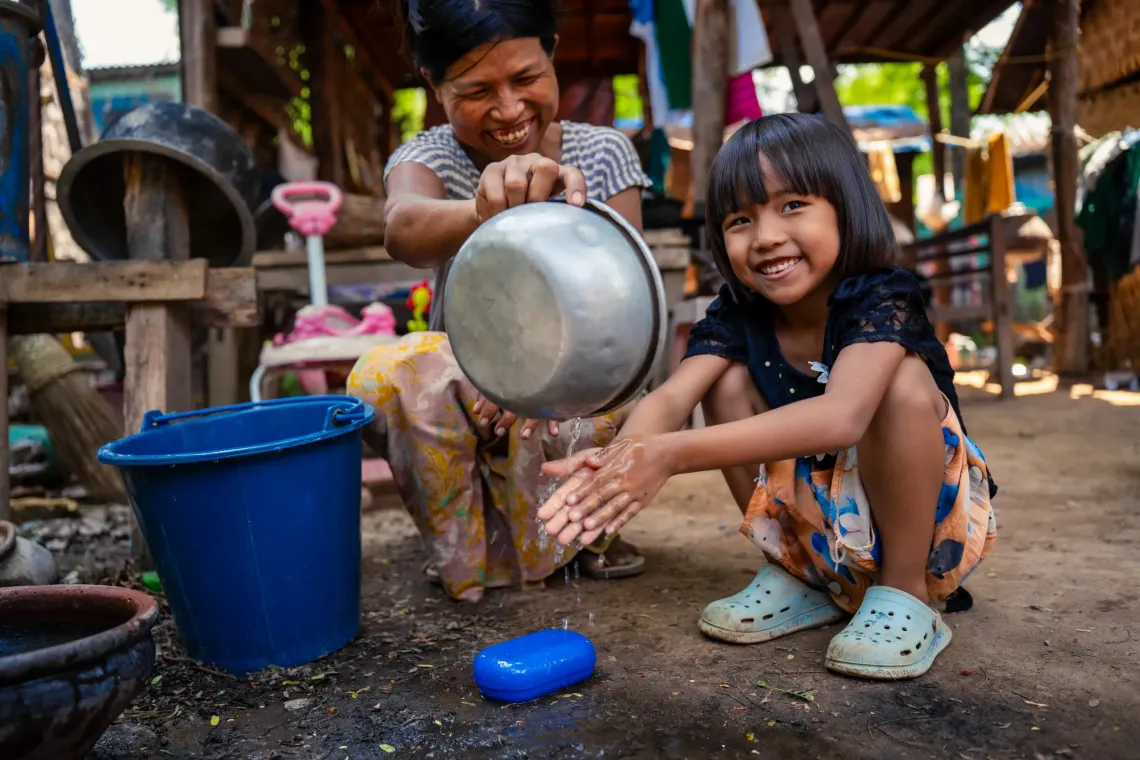
With safer infrastructure in place, the health of the entire family has steadily improved. Daw Khine Khine Min also joined community hygiene promotion sessions and passed those vital lessons on to Jue Jue San. The young girl now proudly lists the critical times she washes her hands: before eating, after using the toilet, and after playing. Today, Jue Jue San’s afternoons are filled with helping her mother with chores, play and studies, leaving the trauma of the earthquake behind her.
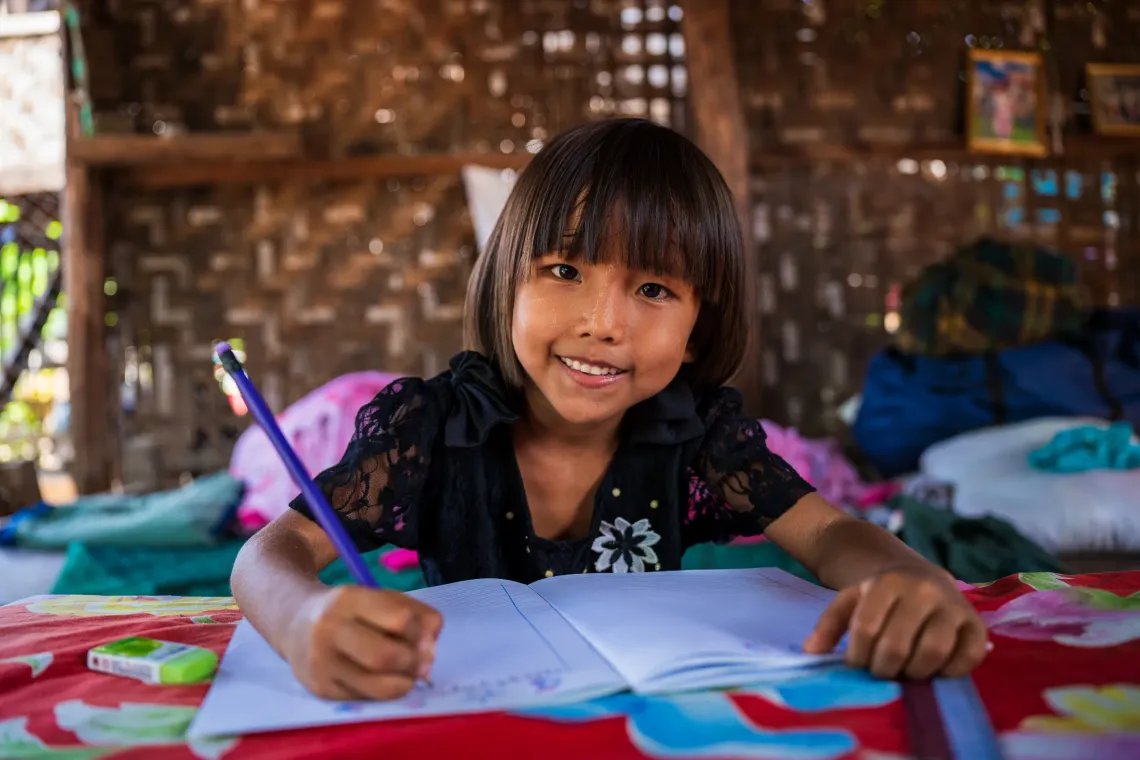
At school, Jue Jue San is also thriving. She proudly shares that she earns "many A's" and special stars from her teacher. Fiercely dedicated to her studies, she notes that while some children forget their homework, she never does. Looking ahead, the bright second-grader has a clear vision for her life: "I want to be a teacher... because I want to be an educator," she says confidently.
Watching her daughter flourish and her family regain their footing, Daw Khine Khine Min is filled with gratitude. For her, the new water system and latrine provided more than just infrastructure; they provided a foundation for her children to grow up safely. "I pray that this support can reach more families like ours," she says, reflecting on the journey. "So, all families can live with dignity, safety, and good health."