Clean Water Means Hope for the Future
Safe water restores health and dignity for earthquake affected families in Amarapura, Myanmar
- English
- မြန်မာ
For the families of Chaung Gwa village in Mandalay Region’s Amarapura Township, water has long been a source of both life and hardship. Nestled in a low-lying area, the community faces severe annual flooding during the monsoon season. Year after year, waters rise up to six feet, inundating homes and swallowing the shared wells that families rely on. These seasonal floods routinely contaminate drinking water and disrupt safe sanitation, creating a constant threat of waterborne diseases, especially for young children, expectant mothers, and older persons.
Even before the devastating Myanmar earthquake in March 2025, daily life was a delicate balancing act. With limited income opportunities, most families could not afford to purchase purified drinking water or treat it at home. Then, a major earthquake struck the region, turning these everyday struggles into an acute crisis. The tremors destroyed homes, shattered sanitation facilities, and severely damaged the village's already fragile water sources, forcing families into highly unsafe living conditions.
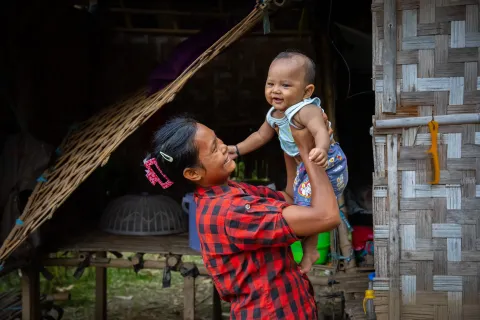
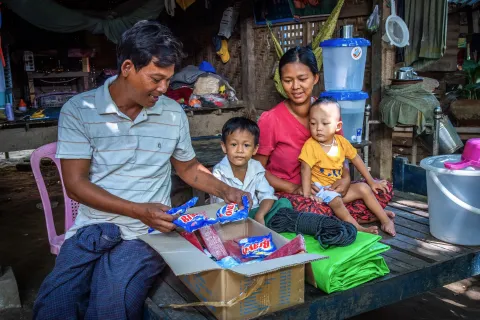
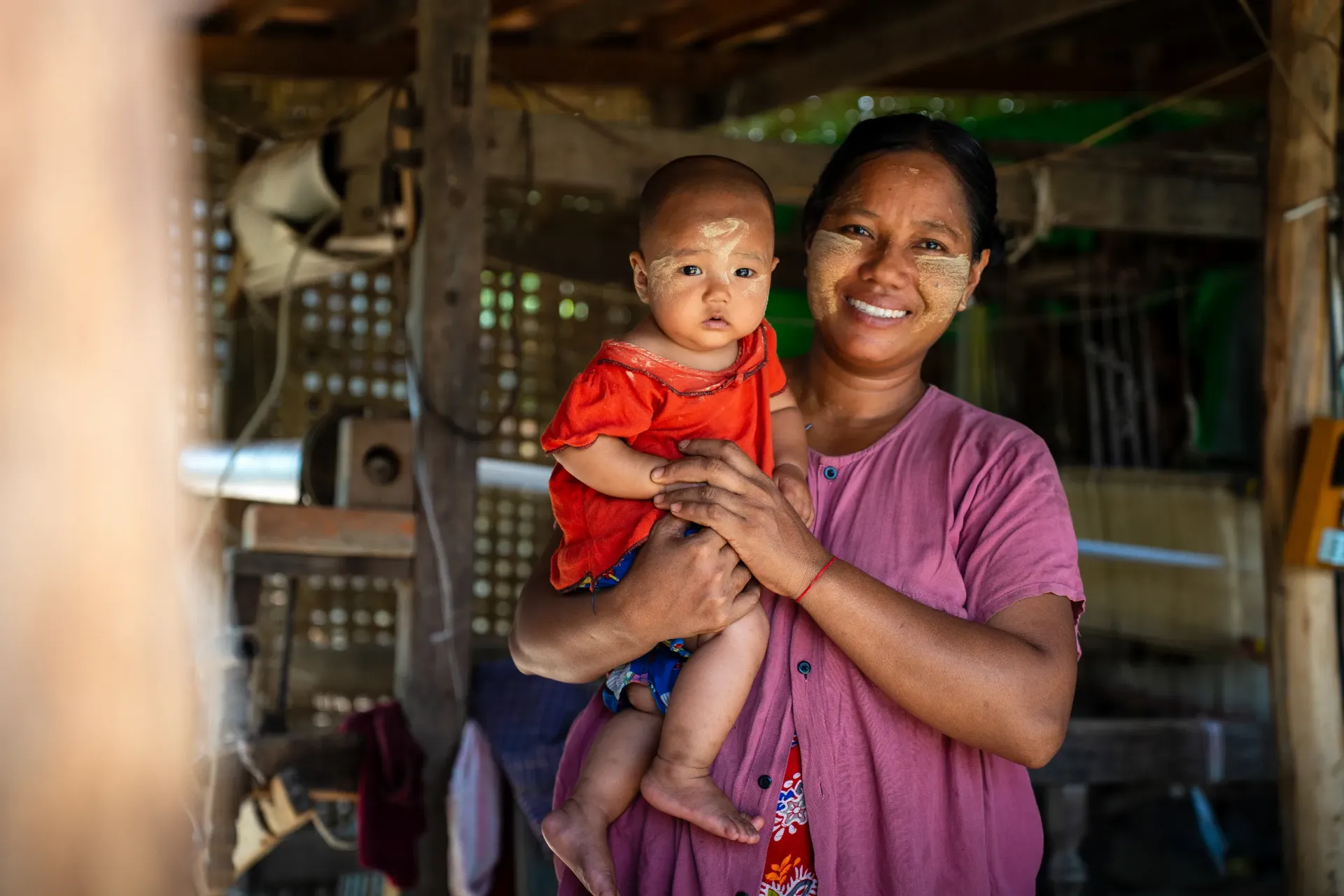
Amidst this devastation, the restoration of safe water has become a true lifeline for 39-year-old Ma Elizabeth. She lives with her husband, 40-year-old Zaw Win Maung, and their three children: 14-year-old Toe Toe Aung, 7-year-old Htet Maung Maung, and a five-month-old baby girl, Khoon Khit Zune.
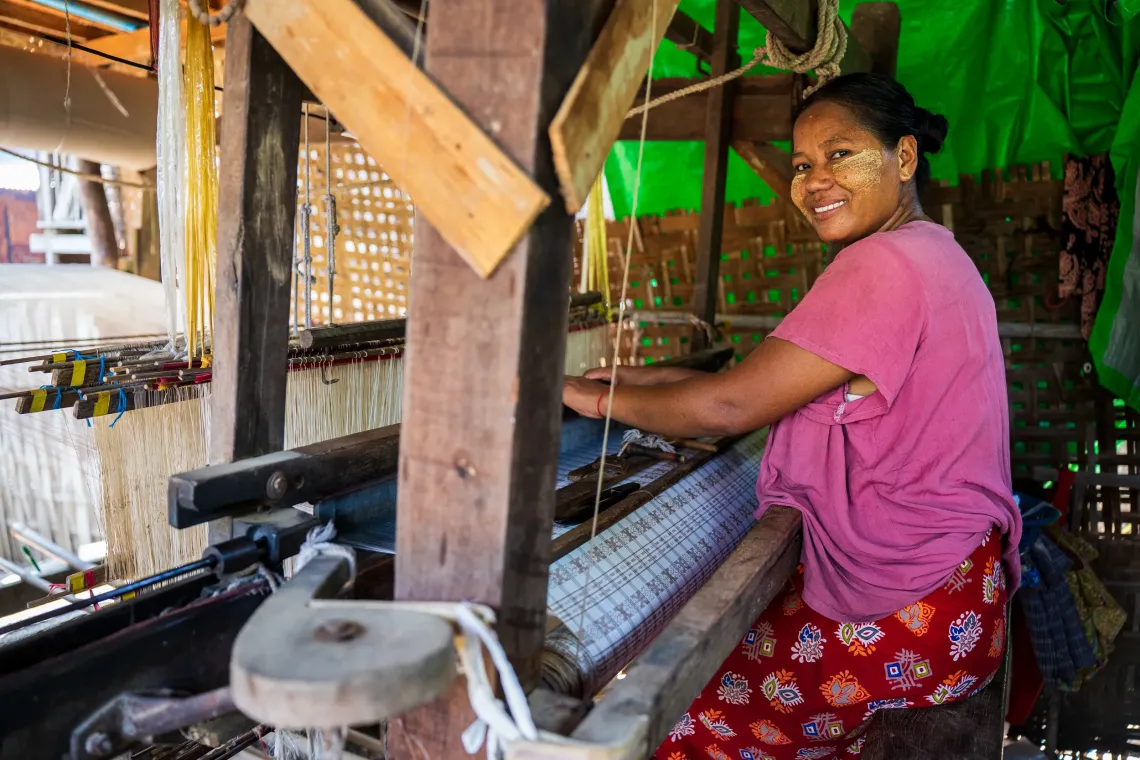
To help support her family's livelihood, Ma Elizabeth weaves traditional textiles at her home, earning a modest amount for each finished piece. Her husband takes on odd jobs as a carpenter, bringing in around 20,000 MMK only on the days he can find work. With both parents relying on such irregular and unpredictable incomes, their earnings are stretched far too thin to cover the basic needs of a family of five.
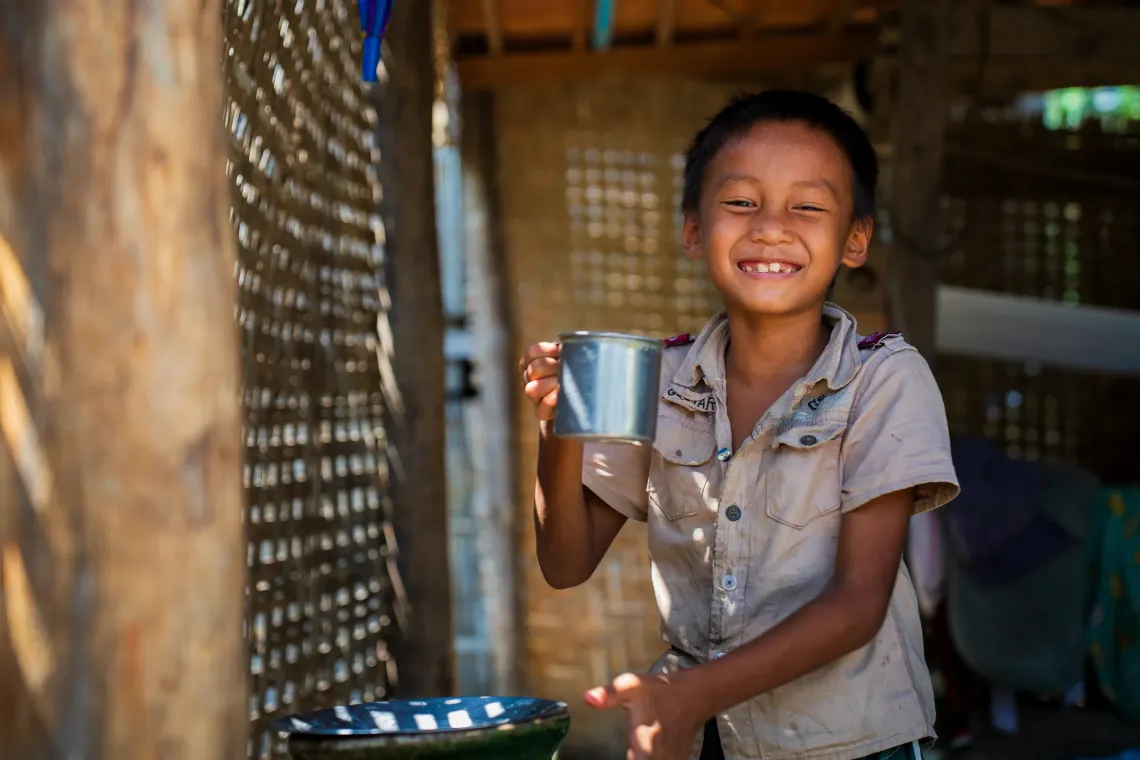
"Before, we drank water directly from the community well because we had no money to buy clean water," Ma Elizabeth explained. "After the earthquake, the situation became even worse."
The earthquake destroyed their home and severely damaged sanitation facilities and water sources, exposing the family to heightened health risks. Shortly after the disaster, while she was still pregnant, Ma Elizabeth suffered from diarrhoea, a common but potentially life-threatening illness in emergency settings that is especially dangerous for expectant mothers and young children.
"I was very worried about my children, especially my baby," she said. "I feared they would get sick too."
For women like Ma Elizabeth, the post-disaster period brought additional burdens. As primary caregivers, they were responsible for securing water, maintaining hygiene, preparing food, and protecting children from illness. Seeing his mother's struggles, 14-year-old Toe Toe Aung stepped up to help, taking on chores like cooking and looking after his younger brother so his parents could manage their daily challenges. Fetching water, however, was a gruelling task. "With the traditional pump, it took a long time, and the handle was quite heavy," Toe Toe Aung recalled. "I couldn't really press it, only the adults could use their strength. We also didn't know what kind of germs were getting into those pipes."
Through UNICEF’s Integrated WASH Recovery and Hygiene Promotion Project, Ma Elizabeth's family received essential hygiene supplies. Working with local partners, the initiative also provided the family with a 20-liter water container and hygiene kit, enabling safer collection and household storage of water. The project also supported the reconstruction of damaged household latrines, restoring privacy, dignity, and protection, which is particularly critical for women and adolescent girls.
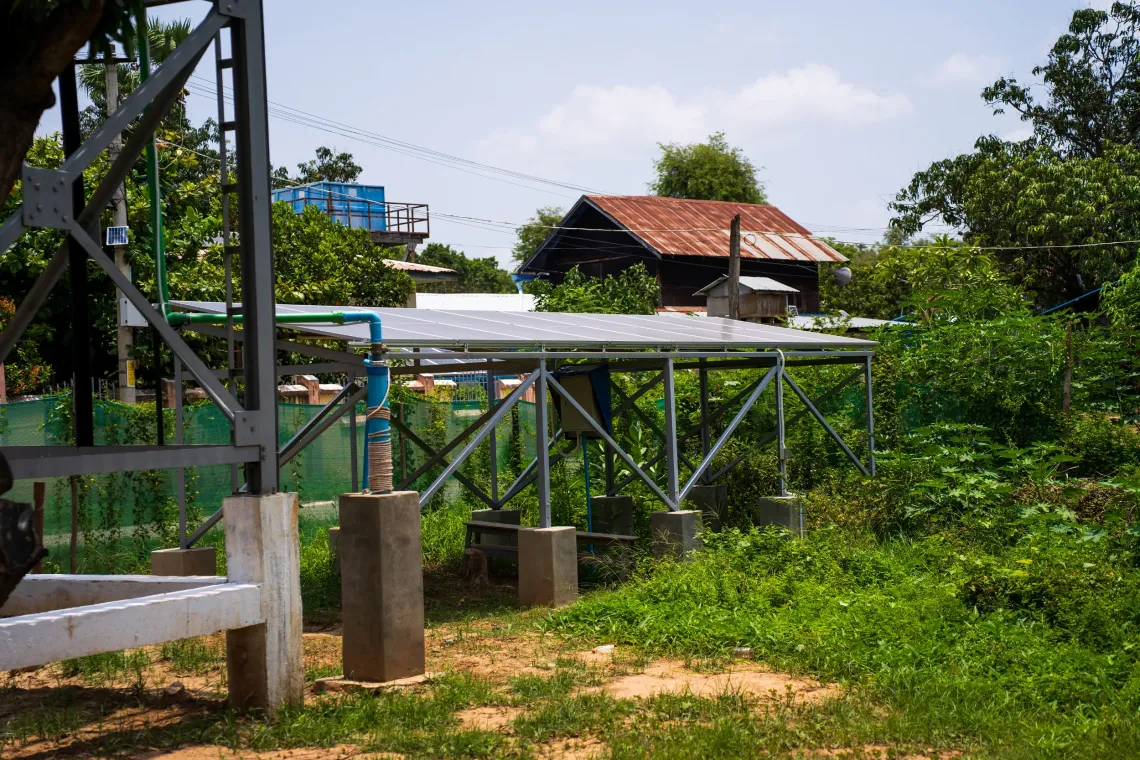
A key intervention in Chaung Gwa village was the installation of a new community water supply system, including public tap stands that provide reliable access to safe drinking water. For Toe Toe Aung, the new solar-powered water system brought immediate relief. "We don't have to pump the handle anymore, which is a huge relief," the teenager shared. "It is safe because it is carefully purified."
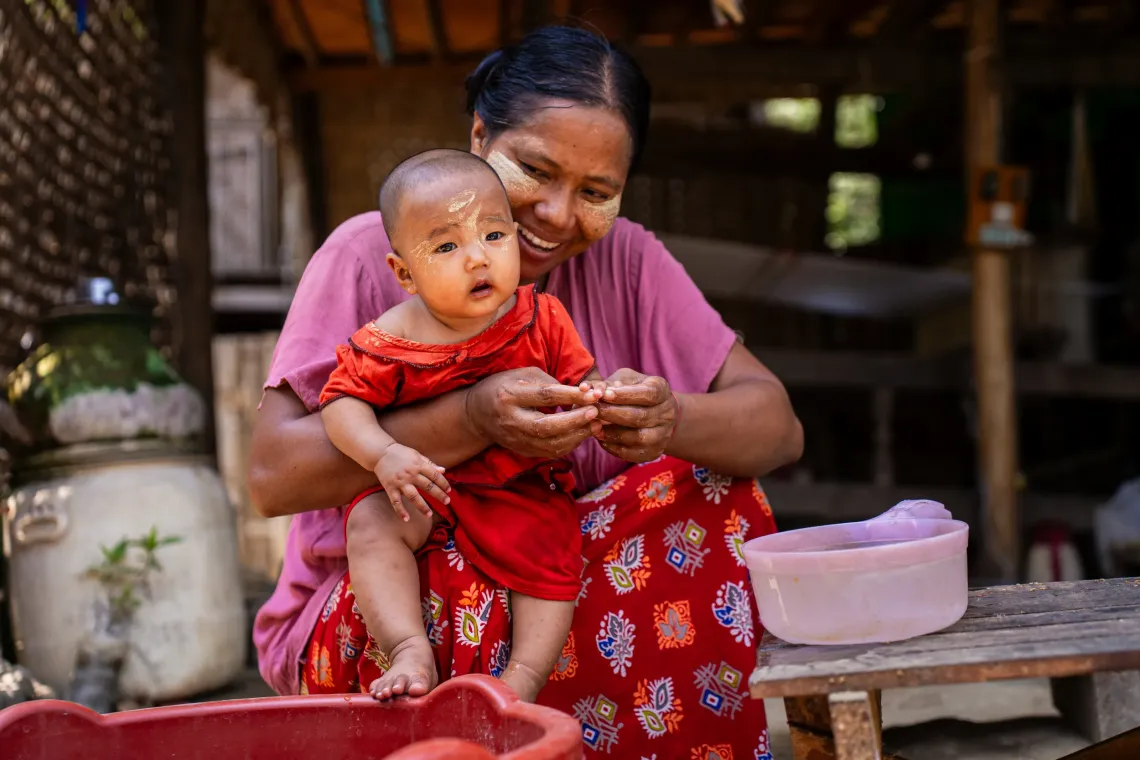
His mother agreed, finding comfort in the visibly improved water quality. "The water from the new water system is very clean; there is no smell and no colour," Ma Elizabeth said. "Now I can give this water to my children without worry."
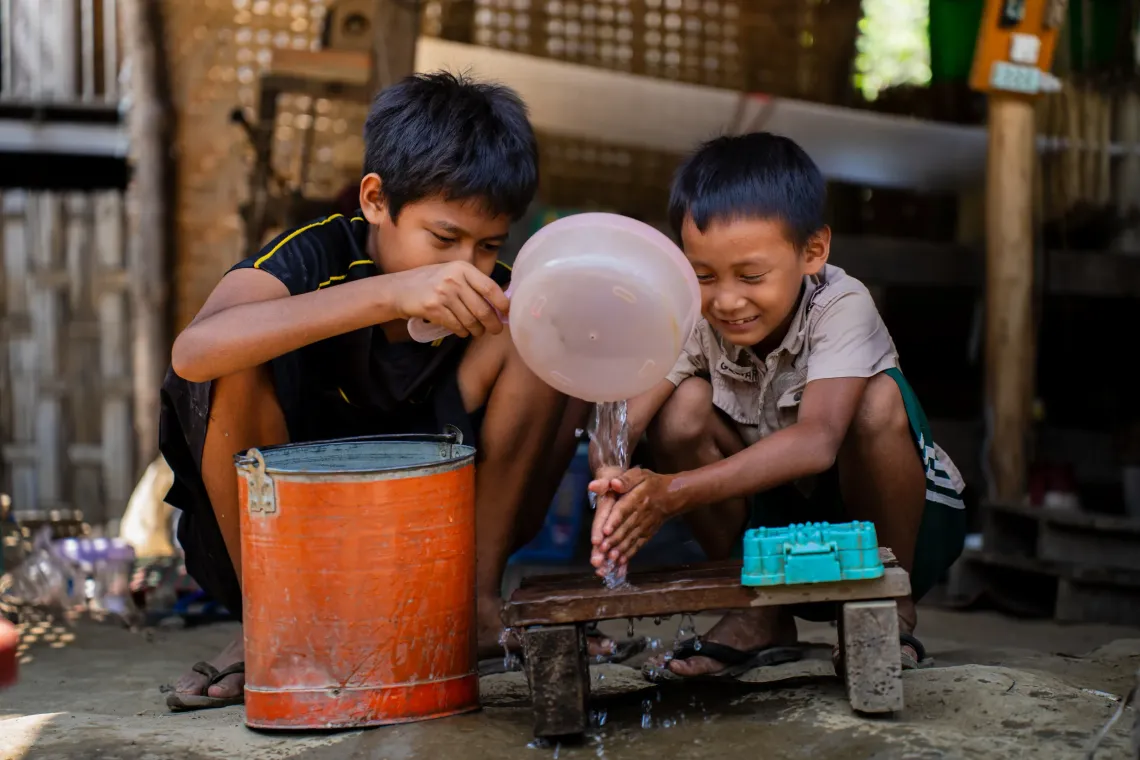
Since gaining access to safe water and improved sanitation, Ma Elizabeth notices improved health and reduced anxiety about her children's well-being. The project's hygiene education has also reshaped the family's daily routines, with Toe Toe Aung actively practicing these life-saving habits at home. "I wash my hands after using the toilet, before eating, and after eating, just to stay as clean as possible," he explained.
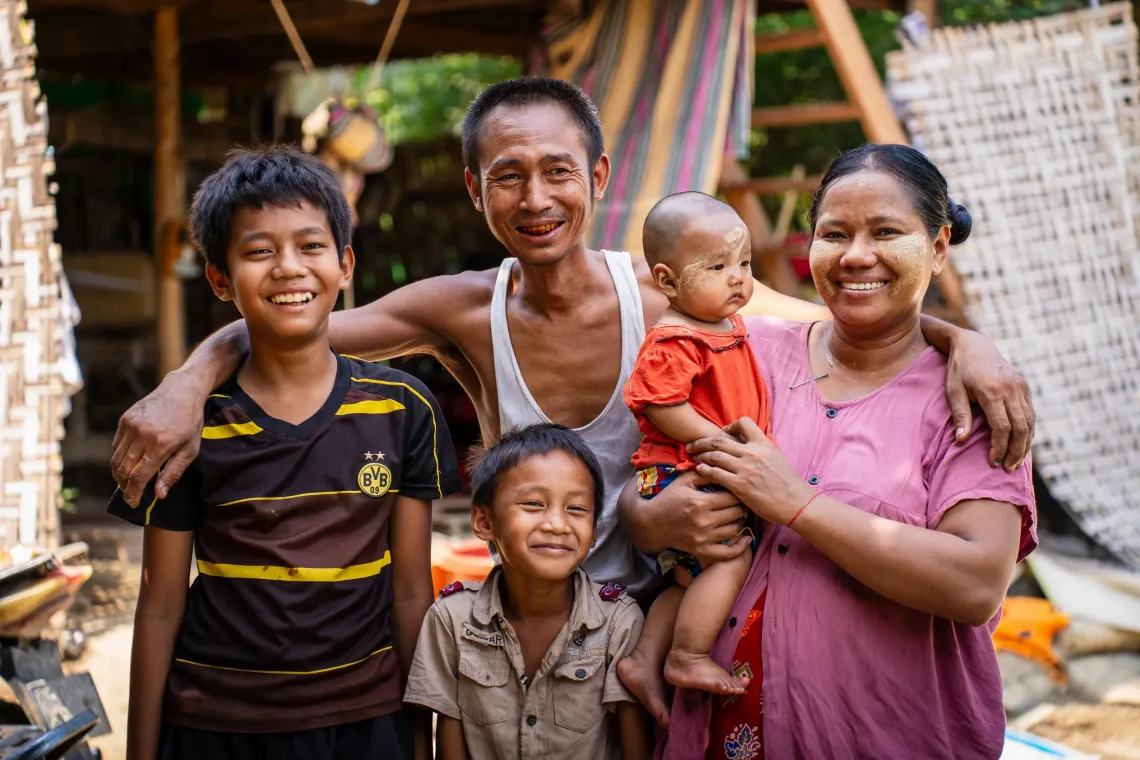
By restoring access to safe, reliable water and sanitation, UNICEF’s WASH response reduces exposure to preventable diseases, supports child survival, and enables women to care for their families with dignity. As Ma Elizabeth continues rebuilding her family's life and home with support from humanitarian partners, access to clean water remains central to their recovery. With his caregiving burdens lightened, Toe Toe Aung is now focused on his education, proudly sharing his dream to "become an engineer" one day. Watching her children thrive and look toward the future, Ma Elizabeth feels a profound sense of security. "Clean water means health for my children," she said. "It gives us hope for the future."