A ray of hope amid armed conflict and floods
Delivering safe water and essential hygiene supplies to the crisis affected families in Myanmar

- English
- မြန်မာ
“We didn’t have a second to waste. I held my youngest son, who has a disability, close to my chest, grabbed my eldest son’s hand, and we hurried toward higher ground, my heart pounding.”
When the flood hit, Nilar Win knew the top priority was getting to safety as fast as her family could, all while keeping her two sons secure.
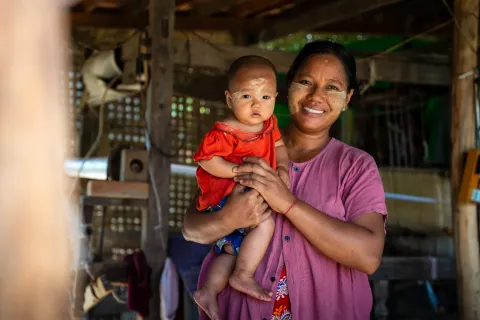
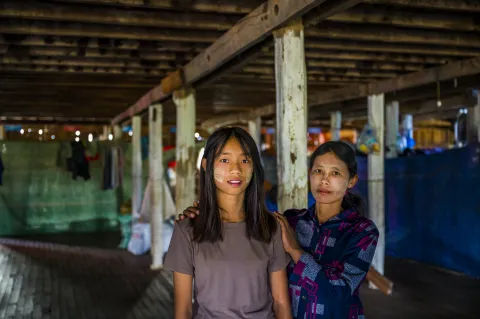
At just 23 years old, Nilar Win lives in the Taung Baw Gar area of Dawei Zay Ward in Sagaing Town, where she and her family face hardship with remarkable resilience. She and her husband, Zaw Min Laye, 41, make a living through masonry. Their family of four includes their 6 and 3 years old sons, Hein Min Htet, and Hein Min Myat.
Hein Min Htet is currently in kindergarten. His younger brother, Hein Min Myat, was born with physical disabilities. The family began seeking medical treatment for him when he was just 6 weeks old. Unfortunately, with both parents rely on masonry work that brings in an inconsistent income of around 20,000 MMK (about $5 USD) a day. Unable to cover the medical expenses, they had to pause his treatment.
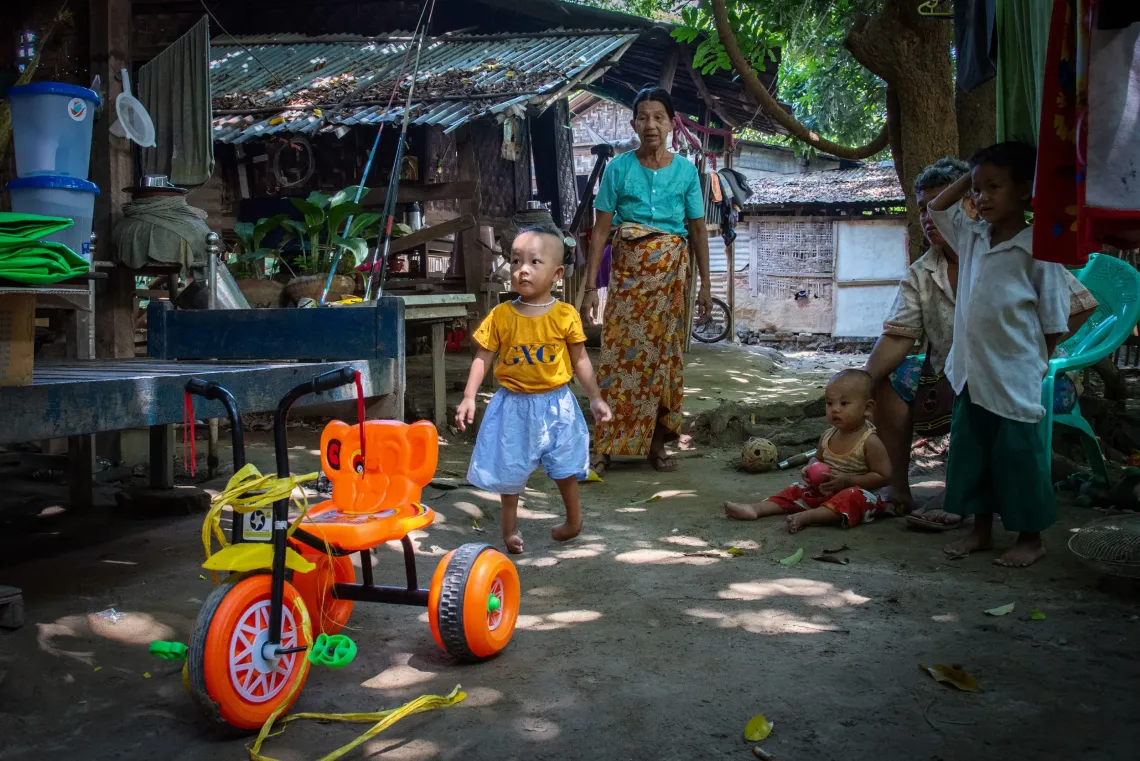
Nilar Win's family is among hundreds of thousands of people affected by this year's monsoon floods. By the end of September 2026, an estimated 950,000 people across parts of Myanmar had been affected by flooding, which damaged homes, livelihoods and critical infrastructure, including schools and health facilities.
The ongoing instability and armed conflict in the Sagaing region have left many residents grappling with daily struggles and overwhelming anxiety.
Nilar Win moved to Taung Baw Gar about seven years ago after getting married, and since then, she has experienced about three major floods. However, the 2026 monsoon flooding was particularly devastating when Zee Chan Creek overflowed.
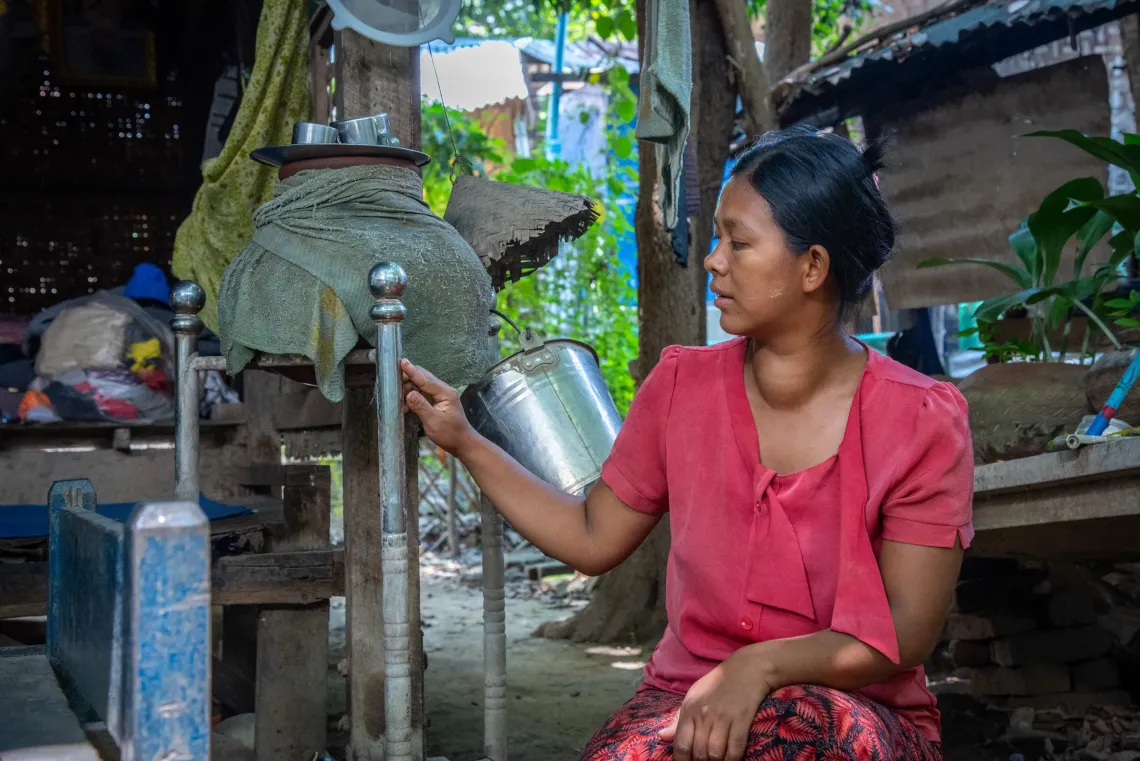
“On 4-5 August this year, the water surged alarmingly fast. In just half a day, it climbed to chest height, leaving us unable to save our belongings and forcing us to seek safety at the nearby community hall,” Nilar Win recalled.
Displacement caused by conflict and the relentless flooding during monsoon season has thrown lives into chaos, creating a host of urgent needs. Among the most pressing issues are shortages of clean drinking water and the damage to latrines, both of which have significantly increased the risk of waterborne diseases.
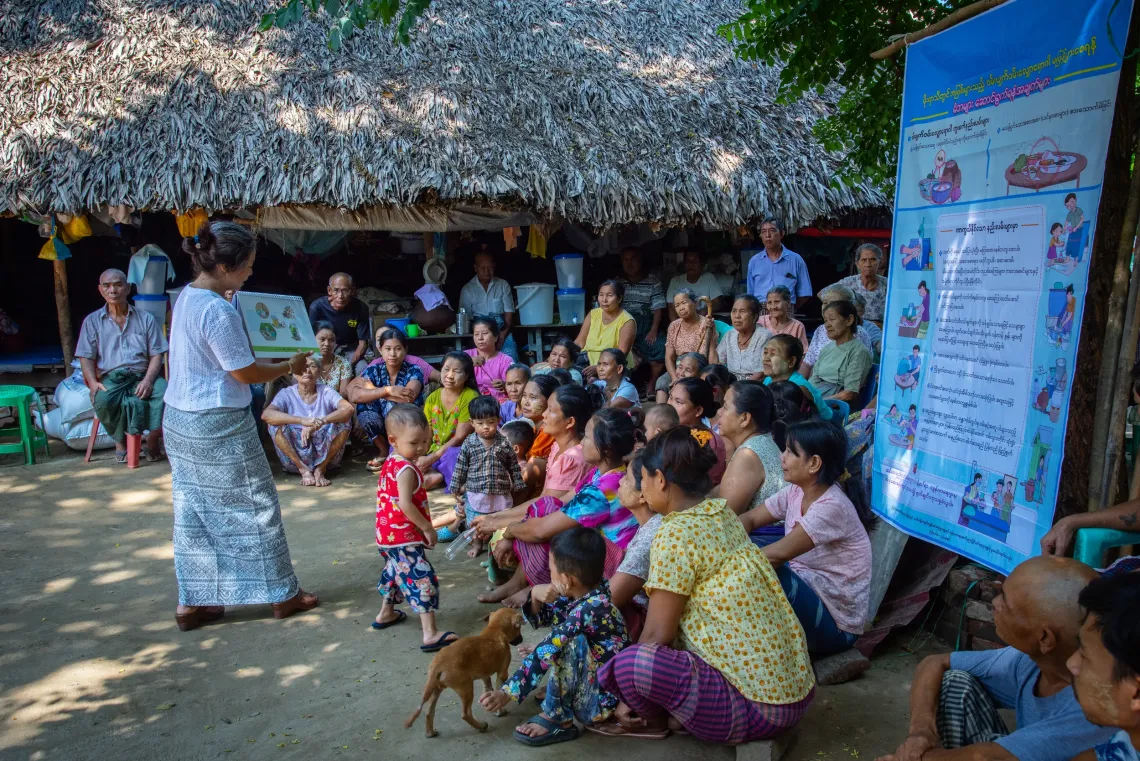
In response to this crisis, initial relief efforts included the installation of emergency mobile water treatment unit by UNICEF, providing much-needed clean drinking water. Additionally, support came from Barefoot Doctors Myanmar, a partner organization working alongside UNICEF.
Thaw Dar, a WASH Coordinator at Barefoot Doctors Myanmar, said, “People were struggling with problems like diarrhea because they couldn’t boil their water or didn’t have water purification tablets. They also experienced skin rashes from walking through contaminated water. That’s why we offered practical demonstrations and training on how to use water purification tablets, make oral rehydration solutions at home, maintain proper hygiene, and manage waste effectively.”
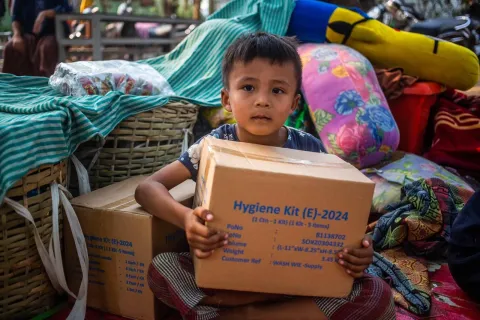
On 11 August, with UNICEF’s support, Barefoot Doctors Myanmar distributed hygiene kits directly to families, including Nilar Win’s. These supplies were essential for families navigating difficult times.
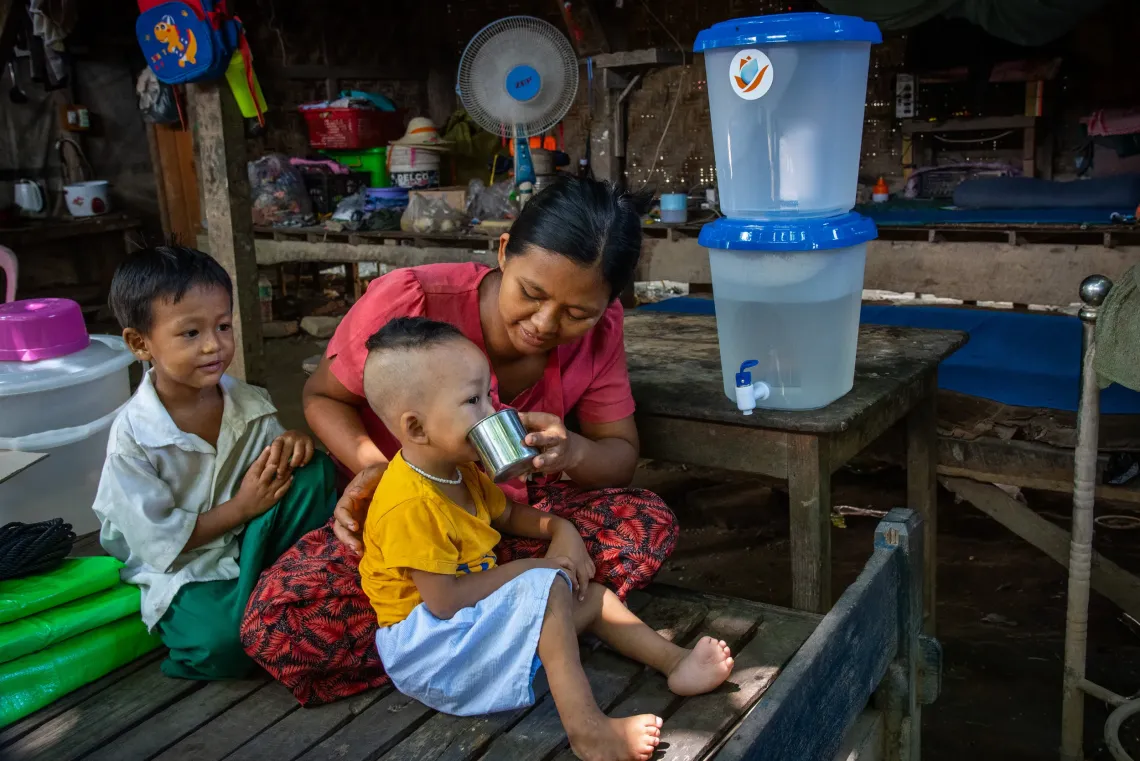
“Having carbolic soap means I can bathe my boys to keep them healthy, and I can wash our clothes properly. Menstrual hygiene products were a luxury before, but receiving them now brings me peace of mind and comfort during my period,” Nilar Win said.
In the midst of armed conflict and natural disasters, children, the elderly, people with disabilities, and families in camps for displaced people are facing particularly dire situations. Yet, even in these challenging times, the support from UNICEF and its partner organizations not only meets essential needs but also brings a glimmer of hope to the hearts of resilient children and families. Notably, with assistance from the Government of Japan, Barefoot Doctors Myanmar has reached over 2,240 families affected by flooding, totaling 10,045 individuals.
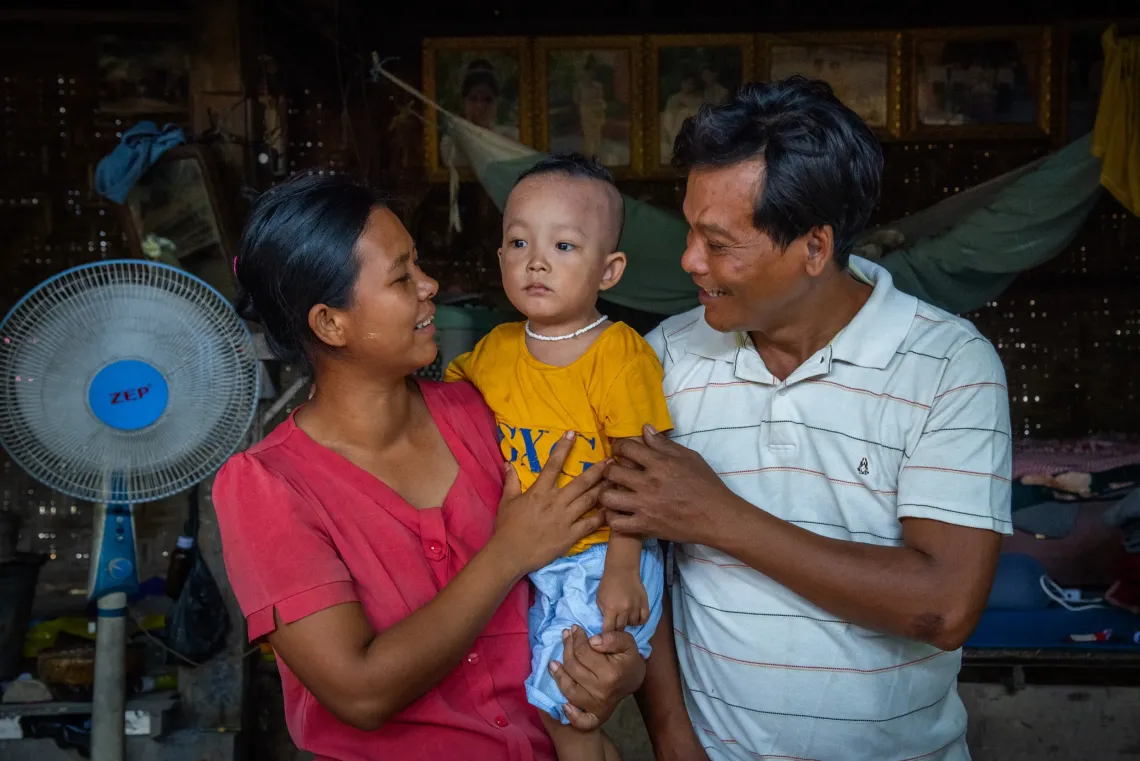
“No matter how difficult life becomes, my biggest wish for my sons is that they stay healthy and get a good education. As a parent, I just want to support their learning journey as much as I can,” Nilar Win said, wrapping her arms around her youngest son, with a hopeful smile.