A mother protects her baby through conflict and floods
After conflict, displacement and flooding devastated her family’s livelihood, safe water and basic hygiene support are helping a young mother protect her child.

- English
- မြန်မာ
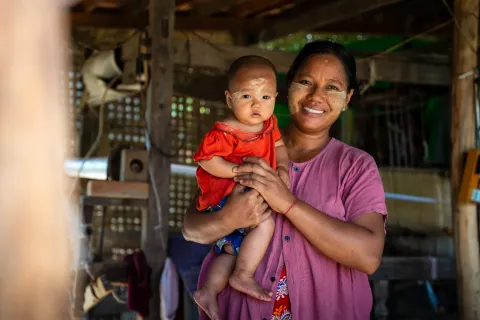
At just 21 years old, Phyo Nadi Kyaw endured conflict, displacement, her husband’s serious injury, the loss of the family’s livelihood and flooding that contaminated the community’s water supply. Through it all, her greatest concern has been protecting the health of her seven-month-old son, Aung Thura Phyo.
In 2024, armed conflict moved close to Phyo Nadi Kyaw’s community.
She recalls that whenever people heard aircraft or artillery shelling, families would flee their homes and frantically look for safe place to take cover.
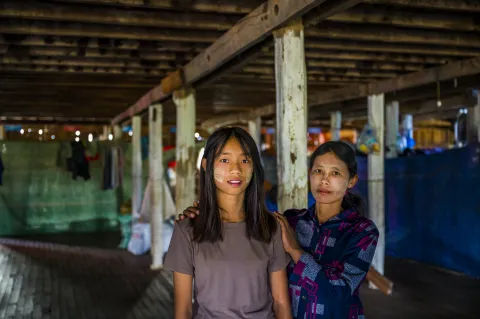
“Even the children here have learned from the adults: the moment they hear aircraft overhead, they instinctively run outside and take cover beneath the trees,” says Phyo Nadi Kyaw.
When staying in their village became impossible, Phyo Nadi Kyaw and her husband fled. But just as they were leaving, her husband was hit by shrapnel in his lower leg. Heavily pregnant at the time, Phyo Nadi Kyaw tried to help him. They fled from place to place, sometimes sheltering in valleys at night with only a few cooking pots and clothes. They later sold their only cow to help pay for her husband’s medical treatment. Despite repeated hospital visits, his leg did not fully recover, leaving him unable to return to work.
One month after giving birth, Phyo Nadi Kyaw returned to her village with her newborn son. But their struggles were far from over.
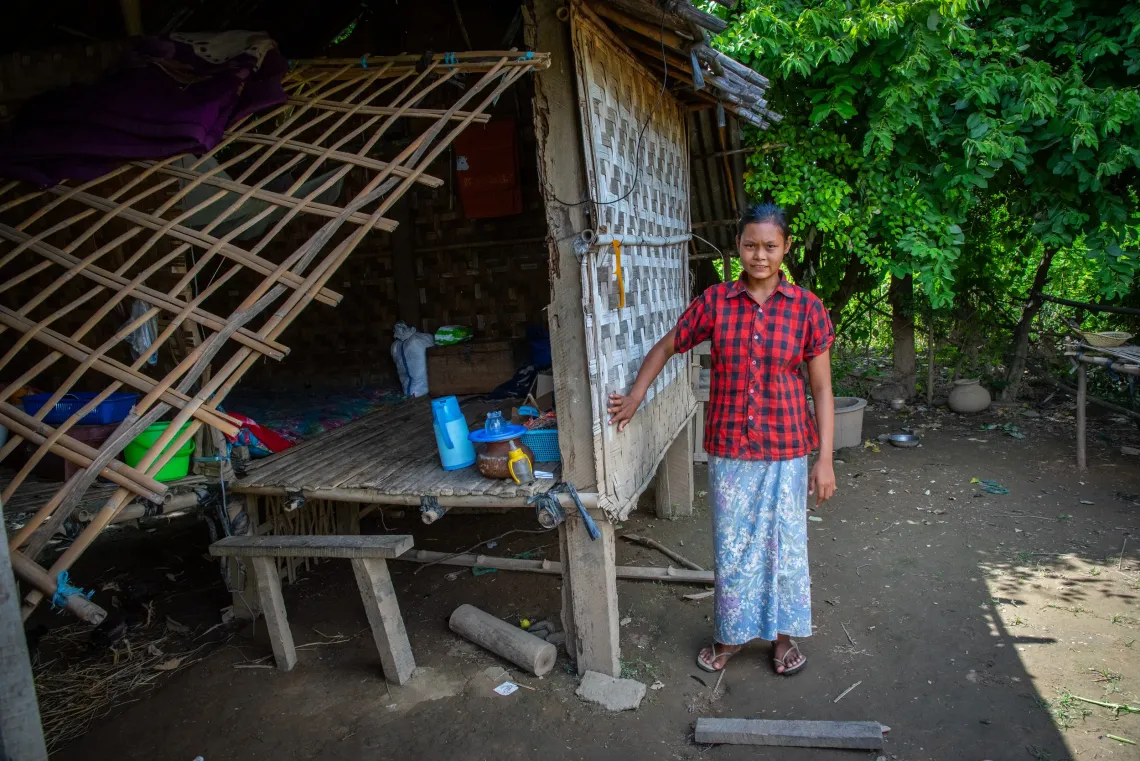
This monsoon season, heavy rainfall caused the Sedawgyi Dam to overflow, sending floodwaters into their village, affecting hundreds of families like Phyo Nadi Kyaw’s. Across parts of Myanmar, monsoon flooding affected an estimated 950,000 people by late September 2026, damaging homes, livelihoods, and critical infrastructure.
Phyo Nadi Kyaw’s small home was completely flooded. Latrines and water storage points were water-logged, contaminating the local water supply. Children in the community, including her seven-month-old son, Aung Thura Phyo, developed skin infections and fever.
For a mother already trying to care for an infant after displacement and the loss of her husband’s income, safe water and basic hygiene supplies became difficult to obtain. The family rationed everything they had – including soap and toothpaste, because they did not know when these items could be replaced.
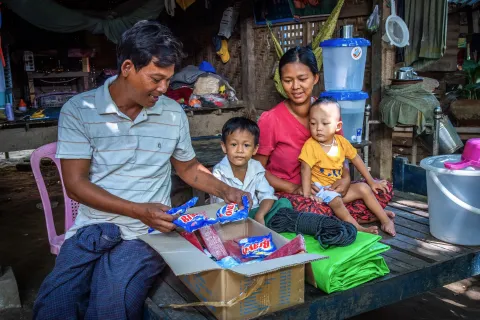
Amid these compounded challenges, critical assistance arrived. UNICEF provided families in the affected area with hygiene kits, water containers and water purification tablets to help them manage safe water, sanitation and hygiene needs following the floods.
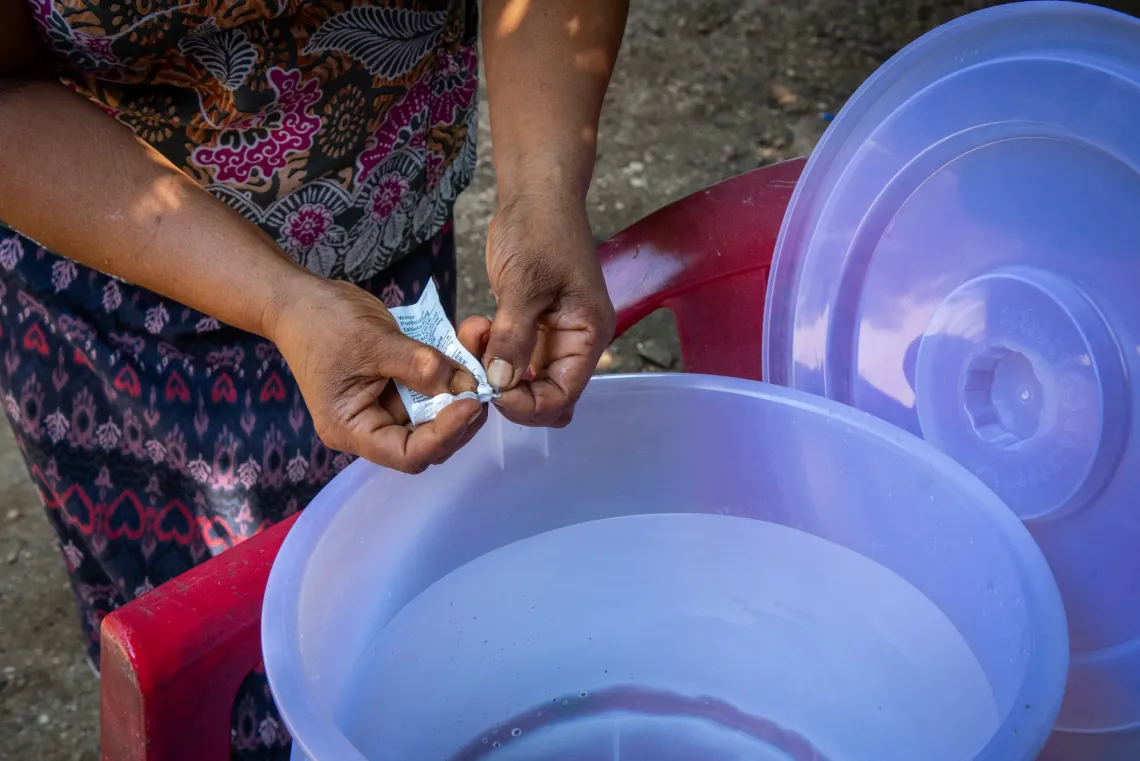
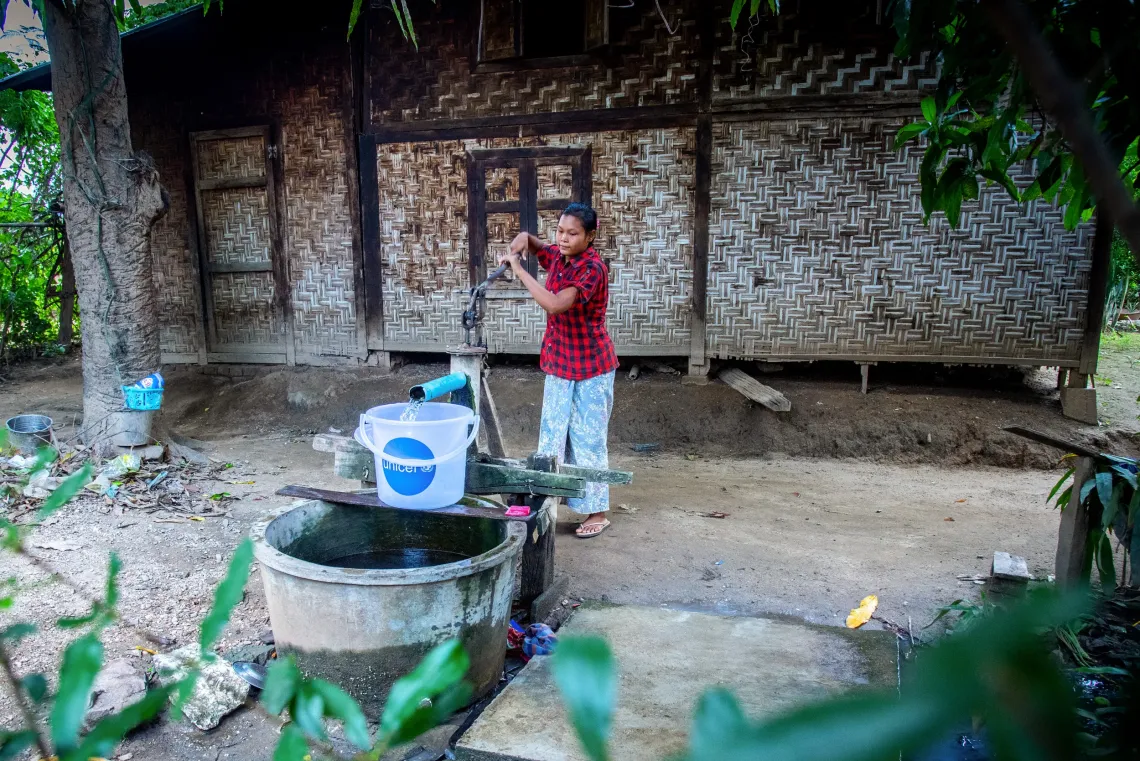
“We treat our drinking and cooking water overnight using the water purification tablets from UNICEF. It helps us to get safe water for my family,” Phyo Nadi Kyaw says.
“The carbolic soap in the hygiene kit helped relieve my baby's skin rash. With new toothbrushes and toothpaste, which might last for at least three months, we aren't afraid to brush our teeth in the morning anymore,” she says.
For Phyo Nadi Kyaw and her family, this means being able to carry out basic hygiene without worrying that these supplies will run out.
With generous support from the United States through the Myanmar Humanitarian Fund, UNICEF distributed water purification materials and hygiene items to 2,917 conflict-affected returnee and flood-affected households comprising 11,906 people across three village tracts in Madaya Township.
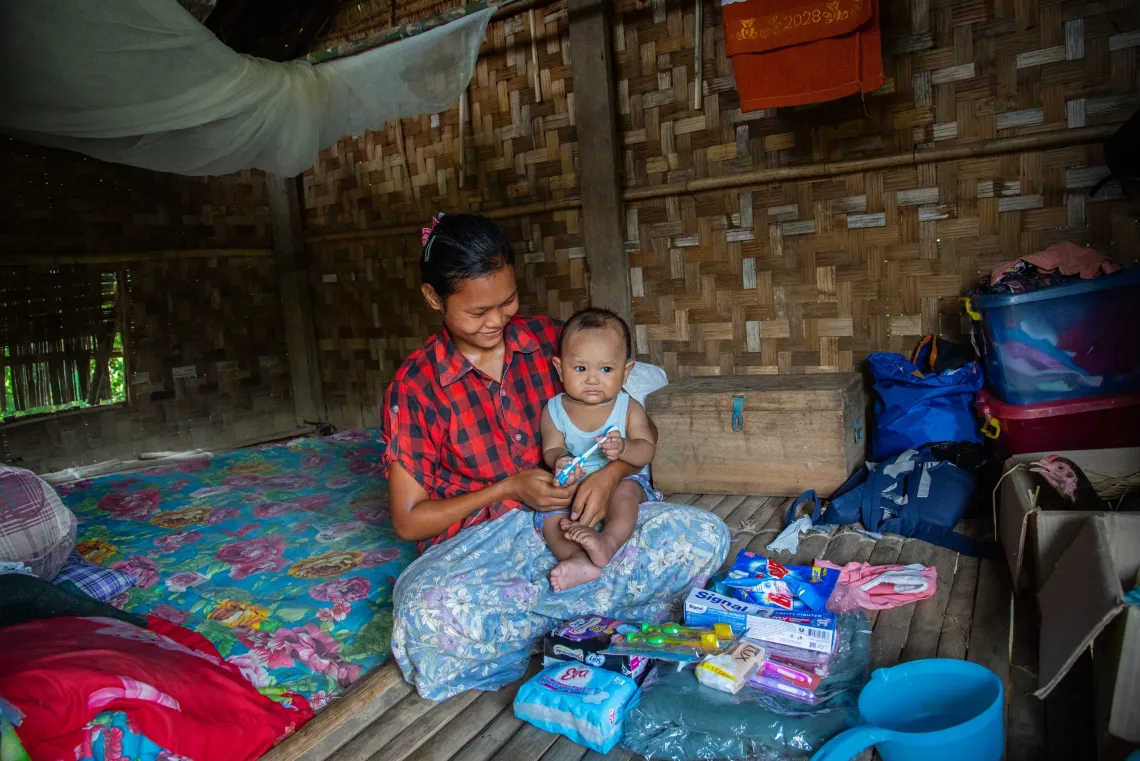
“During all this hardship, I felt helpless because I could not provide properly for my baby,” Phyo Nadi Kyaw says.
Having the supplies she needs to get safe water and maintain basic hygiene has brought some relief after months of upheaval.
“Knowing my child’s health is protected gives us hope to keep moving forward,” she says.