A Circle of Safety for Children in Conflict
How volunteer mothers are helping children in a displacement camp in northern Myanmar heal from what they have lost

- English
- မြန်မာ
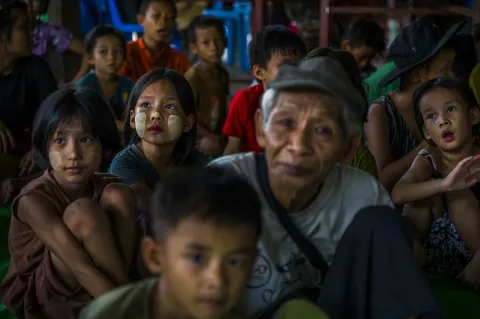
The cheerful sound of children clapping and singing echoes across a crowded displacement camp in Kachin State, northern Myanmar, offering a brief escape from the daily worries of displaced families.
Every weekend morning, a big hall in the camp turns into a lively gathering spot. In the middle of a wide circle of children stands See See Mee, a 38-year-old volunteer, leading a song with a wide smile.
Despite the cramped shelters and the difficult circumstances that brought these families here, the space feels safe and welcoming. For a few hours, fearful memories fade away, and children are simply allowed to be children.
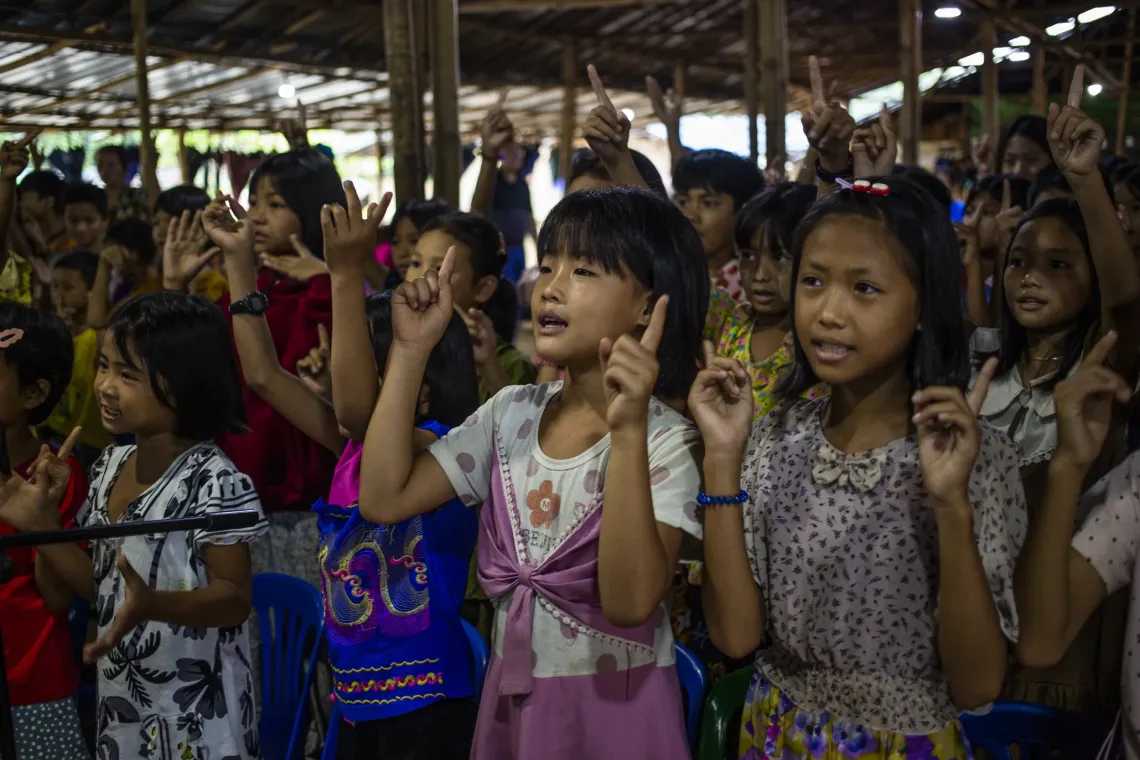
This happy scene is a stark contrast to the reality these families fled.
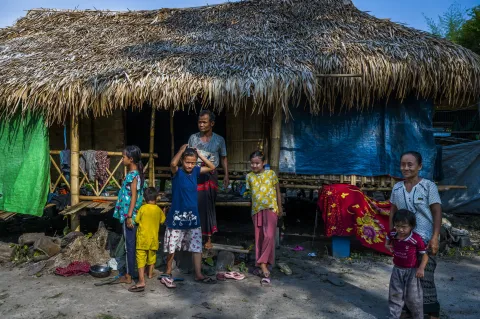
Just three years ago, the residents of this camp lived quiet lives as farmers in a small village near Myitkyina, Kachin State, growing crops and raising livestock. That peace was shattered when fighting reached their doorsteps, forcing them to flee. Their experience is far from unique: across Myanmar, escalating conflict and recurrent disasters have forced an estimated 4 million people from their homes, more than a third of them children.
See See Mee vividly remembers the terrifying morning they had to run. “The gunfire was so loud, my daughter woke up and asked if war had started," she recalls. "We fled into the forest with only the clothes we were wearing.”
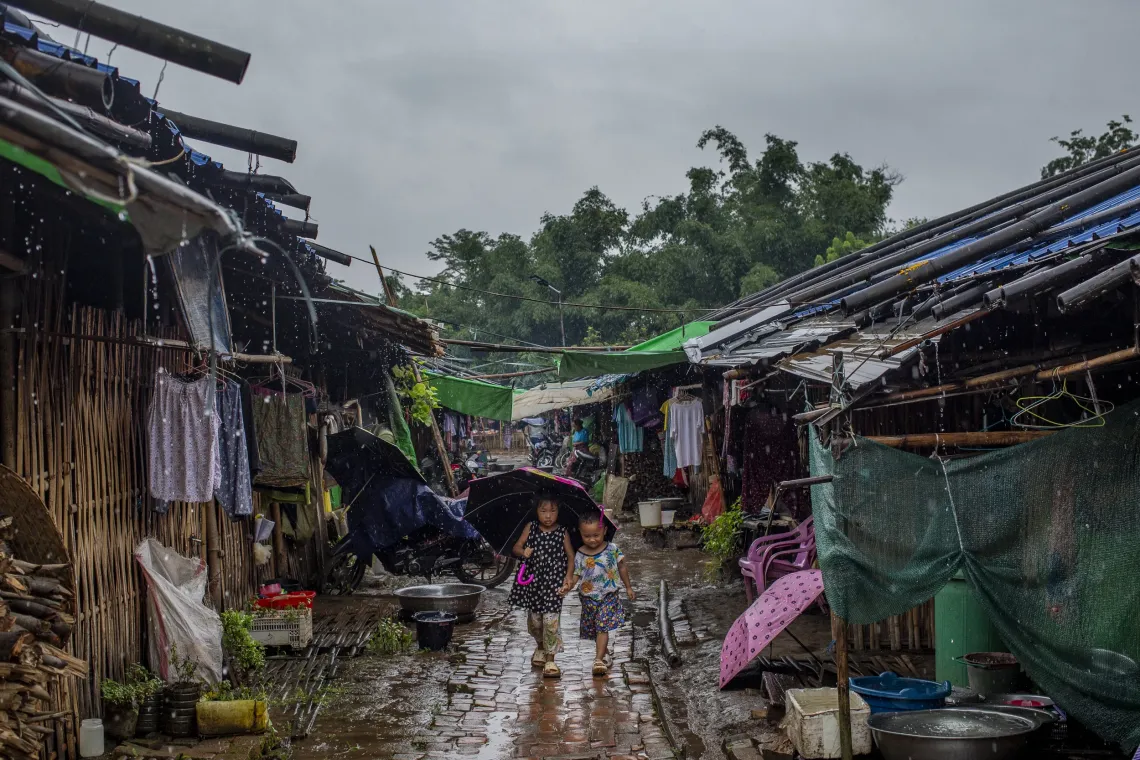
Today, the families who survived that escape face an entirely new set of harsh challenges.
Stripped of their farming livelihoods, parents struggle to find daily wage work. The lack of income, combined with cramped living spaces shared among more than 1,600 people, has created an environment of ongoing stress that inevitably affects the children.
Watching the camp's children and young people bear the weight of this daily anxiety, See See Mee knew she had to step in. As a single mother who survived severe bone cancer that left her disabled, navigating difficult realities was not new to her. She had already faced years of physical pain, multiple surgeries, and the daunting challenge of raising her seven-year-old daughter alone.
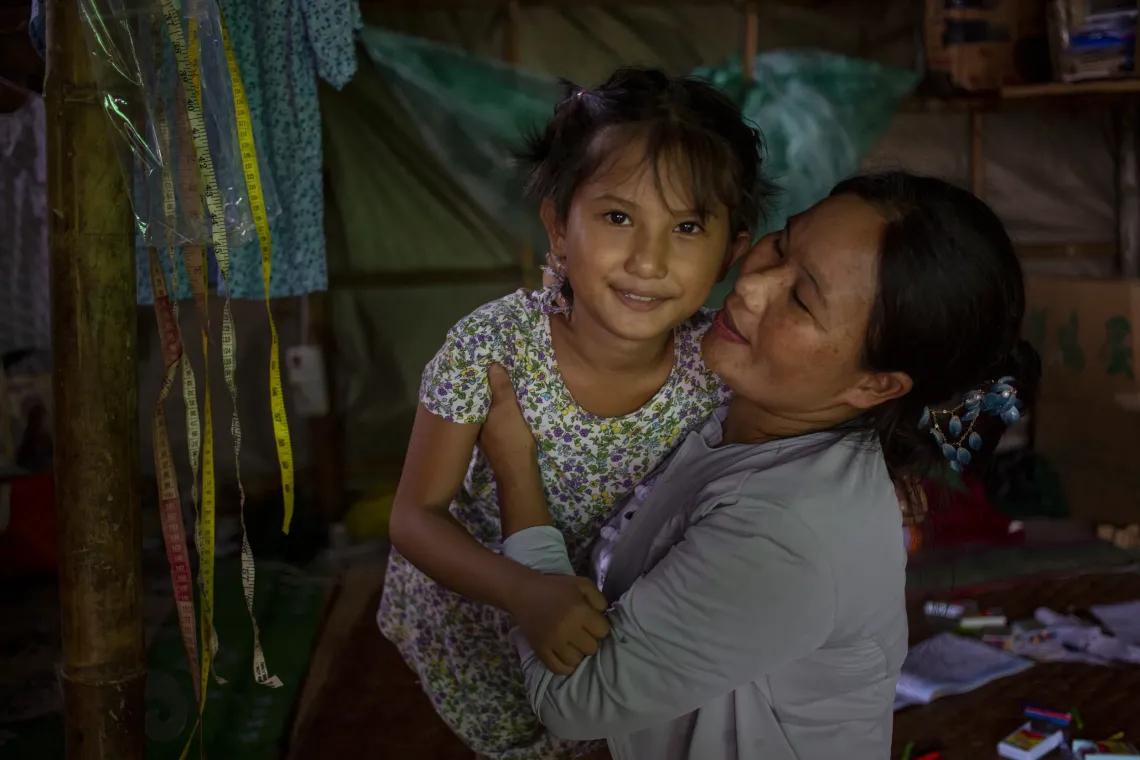
Knowing exactly what it feels like to be vulnerable, she pours her deep empathy into the child-friendly space, determined to create a safe haven. Every weekend she guides the children through singing, dancing, drawing, games and storytelling - simple activities that give them a rare chance to relax, express themselves and begin to process what they have lived through.
“I share stories they can learn from, and gather them to play,” she says. Her warm energy naturally draws children out of their shells and gives them much-needed emotional support.
The trust See See Mee has built within the community is strong. Children feel safe enough to approach her with their worries, finding comfort in her guidance. “It is rewarding when the children come to share their problems with me,” See See Mee says, with a bright smile. “It means they are listening to my advice, which makes me feel very proud.”
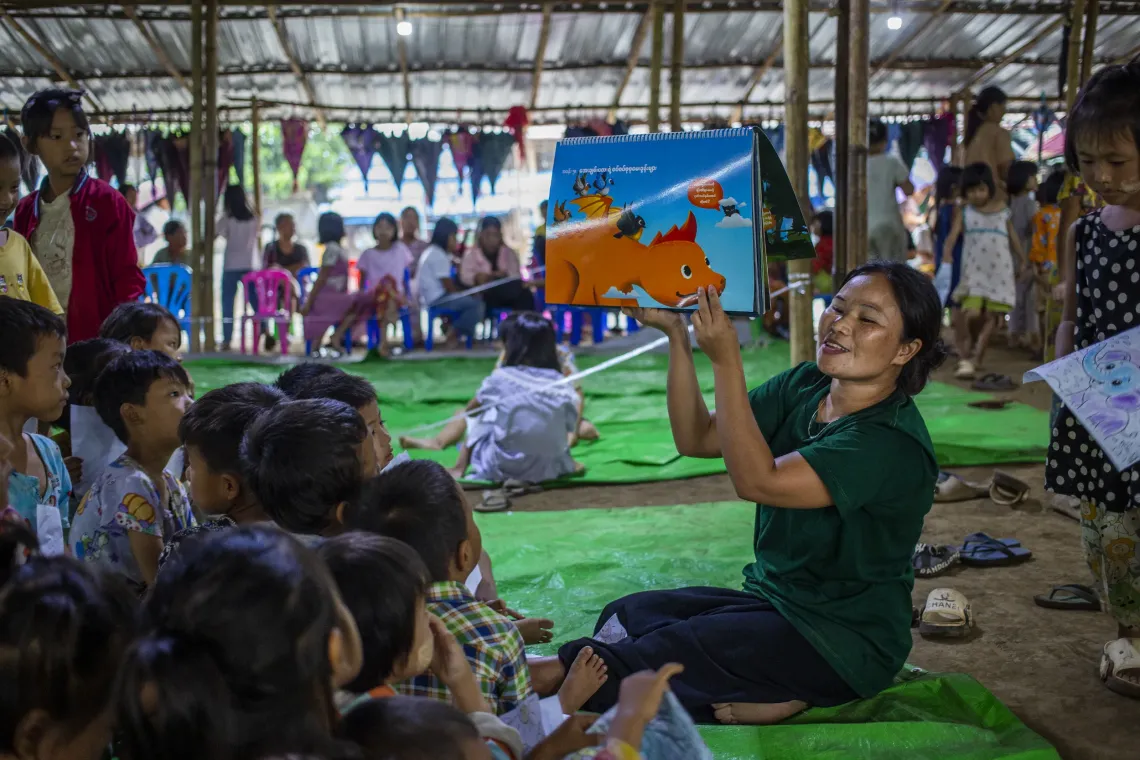
These child-friendly spaces, running over the weekend when schools are closed, have become a central part of camp life. While See See Mee and other volunteers lead the activities, a group of parents often gather to cook warm meals for the children. This shared effort ensures the children get healthy food, and also brings the displaced families closer together, turning the play area into a hub of community care.
Alongside the games and stories, See See Mee helps make sure UNICEF child protection kits reach the children who need them most. These practical supplies are part of a broader UNICEF Child Protection intervention supported by the United States through Myanmar Humanitarian Fund (MHF). The programme also provides a series of child protection and mental health support training and ongoing support for the community volunteers who keep the child-friendly spaces running – helping them to support children while also caring for their own mental health and well-being.
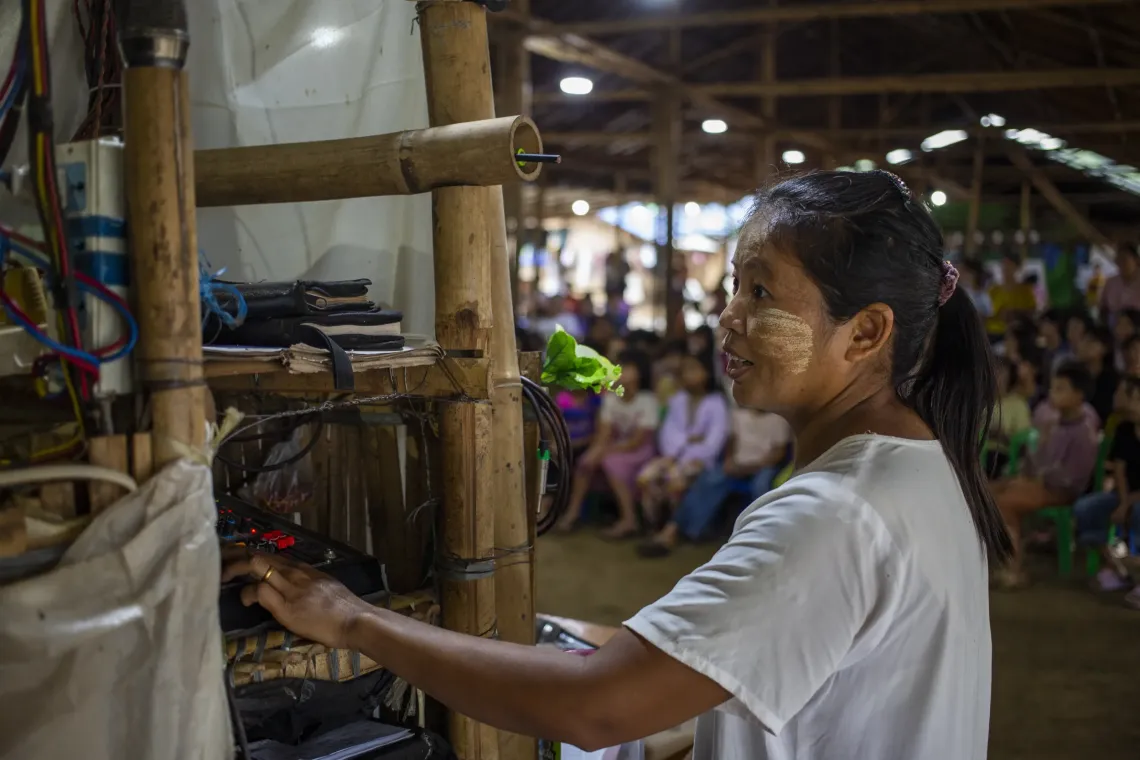
See See Mee does not have to carry the children's needs alone.
Behind the weekend activities stands the camp-based Child Protection Group, led by Saw Mee, who works with parents and camp leadership to keep the space running, children safe, and safeguarding practices in place. This includes ensuring that children are supervised, treated with care and protected from harm while they are in the place.
For children uprooted by conflict, empty hours can be dangerous. Around a camp like this, hidden hazards are never far: fast-flowing creeks, and forests where landmines and unexploded ordnance may still lie buried.
Saw Mee sees the child-friendly space as a shield against them. “If they do not have a place to play, they do not know where to go,” she says. “When they play here, it relieves their stress and they find comfort. If they don't have this space, they wander into the nearby creeks and forests, where there are unseen dangers.”
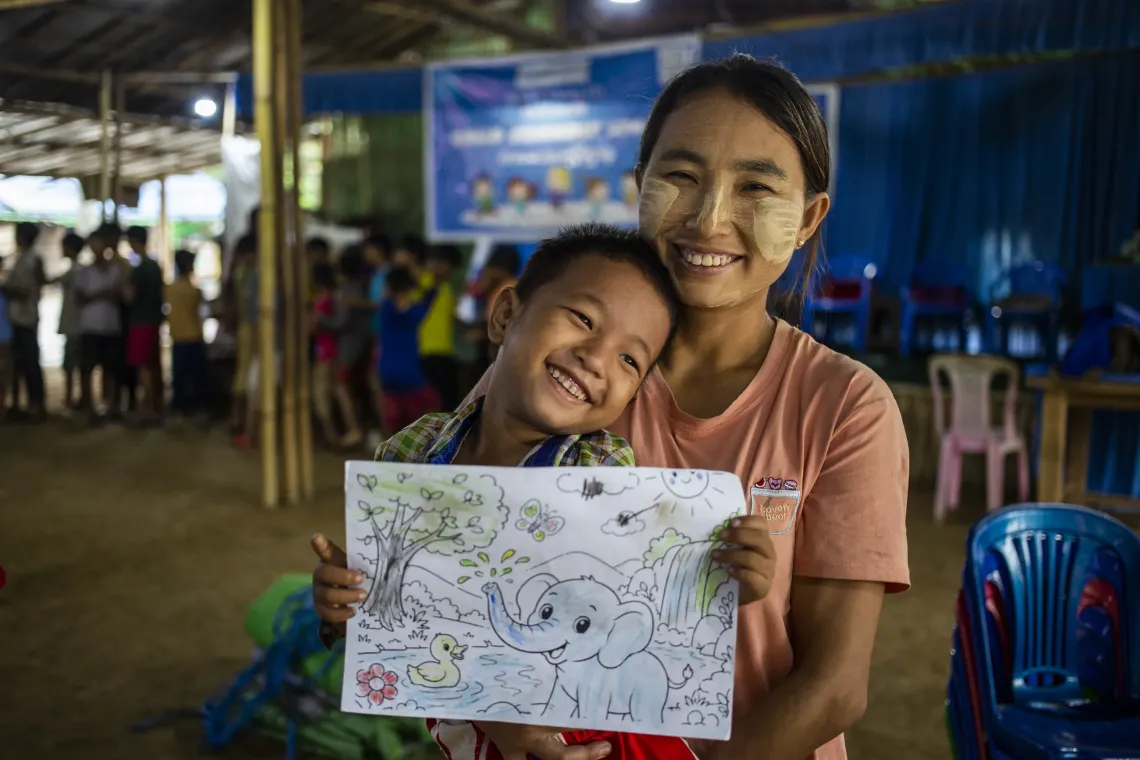
For families living with the daily pressures of displacement, this regular MHF-supported child protection support is making a visible difference in children’s wellbeing, confidence and sense of safety.
The changes are clear to the parents. Khaw Mee, a 35-year-old mother of four, sends all her children to the child-friendly space each week. Her youngest, four-year-old Ngwa Baw Sa, once turned aggressive at home and was too shy to go near a crowd. “Now he sings songs, talks about the pictures he draws, and he is happy playing with his friends,” she says. “I always send them here, and it has taught them how to get along with others.”
Eight-year-old Bhone Myat San, in grade two, is one of the regulars too, often here alongside seven-year-old Kyan Sar. “I am happy to be here with my friends. I like to draw and dance here.”
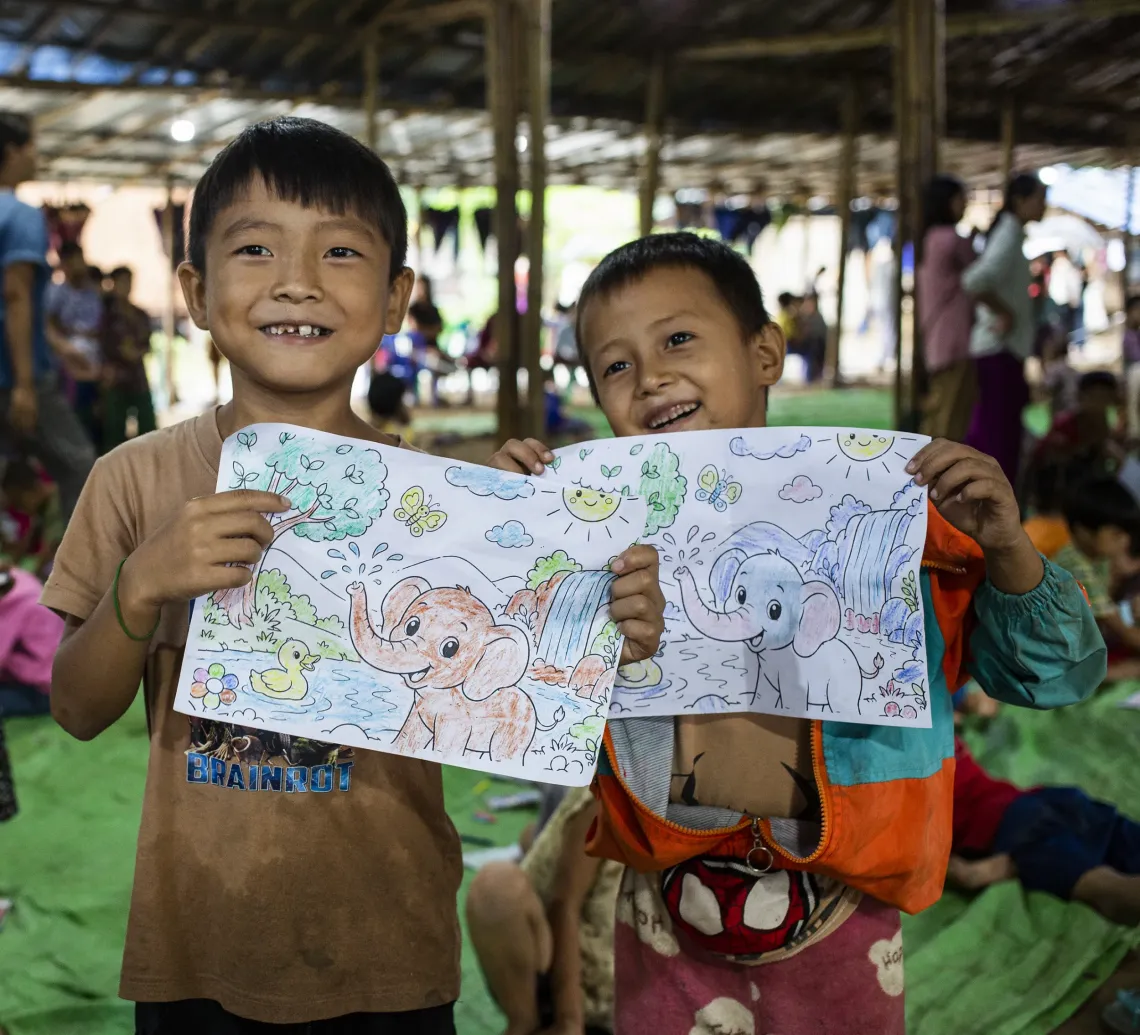
This community-led approach is what makes the programme work.
Thida Seine, a UNICEF Child Protection Officer based in Myitkyina, works closely with volunteers like See See Mee and Saw Mee. “Our goal is to empower the community to protect their own children,” she explains. “By training local mothers who already understand the daily lives and culture of the camp, we make sure these activities can continue in the long run.”
As the activities at the child-friendly space wrap up, the children sit together to enjoy their snacks. They wave goodbye to See See Mee, their faces bright with smiles. Through the steady teamwork of community mothers and UNICEF, along with the support of partners like MHF, these displaced children are finding a piece of a normal childhood again. See See Mee and Saw Mee are showing that even in difficult times, hope grows when a community puts its children first.