Protecting childhood amid crisis: Standing with children in Myanmar
As conflict and displacement expose children to increasing protection risks, UNICEF and local partners are working to keep children safe and connect families to life-saving essential services , with support from the European Union.

For a mother raising her daughter amid years of displacement, her greatest wish is simple: to see her child grow up safely.
“My daughter experiences feelings of anxiety. I worry about her even more because she is a girl,” she says. “As a parent, I just want my daughter to grow up in a safe environment.”
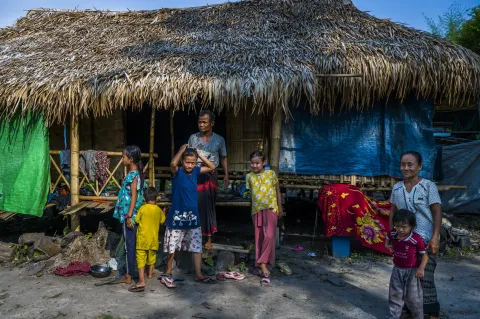
Her concerns reflect the reality of many families across Southeast Myanmar, where prolonged conflict, displacement and economic hardship continue to disrupt children's lives. These pressures weaken the protective environment around them, the safe and caring setting where every child needs to grow up. Parents and caregivers, themselves coping with constant uncertainty, draw on their parenting skills every day to comfort, guide and protect their children from violence, exploitation and psychological distress.
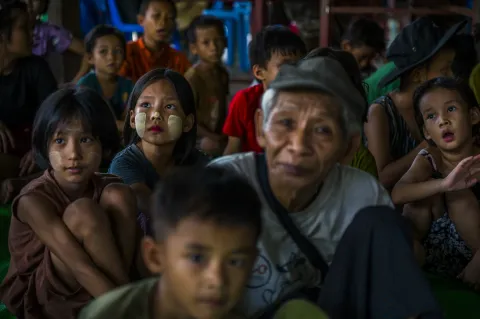
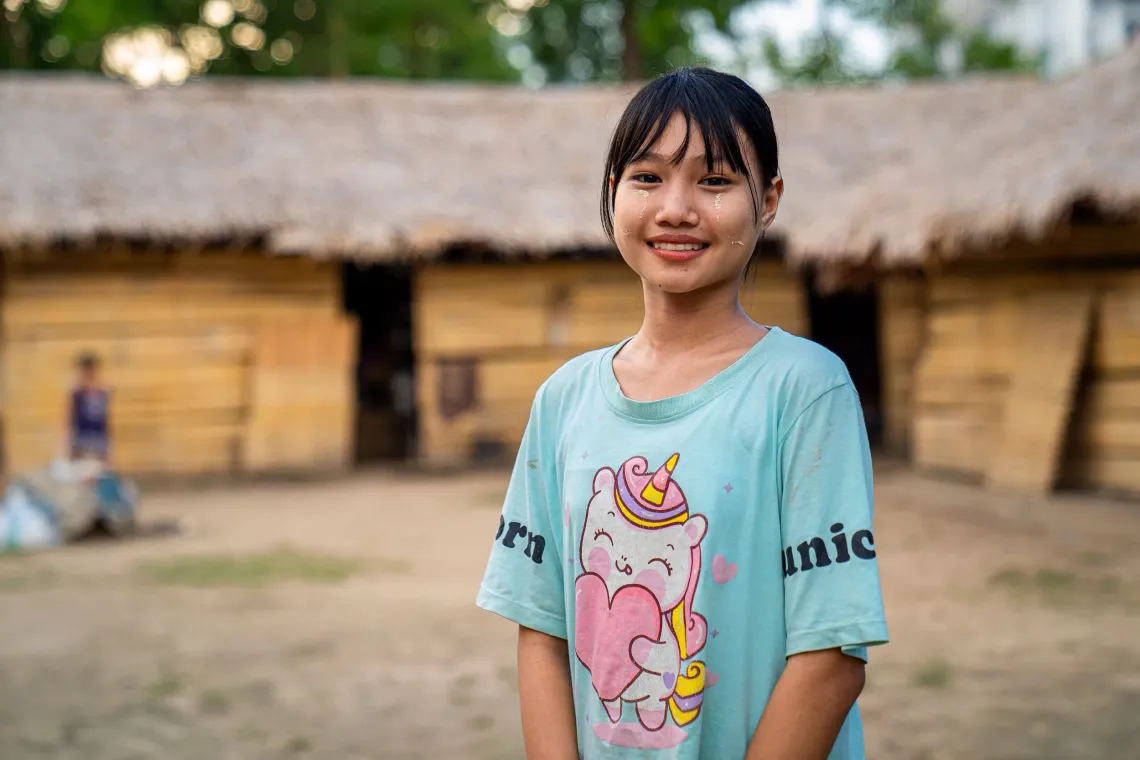
Yet even amid uncertainty, children show resilience and continue to dream.
One girl hopes to become a beautician, while another dreams of opening a restaurant, supporting her parents and helping others.
Behind these simple aspirations lie fundamental child rights: every child deserves to grow up safely, with opportunities to learn, play and build a future.
Growing protection needs amid conflict
Across Myanmar, the consequences of conflict extend far beyond displacement. Along the way, children face threats from landmines and other explosive ordnance, witness high level of violence and are at risk of family separation.
During the first six months of 2026 alone, 113 children were killed or injured by landmines and other explosive ordnance across Myanmar, accounting for more than 23 per cent of the 487 civilian casualties recorded nationwide.
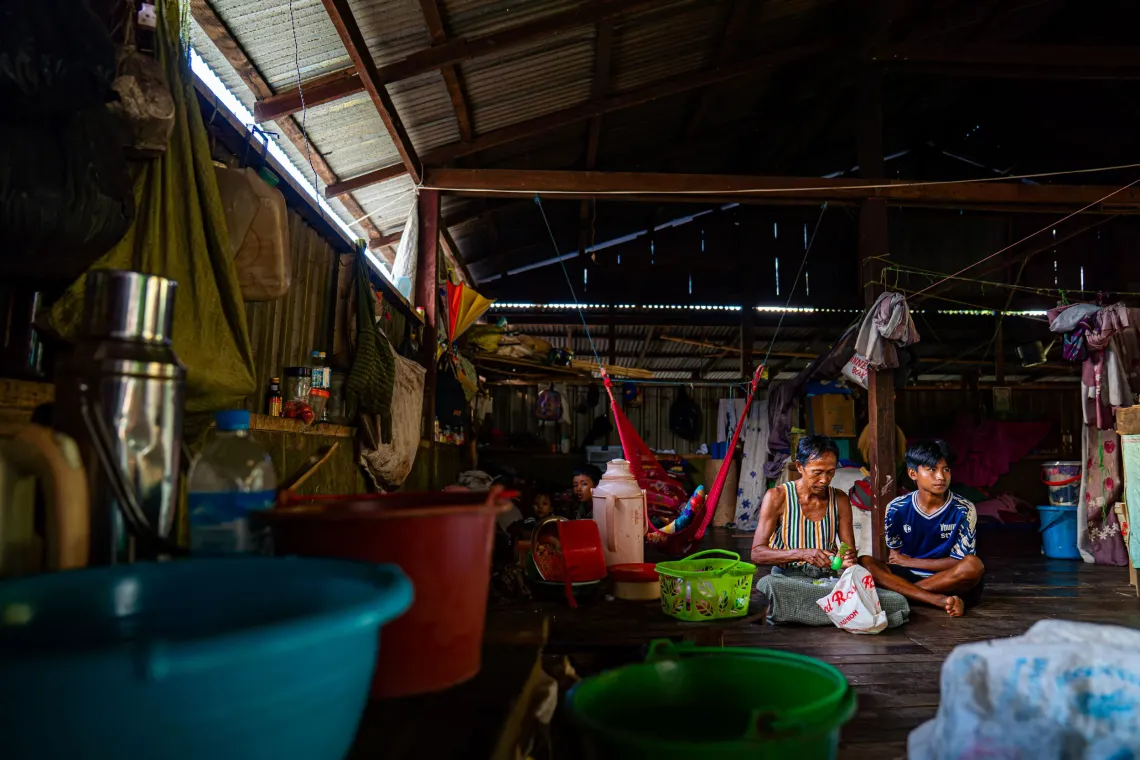
Physical displacement also takes a heavy toll; in addition to families being uprooted from their homes, schools and communities, losing familiar routines, safe spaces and support networks can leave children and caregivers living with fear and lasting distress. For displaced families, daily challenges are compounded by rising living costs and difficulties accessing child protection services and other essential support such as education, health care, which leaves many of them without the support they need to cope.
“Children living here face many difficulties continuing their education,” says a community member. “The cost of living keeps rising, and families are also struggling to cover school expenses.”
As needs become more complex, local child protection networks are bridging this gap identifying children at risk and connecting families with essential assistance.
Communities on the frontline of child protection
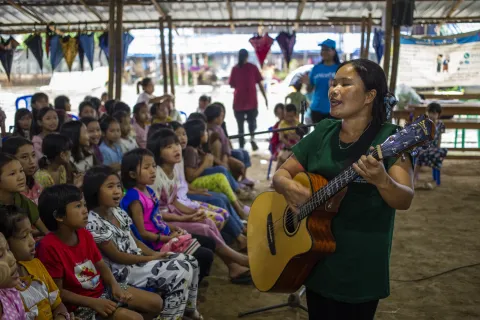
Across conflict-affected communities, local volunteers and frontline workers are crucial in helping families protect their children despite difficult operating conditions.
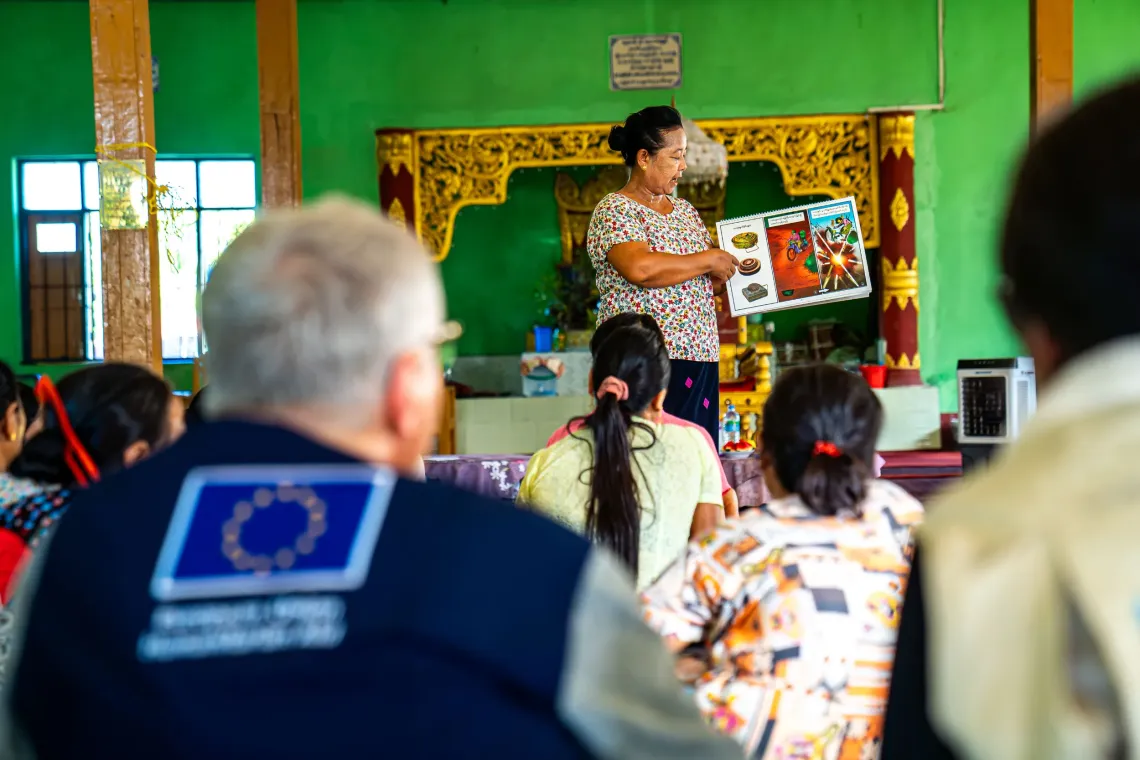
These community volunteers see the dangers first-hand, from landmines and other explosive ordnance that can remain deadly long after fighting has ended to the everyday risks children face in displacement sites. UNICEF has trained them to recognize and respond to protection risks, deliver explosive ordnance risk education, and refer children to services, strengthening overall community-based child protection.
“Many children in the area face life-threatening risks when they handle or dig up explosive items without knowing what they are,” explains a local child protection worker. “Community-based child protection groups play a vital role in reaching children and families in displacement sites and communities. As volunteers from these affected communities, they understand the needs.”
Because they live in the same communities they serve, these trained volunteers are known and trusted by the families around them. They are the ones who are there when a child is at risk and families know they can turn to them when they need support. Through explosive ordnance risk education awareness provided by UNICEF-supported partners in collaboration with community-based child protection groups, children and caregivers know how to recognise potential dangers, avoid suspicious objects and seek assistance safely.
UNICEF with support from the European Union is also backing local organisations to expand community-based services such as providing psychosocial support, establishing child-friendly spaces and making referrals to specialised services so that children affected by conflict and displacement can stay safe and receive the care they need.
Protecting children's rights through access to justice
For children whose rights are at risk, access to justice is a critical protection service. Without it, a child can be left to face the complex legal processes alone.
Through an initiative supported by the European Union, UNICEF is strengthening specialised legal services for children facing legal proceedings and other protection concerns so that no child has to navigate the justice system without support.
The initiative helps legal professionals provide child-sensitive representation that keeps each child’s rights and wellbeing at the centre. It also promotes close coordination with social workers and protection services to help children receive the right assistance at the right time.
Together, these interventions demonstrate why comprehensive child protection is essential – from preventing harm through community awareness to ensuring that children facing more complex risks can access specialised support.
A partnership that keeps protection within reach
The European Union remains an important humanitarian partner of UNICEF in Myanmar, supporting efforts to reach children affected by conflict, displacement and other emergencies.
Through this partnership, UNICEF works with local organizations and frontline responders to strengthen community-based child protection, expand access to essential services and support children facing heightened risks.
Mr. Yasumasa Kimura, UNICEF Representative in Myanmar said, “Every day, children across Myanmar face threats that no child should have to endure. Yet behind these challenges are children with dreams, families determined to protect them, and community volunteers working tirelessly to keep them safe. Our partnership with the European Union is helping sustain essential protection services and strengthen local responses and resilience. Continued humanitarian support is critical to ensuring that children facing the greatest risks are not left behind.”
Why sustained funding matters
Despite the dedication of humanitarian workers and communities, insecurity, access constraints and declining resources continue to challenge the delivery of essential child protection services.
For local organisations, funding uncertainty affects not only the immediate assistance children and families receive but also the community-based protection networks built to keep them safe over time.
“Reduced funding creates many difficulties in implementing activities,” says a local civil society representative. “Interventions bring greater change when they are sustained over the long term, rather than carried out for only a short period.”
Without predictable support, children risk losing access to essential safety information, psychosocial care, individual protection assistance and other services that help prevent and respond to harm.
Investing in child protection services delivers a strong return: better outcomes for children today and stronger systems that keep protecting them tomorrow. The most effective way to achieve this is through technical support and localisation, equipping local organisations and community networks with the skills and resources to lead the response.“Small organisations like ours cannot do this alone,” the local representative says. “We need safe places where services can be provided. We need organisations like UNICEF to equip us with strong technical skills and capacity. And we need the donors such as the European Union to continuously support our assistance for affected children and families.”
Keeping children's hopes alive
For children growing up amid uncertainty, the future should be defined by their aspirations, not the dangers surrounding them.
Across southeast Myanmar, caregivers, community volunteers and humanitarian workers are doing what they can to help children stay safe, continue learning and maintain hope.
The need remains great, but so does the opportunity. With sustained support from the European Union and other humanitarian partners and donors, community volunteers and local organisations can reach many more children and keep them protected. UNICEF continues working to ensure that children affected by crisis can access essential protection services while strengthening communities' capacity to respond to their needs.
For the displaced mother raising her daughter, continued support matters deeply.
“Children are so innocent. They do not deserve to experience these sufferings. I hope everyone will come together to help ensure that children do not lose their happiness or their futures.”
“They are the hope and future of our community,” she says.