From fear to learning again after the Myanmar earthquake
More than a year after earthquake, UNICEF-trained teachers are helping children regain confidence through learning, play and support from friends

- English
- မြန်မာ
When classrooms reopened after a devastating earthquake in March 2025, teacher Daw Aye Aye Aung noticed that many children were still afraid to be back.
Some became distressed when they heard the word “earthquake”. Others worried that the ground would shake again while they were sitting in class. Repeated aftershocks and damaged school buildings had made it difficult for many children to feel safe.
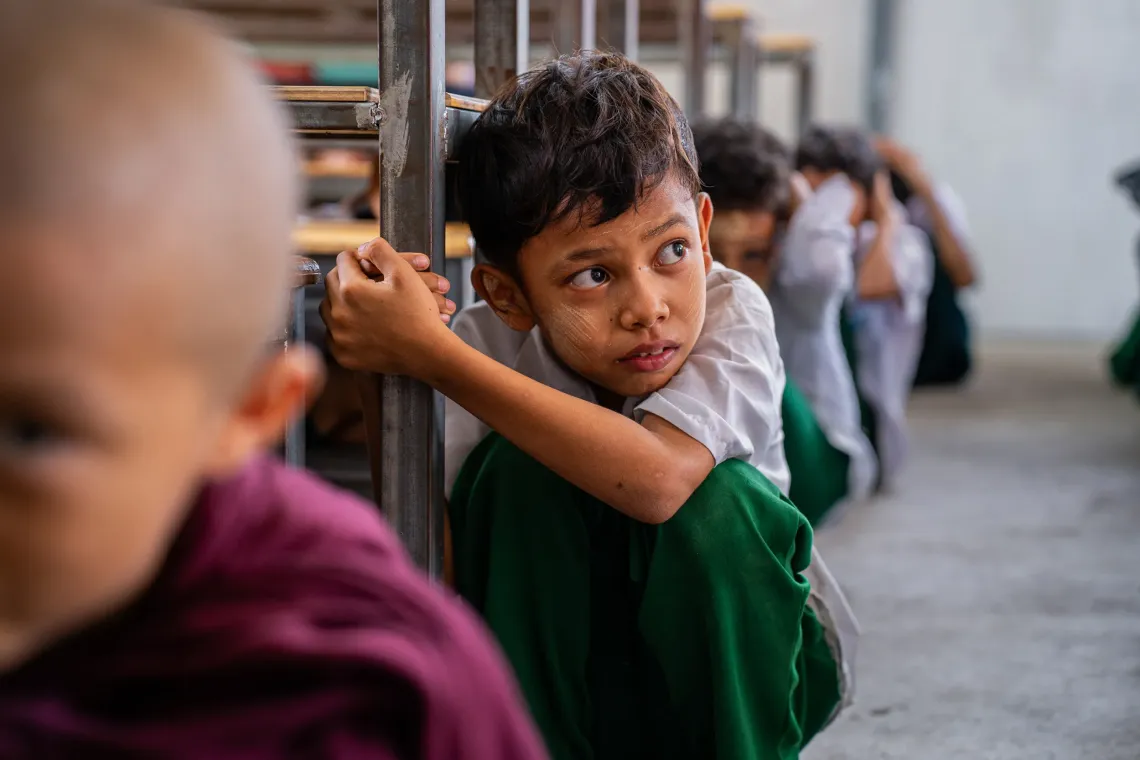
“At that time, the children were very scared,” says Daw Aye Aye Aung, a teacher at a monastic education centre in central Myanmar. “Some of the younger children would cry even when they heard people talk about an earthquake.”
For many months, teachers and students continued learning in temporary spaces after school buildings were damaged. The makeshift classrooms were hot and did not keep out the monsoon rain well.
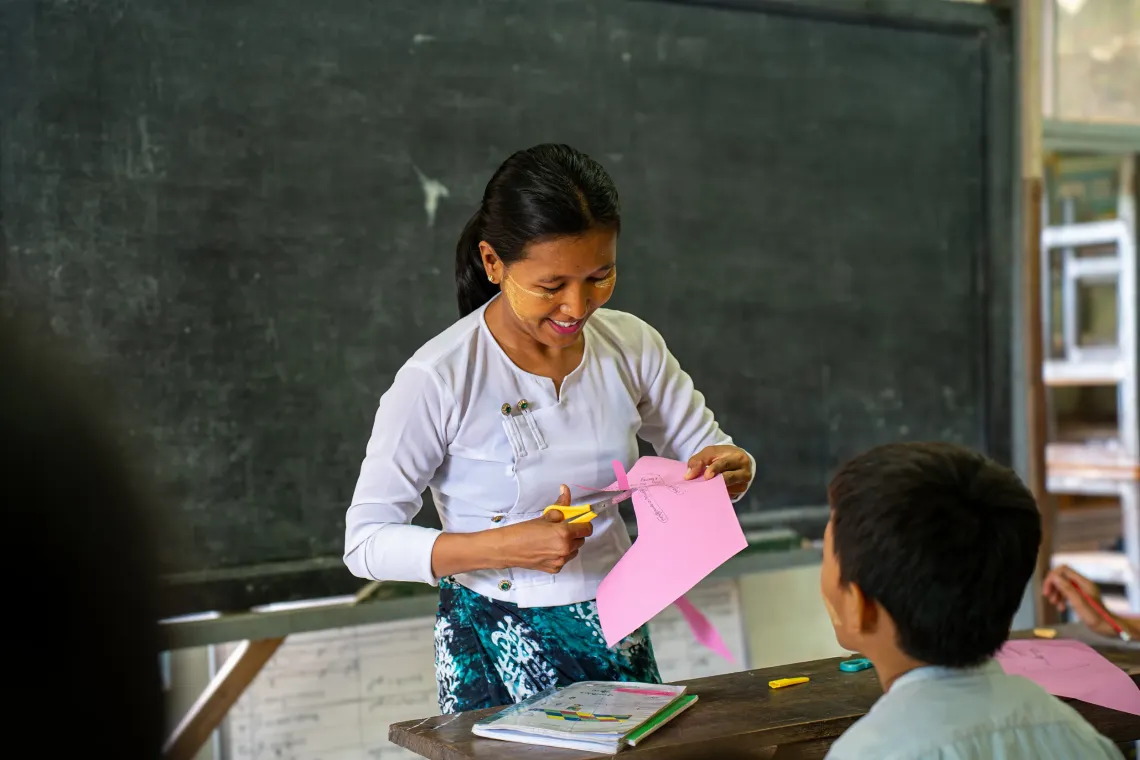
More than a year later, Daw Aye Aye Aung is seeing a change.
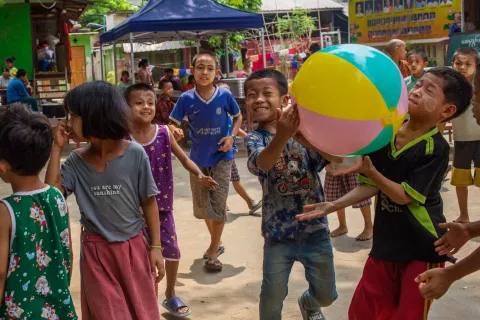
Children are back to routines that matter; learning in class, reading, playing with friends, sharing how they feel and practising what to do in an emergency.
Through UNICEF-supported training, Daw Aye Aye Aung learned new ways to help children express their feelings. In one activity, children write down their thoughts on colourful pieces of paper and place them on the five fingers of a hand. The simple exercise gives them a chance to talk about emotions that can be hard to explain.
“After attending the training from UNICEF, I understood how to support children’s emotional well-being, how to encourage them and how to comfort them,” she says.
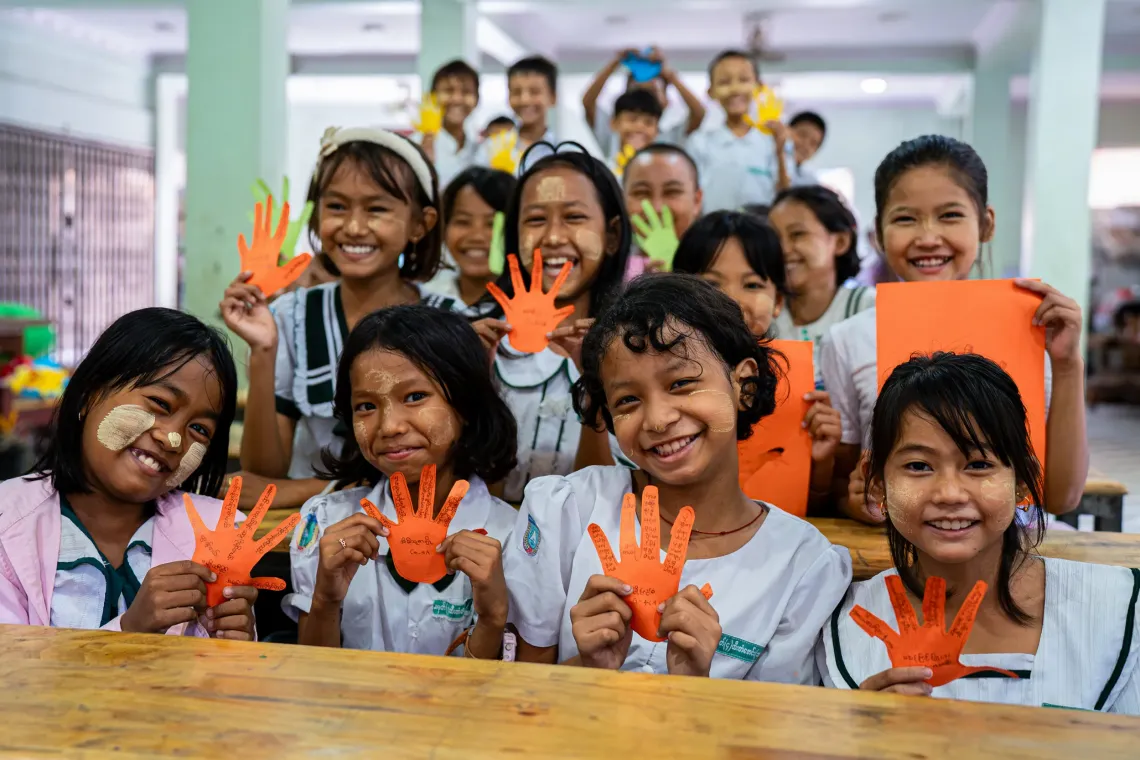
The change has extended beyond the activity itself.
“Before, children were less likely to speak openly about their worries. Now, they are more willing to talk about them and know how to support one another emotionally,” Daw Aye Aye Aung says. “When they see that a friend is having difficulties, they try to encourage them. If they cannot help their friend, they come and tell the teacher.”
For 13-year-old Soe Htet Mg, returning to class has become less frightening.
When he first came back after the earthquake, recurring aftershocks and cracks in the school building made him worry. Today, he says he knows what to do if the ground shakes again.
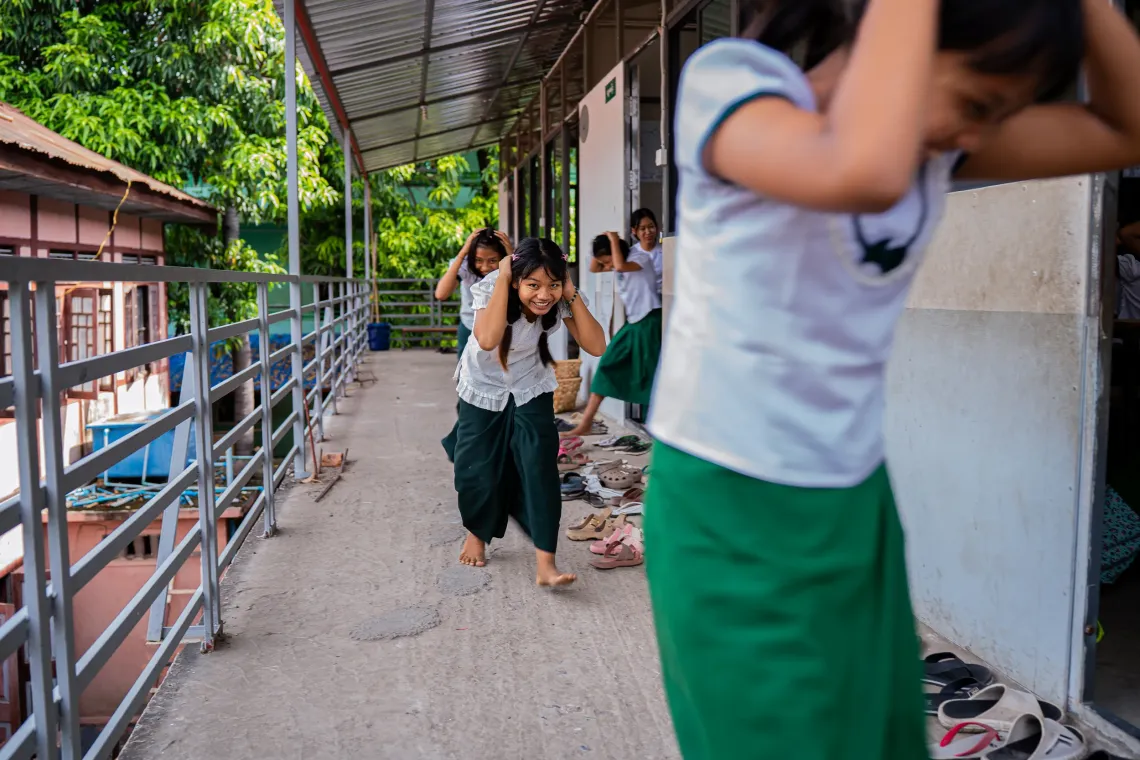
“When there is an aftershock, I have learned to protect my head with my hands and go to the assembly area,” he says. “The school buildings have also been repaired, so this year I am not as afraid.”
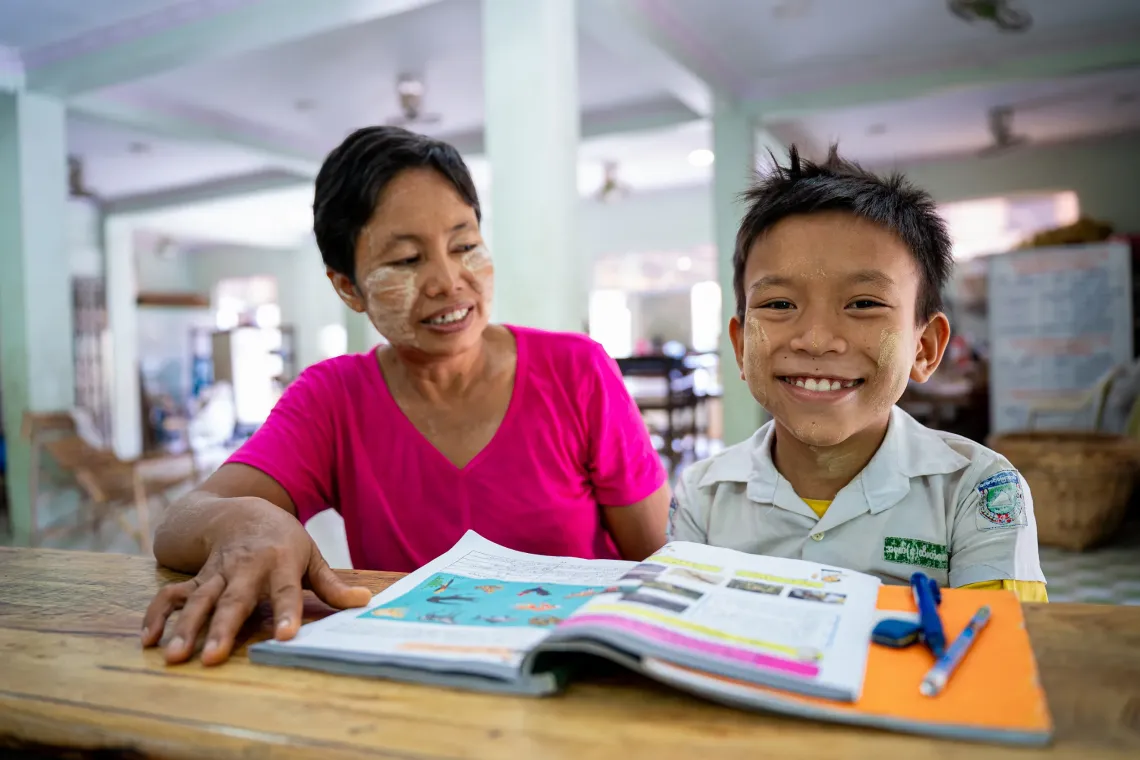
He was also happy to receive a backpack and learning supplies. “I love my backpack,” he says. “My mother does not need to spend money to buy one.”
His mother, Cho Mar Win, 47, has seen the difference. Sitting beside her son as he reads, she says she is happy to see him continuing his education.
“I am happy when I see him reading and going back to the classroom,” she says. “The school supplies he received are very useful for him. As a mother, I want him to continue learning and have a good future.”
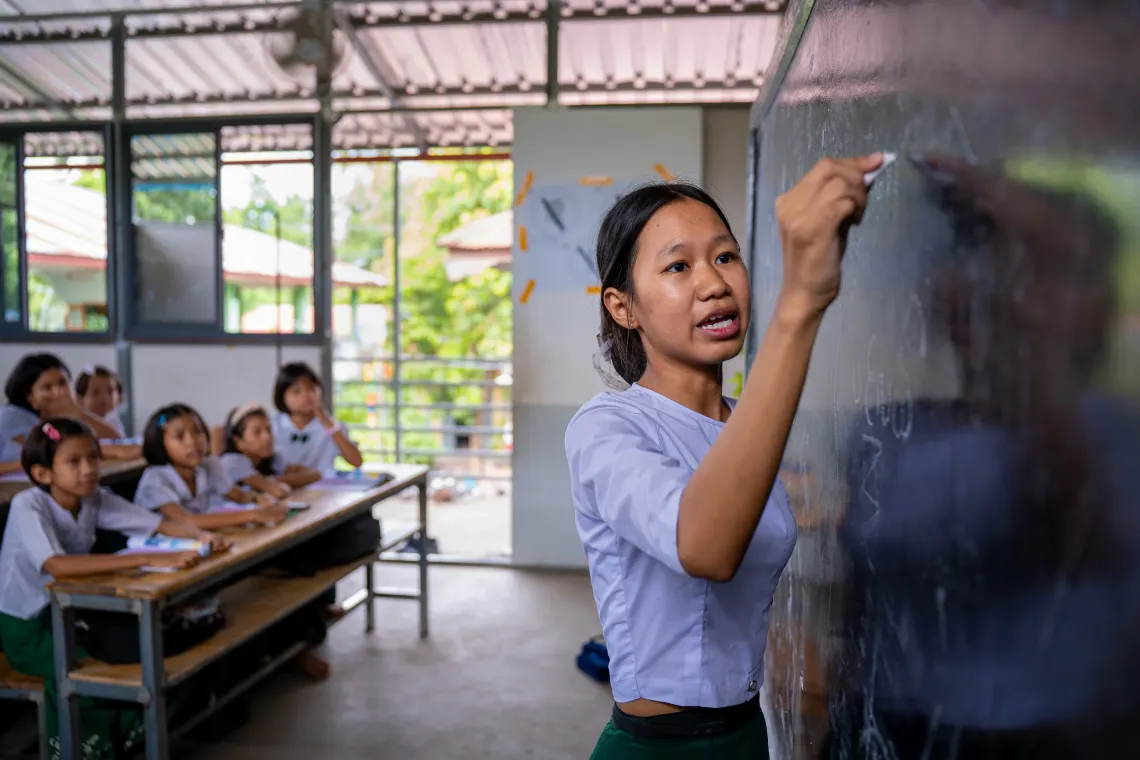
Teacher Daw Hsu Yee Toe has taught at the same monastic education centre for four years. When classes resumed after the earthquake, there were not enough classrooms, so teachers held lessons in the monks’ living quarters. The space was crowded, making it difficult for children to learn comfortably.
Temporary learning spaces later made teaching more manageable. For Daw Hsu Yee Toe, however, teacher training has been just as important as the supplies.
“Before, we only knew that children should run when there was an earthquake,” she says. “After the training, I learned that they need to cover their heads and move systematically to the assembly area.”
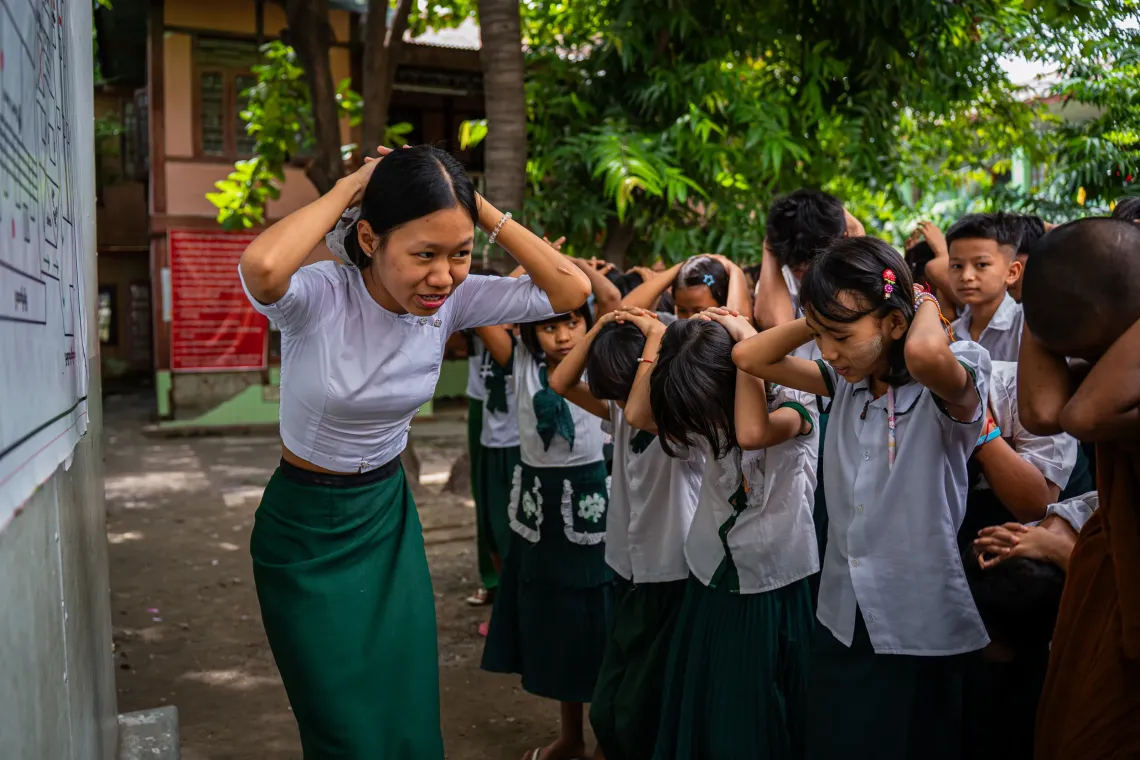
She now practises emergency drills with students, helping them prepare before an emergency and respond more safely if one happens.
Eleven-year-old Phone Pyae Sone says the practice has helped him feel less afraid.
“I am still a little scared when an earthquake happens, but I am not as scared as last year,” he says. “We have practised with our teachers what to do if there is an emergency.”
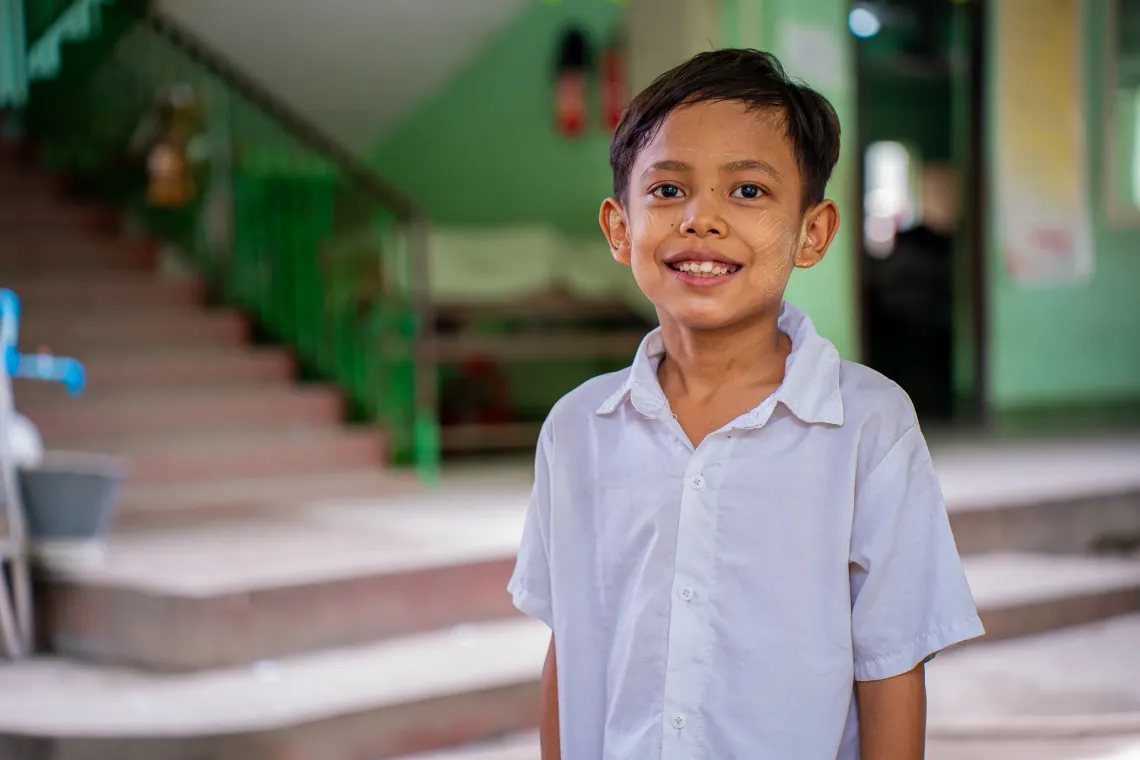
He says students have also learned to talk to close friends when they feel sad and encourage classmates who are worried.
For Phone Pyae Sone, the drills are also a chance to learn together.
“When we practise where to go during an earthquake, it is very fun,” he says. “We do it with many friends, so it feels like playing.”
Zayar Hein Aung, a UNICEF Education Officer, was part of the initial earthquake response and has returned to the monastic education centre as recovery efforts have continued.
“In the early days after the earthquake, children and teachers were trying to continue learning in very difficult conditions,” he says. “More than a year later, it is encouraging to see children back in classroom, reading, playing and taking part in activities with their friends. Teachers are also more confident in supporting children’s well-being and helping them prepare for emergencies.”
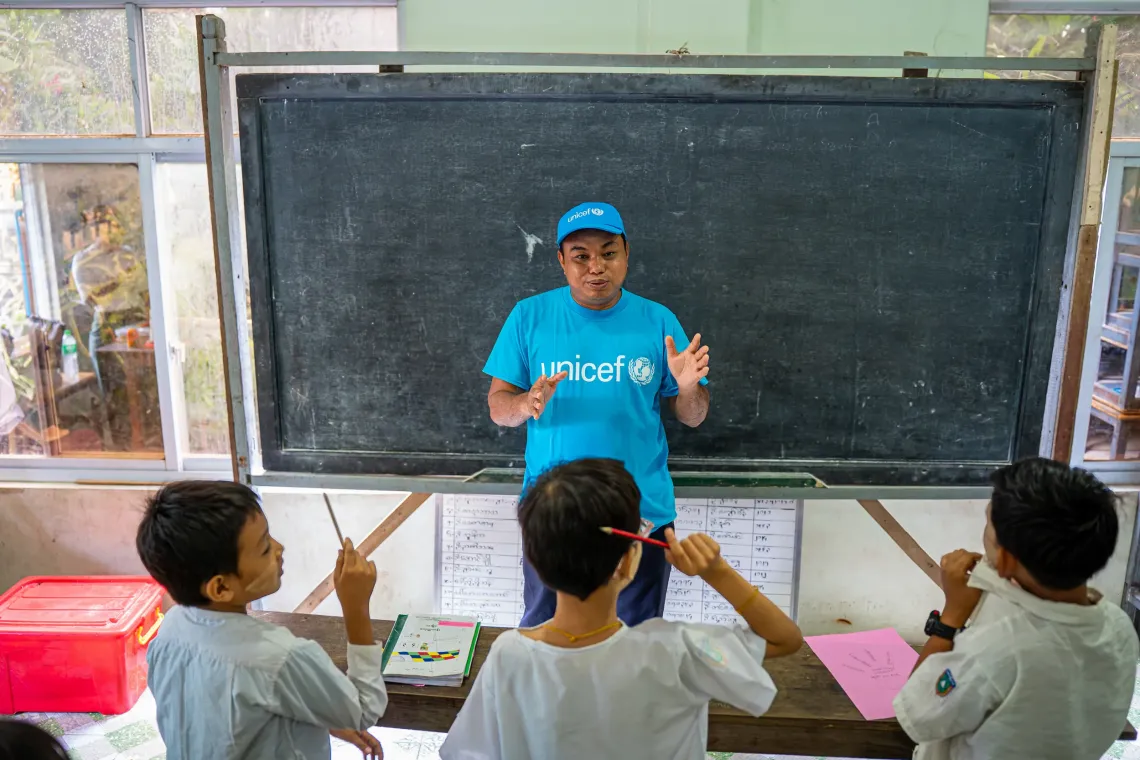
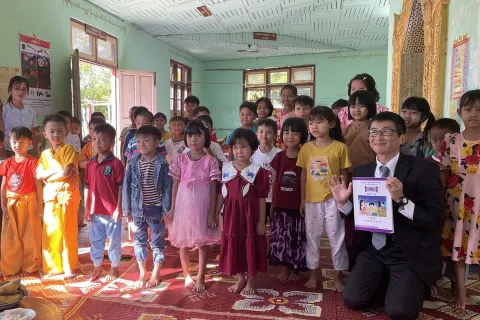
With generous funding from the Government of Japan, UNICEF supported 146 learning centres in central Myanmar with temporary learning spaces, individual learning materials, teaching learning materials and recreation materials, and training for teachers. The support is helping children continue learning, while giving teachers more tools to create a safe and supportive environment.
More than a year after the earthquake, recovery is still ongoing. But at monastic education centres across the region, teachers and children are rebuilding the everyday routines that make learning possible.
For Daw Aye Aye Aung and Daw Hsu Yee Toe, that is what recovery looks like: not only classrooms and school supplies, but children who can return to learning with greater confidence in themselves, in one another and in the adults who support them.