Listening to communities; restoring hope
UNICEF supports displaced children and families in Southern Shan, Myanmar in partnership with Japan

- English
- မြန်မာ
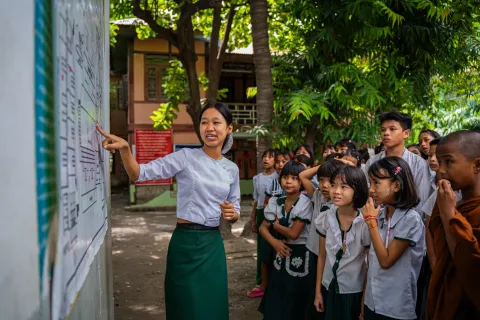
On a quiet afternoon in Southern Shan State, children gathered barefoot inside a modest learning space built of bamboo and wood, their laughter cutting through months of uncertainty. For families displaced by conflict, economic hardship, and repeated shocks—from the March earthquake to recent monsoon floods—this space represents something precious: continuity, dignity, and hope.
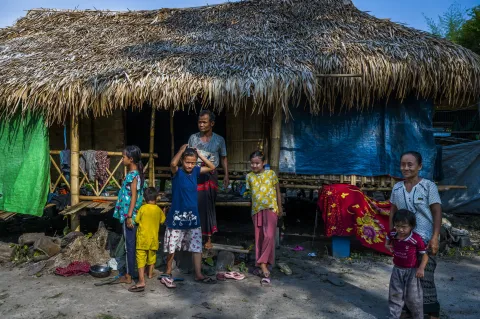
These are the realities shaping childhood in Southern Shan — realities that framed the visit of Shogo Yoshitake, Chargé d’affaires of the Embassy of Japan in Myanmar. Across the area, community-based services are supporting children affected by displacement, economic hardship and natural disasters, helping sustain access to learning and protection in challenging circumstances.

Putting inclusion at the centre
At an Inclusive Learning Centre (ILC) in Nyaung Shwe, supported by UNICEF in partnership with local organizations, learning and rehabilitation activities for children with disabilities were showcased. Local partners explained how inclusive, community-based services — ranging from learning support and physiotherapy to caregiver engagement — are helping children build confidence, strengthen mobility and participate more fully in daily life.
Caregivers and service providers shared how access to consistent, local support is easing pressure on families in areas where specialized services are limited, while ensuring children with disabilities are not left behind as crises persist. These inclusive approaches are helping families and communities absorb shocks and sustain progress for children most at risk.

Education and protection in displacement
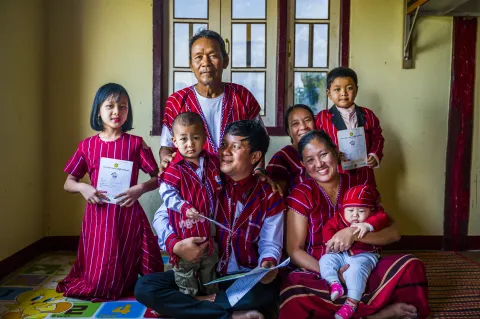
During a visit to a displacement site, UNICEF-supported services for children and caregivers were observed, including integrated education, child protection, health, nutrition, and water, sanitation and hygiene support delivered with partners. Volunteer teachers and community members shared how education and child-friendly activities help children maintain routines, rebuild social connections and cope with stress. Families described how community-based support — including learning spaces, parenting sessions and safe activities — has become a critical source of stability for children affected by repeated displacement and disruption.
Throughout the visit, the Japan Chargé d’Affaires engaged directly with families and community volunteers, listening to their experiences and priorities, and gaining insight into both the progress made and the challenges that remain for children’s well-being.
“Hearing parents speak about their children’s needs today and their hopes for tomorrow stayed with me,” said Mr. Shogo Yoshitake. “Families showed remarkable resilience and how support is helping children regain confidence and dignity.”
A partnership grounded in trust and continuity
The visit provided an opportunity to reflect on both progress achieved and the needs that remain for children affected by displacement, economic hardship, and recent natural disasters - particularly the March 28 earthquake and also monsoon floods that affected several communities. Families and community members emphasized the importance of sustained, flexible support to protect children’s well-being, preserve access to learning, and strengthen resilience in the face of ongoing challenges.
Through the partnerships with donors including Japan, UNICEF is working hand-in-hand with local communities, ensuring that vital support continues to reach children and families where it is needed most—helping them survive, recover, and thrive in the face of crisis.