From the street to opportunity: building pathways for children in Mozambique’s cities
UNICEF is working with the Government and partners to develop this emerging model into a sustainable and scalable pathway for children in Mozambique’s urban centres.

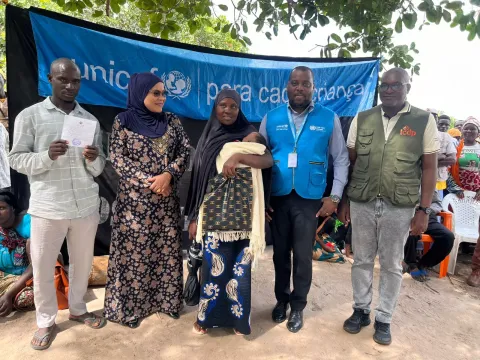
Maputo, Mozambique - On Friday, 18 September, UNICEF Mozambique brought together members of the diplomatic community, government counterparts, community partners and children and adolescents to explore an emerging model for supporting children living and working on the streets.
During a visit to communities in Maputo, participants saw how local organizations are building relationships with children and adolescents in street situations and supporting them to access services and opportunities. At the Maxaquene Community Centre, young people spoke directly about their experiences, aspirations and the opportunities they want for their futures.
The approach being developed with the Government of Mozambique recognizes that no single organization can provide everything a child needs. Instead, UNICEF is helping connect government institutions, municipalities, community organizations, social services, education and skills providers, civil society and the private sector around a common pathway.
Through outreach, Espaços Pontes and community centres, children can be connected to case management, psychosocial support, education, social protection and other services, before progressing towards skills development, livelihoods and greater autonomy.
The approach builds on a UNICEF-supported assessment of 300 children and adolescents in street situations. Almost seven in ten were out of school. Of those, 80 per cent said they wanted to return, highlighting both the scale of the challenge and the potential to reconnect children with learning and opportunity.
During the visit, one adolescent, Pedro*, offered a reflection that stayed with participants: “Destiny is how things end.”
Where a child’s story begins should not determine where it ends.
UNICEF is working with the Government and partners to develop this emerging model into a sustainable and scalable pathway for children in Mozambique’s urban centres. Development partners, civil society, universities and the private sector can all play a role, whether by opening pathways to education and employment, strengthening community services, contributing expertise or investing in solutions that can grow.
Together, these partnerships can help ensure that children in street situations are seen not only through the challenges they face, but also through their potential and the opportunities they deserve.
Name changed to protect the child’s identity.