Rebuilding with dignity: how cash support is helping flood-affected families in Xai-Xai recover
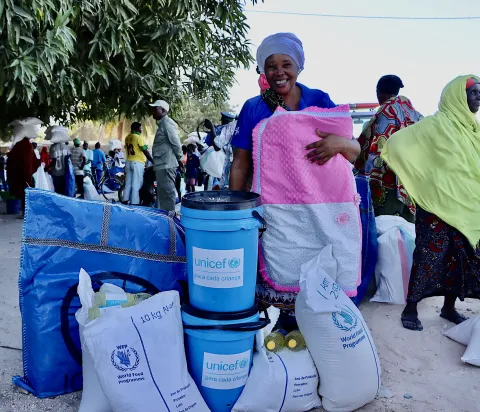
In response to the floods, Mozambique’s National Institute for Social Action (INAS-IP) led an emergency response, with technical support from UNICEF and funding from the European Union (ECHO).

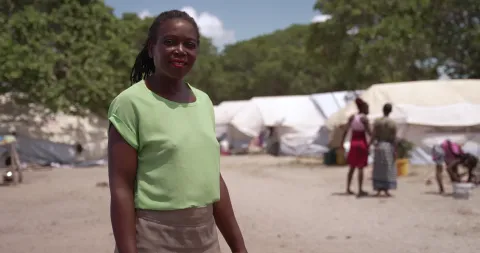
Xai-Xai, Gaza - When the floods hit Xai-Xai in the beginning of the year, they did not just damage homes and roads — they disrupted lives.
Families lost crops, belongings and sources of income. Some communities became completely isolated, cut off from basic services and support. For the most vulnerable, the future suddenly became uncertain.
But recovery began with something simple — and powerful.
Support that reaches those who need it most
In response to the floods, Mozambique’s National Institute for Social Action (INAS-IP) led an emergency response, with technical support from UNICEF and funding from the European Union (ECHO).
Together, they reached around 1,200 people, prioritizing the most vulnerable families — including those in hard-to-reach areas.
At the centre of this response was a solution that puts dignity first: cash transfers.
For affected families, this meant more than assistance.
It meant choice.
It meant flexibility.
It meant the ability to meet urgent needs in their own way.
More than cash: restoring control and confidence
For many families, receiving cash support was the first step towards regaining control over their lives.
With it, they could buy food, replace essentials and begin rebuilding — at their own pace, based on their real needs.
This approach is not only efficient.
It is dignified.
Because instead of receiving predefined aid, families decide what matters most for their recovery.
While enrolling in the programme, beneficiaries were also able to:
- access civil registration services and secure important documents
- receive information on protection from sexual exploitation and abuse (PSEA)
- learn how to report concerns safely through grievance mechanisms
This ensured that support was not only accessible — but also safe, transparent and accountable.
Innovation that brings assistance closer
The response also introduced new ways of delivering support.
In partnership with mobile operators Tmcel, Vodacom and Movitel, an innovative digital payment system was rolled out.
This allowed families to receive assistance:
- more quickly
- more securely
- with greater independence
At the same time, essential equipment was provided to strengthen local INAS-IP services — helping ensure that support could reach communities more efficiently, both now and in the future.
Preparing for the next shock
Beyond immediate relief, the intervention also focused on the future.
An emergency response module was piloted to strengthen preparedness for future shocks — ensuring that systems are ready to respond faster and better when crises occur again.
Monitoring activities helped assess impact, ensure accountability, and capture lessons learned.
These efforts are already contributing to a stronger, more resilient social protection system in Mozambique.
A model for recovery
The experience in Xai-Xai highlights an important lesson: cash transfers work.
They are:
- efficient
- scalable
- responsive
- and centred on people
Most importantly, they allow families to recover with dignity.
A partnership making a difference
This response shows what is possible when strong partnerships come together.
With leadership from INAS-IP, and the joint efforts of UNICEF and the European Union, families affected by the floods are not only receiving support — they are rebuilding their lives.
For the families of Xai-Xai, recovery is still ongoing.
But today, there is something that was missing in the immediate aftermath of the floods:
stability.
choice.
hope.
Because when support reaches people in the right way — and at the right time — it does more than respond to a crisis.
It helps build resilience for the future.