Protecting Mozambique’s Children from Climate Shocks
How the Today and Tomorrow Initiative is Making a Difference
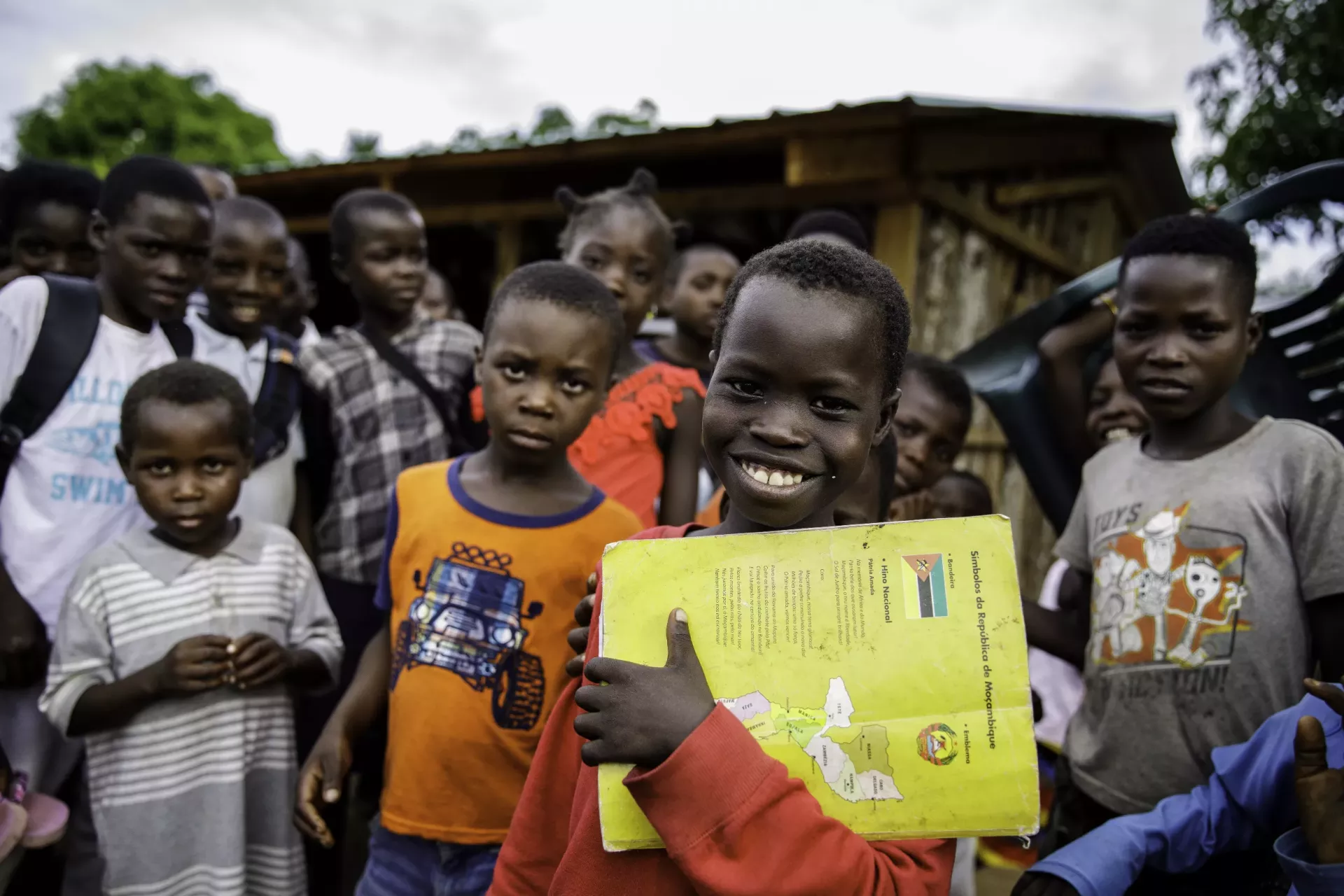
Mozambique is one of the most climate-vulnerable countries in the world, with children bearing the brunt of increasingly frequent and severe cyclones. Alarmingly, the country was struck by three cyclones in just four months between December 2024 and March 2025. Many communities were still recovering from December’s Cyclone Chido when Cyclone Jude hit in early March.
Cyclone Jude alone affected over 1 million people, half of them children, and damaged or destroyed 225,000 homes. Severe flooding exacerbated the prevalence and risk of waterborne diseases like cholera and diarrhoea, while serious damage to roads disrupted the continuity of critical services and the distribution of vital supplies.
Mozambique is one of eight countries piloting UNICEF’s Today and Tomorrow Initiative (TTI), the world’s first integrated climate and disaster risk finance mechanism designed specifically for children and young people.
Launched by UNICEF in 2023, with the support from partners including the governments of Germany and the UK, TTI combines two powerful components. The Today pillar invests in resilience through preparedness, disaster risk reduction, and climate adaptation. The Tomorrow pillar provides pre-arranged, parametric insurance that delivers rapid, flexible, and predictable funding within 72 hours of a major tropical storm.
Parametric insurance is a type of coverage that triggers an automatic payout based on a pre-determined formula, calculated by an actuarial firm using factors such as the cyclone’s wind speed and the affected region’s child population. This innovative mechanism eliminates the need for lengthy damage assessments or proposal submissions, enabling UNICEF to deliver agile, life-saving emergency support to impacted communities.
Due to the increased frequency of cyclones affecting the country, Mozambique has received the largest share of TTI Tomorrow resources to date: $7.36 million, or 67 per cent of total global payouts. In 2024 alone, TTI released over $3 million in response to Cyclone Chido and Tropical Storm Filipo. This year, $2.5 million was released to support the Cyclone Jude response.
These rapidly available resources, made possible through innovative parametric insurance, have enabled UNICEF to scale up emergency services across health, education, WASH, and child protection. Some key results delivered thanks to TTI funding include the rehabilitation of 55 classrooms using cyclone-resilient, Build Back Better standards, and the establishment of 160 temporary learning spaces, ensuring continued education for 16,000 children. Nearly 48,000 people gained access to safe water, while eight health facilities are being restored to serve over 100,000 people. Thousands of children and caregivers also received psychosocial support, family tracing services, and essential supplies.
As part of the Today component, efforts have focused on strengthening resilience in the education sector through school-based emergency preparedness planning, capacity building, and the construction and rehabilitation of schools to protect children from future climate shocks.
“The Today and Tomorrow Initiative is a game changer for children hit by climate shocks in Mozambique. It is allowing us to respond quickly when disasters strike, while investing in long-term solutions that protect children from the growing impacts of the climate crisis,” said Mary Louise Eagleton, UNICEF Representative in Mozambique.
Thanks to TTI, recovery is faster, systems are stronger, and children are safer. With support from partners, UNICEF is helping to ensure children not only survive climate shocks but thrive despite them, thanks to resilient infrastructure and services.