The quiet strength of a hero: Elisa's journey to protect her children
The power of a mother's dedication to ensure her children were protected from a measles outbreak.

When it comes to immunization, the role of parents, and mothers in particular, is crucial. In communities around the world, parents are the champions of their children’s health making informed decisions that protect them from preventable diseases.
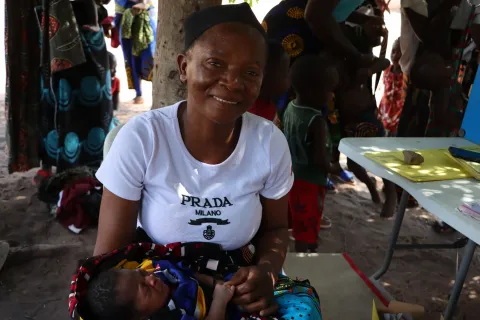
Elisa Cipriano is a great example of this. A farmer and mother of four, she provides for her children through her agricultural work. Her life is deeply rooted in her community: Chiúre, a district in the south of Cabo Delgado province in Mozambique. Surrounded by dense greenery, its life is defined by the alternation of the dry and wet seasons. The long, mostly unpaved reddish trails lined with marula and other trees make transportation difficult, especially during the rainy season.
In the remote district of Chiure, the daily lives of families like Elisa Cipriano's have been turned upside down. Once a thriving agricultural community, Chiure now faces extraordinary challenges, with the February 2024 attacks in Mazeze and Chiure Velho, marking a turning point in the district's struggle for stability. Elisa, a mother of four, relies on farming to feed her family. However, insecurity and displacement have reshaped her world. The attacks not only forced many residents to flee but also destroyed two health facilities, depriving the region of vital services. Like many others, Elisa witnessed neighbors leaving their homes, some moving to Chiure sede, while others sought refuge in Nampula Province (Namapa). These pendular movements have created logistical challenges for humanitarian aid and severely disrupted immunization efforts. The district, already a hub for thousands of internally displaced people (IDPs) fleeing violence in Cabo Delgado, has seen its fragile health networks stretched to their limits. With two health centres reduced to rubble and overcrowding at the remaining facilities, basic healthcare services, including immunizations, have become scarce. Meanwhile, infrastructure in Chiure remains a constant hurdle. Unpaved roads, bordered by towering marula trees, become impassable during the rainy season, further isolating communities like Elisa’s. The lack of reliable transportation means that access to markets, schools, and healthcare is often determined by the weather, leaving families vulnerable to hunger and disease.
Despite the odds, Elisa continues to fight for her children’s future. Like many parents in Chiure, she dreams of a better life for her family—a life where they can access healthcare, education, and the stability they once knew. But for now, her story is one of resilience in the face of relentless challenges, echoing the struggles of a district determined to rebuild.
Starting in late July 2024 a measles outbreak began in Chiúre, affecting many children in the community. Measles remains a significant issue in Mozambique: in 2022, 1047 children were diagnosed with the disease, falling to 656 in 2023. Vaccination coverage remains well below, the 95 per cent coverage required to eliminate measles in a community. Continued efforts, including awareness campaigns and targeted vaccination drives, are essential to closing this gap and ensuring that children are protected against preventable diseases like measles. In addition to Chiúre, the districts of Ancuabe, Montepuez, and Namuno also experienced measles outbreaks. In response to this situation, UNICEF, with support from the Alwaleed Philanthropies, assisted Mozambique’s Ministry of Health to implement a ‘Big Catch-Up' campaign, reaching hard-to-reach children with vaccines including the measles vaccine.
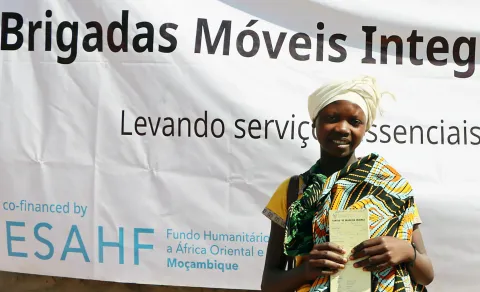
Elisa did not hesitate; she knew it was vital for her children to take advantage of the vaccination campaign. The life of a farmer in Chiúre is often challenging: Many families practice subsistence farming, And Elisa's typical day starts early, often before sunrise. She prepares her children for the day, ensuring they have what they need. Then, she heads to her machamba (field), where she spends hours tending to her crops—planting, weeding, and watering, all under the relentless sun. During the vaccination campaign, this routine changed for a short time. Elsa set aside her daily chores and brought her four children to the nearest mobile vaccination brigade to receive the measles vaccine. Grateful for the opportunity to access this life-saving preventative care, she expressed her joy and relief.

This disease started suddenly in my area. Many children fell ill, and at the hospital, they said it was measles. I knew this disease was serious because many children had died in the past, and that really frightened me.
"This disease started suddenly in my area. Many children fell ill, and at the hospital, they said it was measles," recalls Elisa. "I was afraid that my children would also catch the disease, so when the Agente Polivalente (Community Health Worker) said there was going to be a vaccination campaign here in the community, I left my work in the machamba to bring my children. I knew this disease was serious because many children had died in the past, and that really frightened me " she adds.
Elisa has been a hero to her children by responding positively to awareness campaigns about the vaccination drive, recognizing its vital role in ensuring her children's healthy growth. By doing so, parents like her also contribute to building community-wide immunity, which is vital for preventing outbreaks of diseases like measles. UNICEF, thanks to the generous contribution of the Alwaleed Philanthropies, and in collaboration with the Ministry of Health of Mozambique and local health staff, is working to tackle the issue of zero-dose children in Mozambique, ensuring the country increases vaccination rates to protect all children from preventable diseases and strengthen community health resilience.