Changing minds: Bicheh learns how boys can stand up for girls in Cabo Delgado
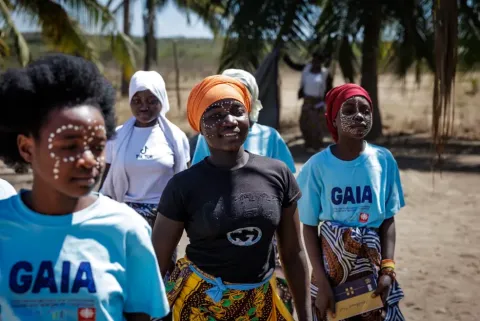
UNICEF supports the GAIA programme in Cabo Delgado with the generous support of the Government of Norway, helping adolescents affected by conflict understand their rights, challenge violence and harmful gender norms, and make informed decisions.

Mariangone, Cabo Delgado - For Bicheh Luciano, changing the way girls are treated is not only a responsibility for girls and their families. Boys have a role too.
“Boys have a responsibility to explain to others in the community that girls don’t have to get married early and that they should not pressure them,” says the 17-year-old Grade 7 student.
Bicheh arrived in Mariangone three years ago after his family left their home in Macomia because of violence by non-state armed groups.
“The whole family moved to Mariangone as it is safer here from the armed men,” he says.
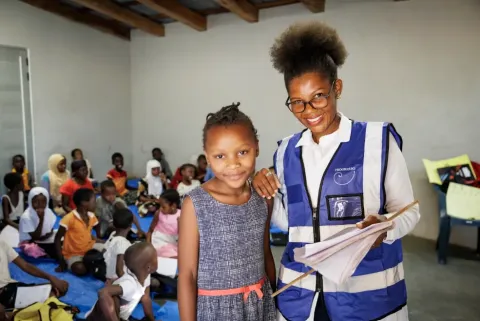
About a year ago, Bicheh began attending Girls Are In Action (GAIA), which combines life skills education with psychosocial support to help adolescents affected by conflict build confidence, understand their rights and make informed decisions about their lives.
“I like coming to GAIA because I learn a lot and it is fun being with friends,” he says.
Girls and boys take part in discussions on issues including gender-based violence, child marriage, relationships and children’s rights, alongside sport, music, games and practical activities.
For Bicheh, the sessions have changed how he thinks about violence and the responsibilities of boys.
“I have learned about violence against children and against women,” he says. “I know I can advise girls and boys and, if someone needs help, I can tell the authorities.”
Pedro Joao Augusto, 27, from Caritas, helps run the activities in Mariangone. He says involving boys in the discussions is an important part of the programme.
“The boys are part of the debates too,” he says. “They have learned that sexual violence is illegal and there are serious consequences to their actions. Their attitudes are changing.”
Community leader Felisberto Joao says he has also noticed a difference.
“I see the boys’ attitudes changing, the same as the girls,” he says.
Bicheh believes young people can help challenge harmful attitudes among their friends and in the wider community.
“The community should not put pressure on us children to get married before 18,” he says. “We need to stay in school. We can be adults later.”
Bicheh hopes to become a police officer after finishing school. For now, he is continuing his education and learning that boys can be part of creating safer and more equal communities for girls and boys alike.
UNICEF supports the GAIA programme in Cabo Delgado with the generous support of the Government of Norway, helping adolescents affected by conflict understand their rights, challenge violence and harmful gender norms, and make informed decisions about their futures.